AI & ML Models
0.0 (0 reviews) • 0 downloads
Child Disorder Diagnose in Python Projects
र 1000
Child Disorder Diagnose in Python Projects
Technical Details
Domain : Python
Database : Sqlite
Tools : Anaconda
Run Tools: VS Code
Database : Sqlite
Tools : Anaconda
Run Tools: VS Code
Secure Payment
Instant Download
GST Invoice
24/7 Support
About This Product
Child Disorder Diagnose in Python Projects
Abstract
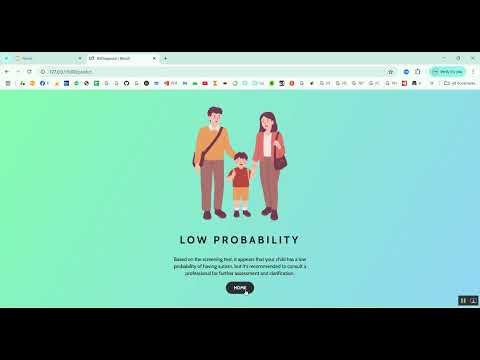
Early diagnosis of developmental and behavioral disorders in children is crucial for timely intervention and improved long-term outcomes. The project titled Child Disorder Diagnosis in Python Projects focuses on developing an intelligent system that can assist healthcare professionals in identifying potential disorders in children using data-driven analysis. The system collects and analyzes data from multiple sources, including medical records, behavioral assessments, and questionnaire responses, to detect patterns indicative of disorders such as autism spectrum disorder (ASD), attention deficit hyperactivity disorder (ADHD), and speech or learning delays. Python is used as the development platform due to its robust libraries for data preprocessing, machine learning, and deep learning, including Pandas, NumPy, Scikit-learn, TensorFlow, and Keras. The proposed system leverages supervised and ensemble learning techniques to provide accurate and interpretable diagnostic suggestions, supporting early intervention and improving healthcare efficiency.
Existing System
Existing diagnostic approaches for child disorders primarily rely on manual evaluation by pediatricians, psychologists, and therapists, using observation, standardized tests, and parent questionnaires. While effective, these methods are time-consuming, subjective, and dependent on the expertise of specialists, often leading to delays in diagnosis. Some computerized systems exist for specific disorders, but they usually focus on single conditions, lack comprehensive analysis, or cannot integrate multiple sources of data. Traditional systems also struggle to handle large-scale datasets or provide predictive insights, limiting early detection capabilities. The absence of automated, data-driven diagnostic tools reduces the accessibility and efficiency of healthcare services, especially in regions with limited specialist availability.
Proposed System
The proposed system introduces a Python-based intelligent diagnostic tool for child disorders that integrates data preprocessing, feature extraction, and machine learning classification. Data collected from medical records, developmental assessments, and behavioral questionnaires are cleaned, normalized, and transformed into suitable formats for modeling. Supervised machine learning models such as Random Forest, Support Vector Machines (SVM), and Gradient Boosting, or deep learning models like Multi-Layer Perceptrons (MLP), are employed to predict the likelihood of specific disorders. Ensemble methods can combine multiple models to improve accuracy and robustness. Python libraries such as Scikit-learn, TensorFlow, and Keras are used for model training, evaluation, and deployment. The system provides diagnostic predictions along with confidence scores and highlights key features contributing to each prediction, enhancing interpretability for healthcare professionals. This approach reduces diagnostic time, enables early detection, and supports evidence-based interventions for children at risk of developmental and behavioral disorders.
Abstract
Early diagnosis of developmental and behavioral disorders in children is crucial for timely intervention and improved long-term outcomes. The project titled Child Disorder Diagnosis in Python Projects focuses on developing an intelligent system that can assist healthcare professionals in identifying potential disorders in children using data-driven analysis. The system collects and analyzes data from multiple sources, including medical records, behavioral assessments, and questionnaire responses, to detect patterns indicative of disorders such as autism spectrum disorder (ASD), attention deficit hyperactivity disorder (ADHD), and speech or learning delays. Python is used as the development platform due to its robust libraries for data preprocessing, machine learning, and deep learning, including Pandas, NumPy, Scikit-learn, TensorFlow, and Keras. The proposed system leverages supervised and ensemble learning techniques to provide accurate and interpretable diagnostic suggestions, supporting early intervention and improving healthcare efficiency.
Existing System
Existing diagnostic approaches for child disorders primarily rely on manual evaluation by pediatricians, psychologists, and therapists, using observation, standardized tests, and parent questionnaires. While effective, these methods are time-consuming, subjective, and dependent on the expertise of specialists, often leading to delays in diagnosis. Some computerized systems exist for specific disorders, but they usually focus on single conditions, lack comprehensive analysis, or cannot integrate multiple sources of data. Traditional systems also struggle to handle large-scale datasets or provide predictive insights, limiting early detection capabilities. The absence of automated, data-driven diagnostic tools reduces the accessibility and efficiency of healthcare services, especially in regions with limited specialist availability.
Proposed System
The proposed system introduces a Python-based intelligent diagnostic tool for child disorders that integrates data preprocessing, feature extraction, and machine learning classification. Data collected from medical records, developmental assessments, and behavioral questionnaires are cleaned, normalized, and transformed into suitable formats for modeling. Supervised machine learning models such as Random Forest, Support Vector Machines (SVM), and Gradient Boosting, or deep learning models like Multi-Layer Perceptrons (MLP), are employed to predict the likelihood of specific disorders. Ensemble methods can combine multiple models to improve accuracy and robustness. Python libraries such as Scikit-learn, TensorFlow, and Keras are used for model training, evaluation, and deployment. The system provides diagnostic predictions along with confidence scores and highlights key features contributing to each prediction, enhancing interpretability for healthcare professionals. This approach reduces diagnostic time, enables early detection, and supports evidence-based interventions for children at risk of developmental and behavioral disorders.
Customer Reviews (0)
No reviews yet. Be the first!
Related Products
⭐ Featured
AI & ML Models
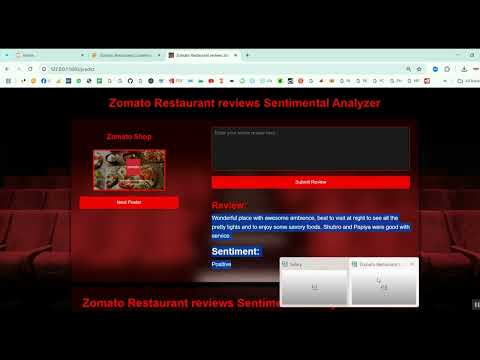
Zomato Restaurant Reviews Sentimental Analyzer in Python Projects
Zomato Restaurant Reviews Sentimental Analyzer in Python Projects
र 1000
⭐ Featured
⭐ Featured
AI & ML Models
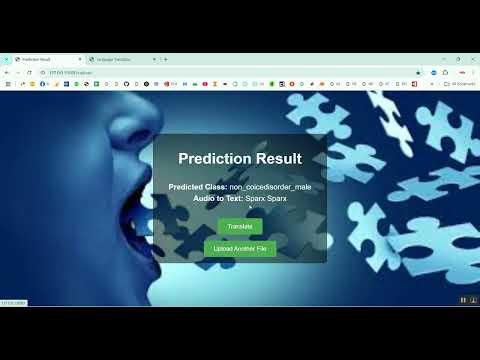
Voice Disorder Prediction using Audio Dataset in Python Projects
Voice Disorder Prediction using Audio Dataset in Python Projects
र 1000
AI & ML Models
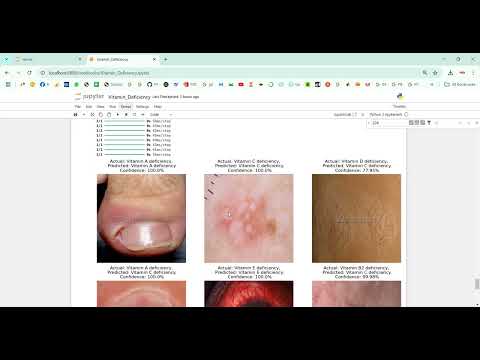
Vitamin Deficiency Detection Using Image Processing in Python Projects
Vitamin Deficiency Detection Using Image Processing in Python Projects
र 1000