Django Projects
0.0 (0 reviews) • 0 downloads
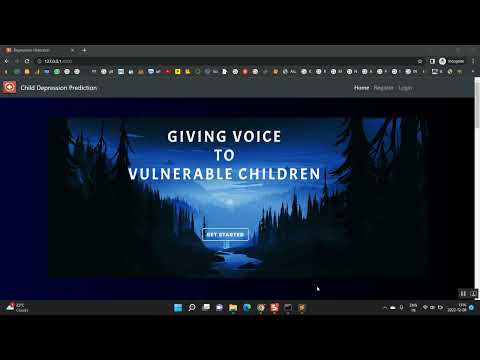
Child Depression ML Classification in Python Projects
र 1000
Child Depression ML Classification in Python Projects
Technical Details
Domain : Python
Database : Sqlite
Tools : Anaconda
Run Tools: VS Code
Database : Sqlite
Tools : Anaconda
Run Tools: VS Code
Secure Payment
Instant Download
GST Invoice
24/7 Support
About This Product
Child Depression ML Classification in Python Projects
Abstract
Childhood depression is a serious mental health concern that can affect emotional, social, and cognitive development. Early detection and intervention are crucial for improving mental health outcomes. This project, Child Depression ML Classification in Python, aims to develop a machine learning system to automatically detect signs of depression in children based on behavioral, psychological, or survey-based data. Using Python libraries such as Pandas, NumPy, Scikit-learn, TensorFlow/Keras, and Matplotlib, the system preprocesses input data, extracts meaningful features, and trains classifiers such as Random Forest, Support Vector Machine (SVM), or Neural Networks to identify depressive tendencies. The system provides an automated and scalable solution to assist psychologists, educators, and caregivers in identifying children at risk of depression.
Existing System
Current detection methods for child depression primarily rely on manual assessment through psychological tests, questionnaires, and clinical observation. While effective, these methods are time-consuming, subjective, and dependent on the availability of trained professionals. Some automated approaches have been attempted using simple rule-based algorithms or basic statistical models, but these fail to handle complex and multidimensional behavioral data. Additionally, existing systems often lack real-time or scalable solutions suitable for widespread use in schools or healthcare settings.
Proposed System
The proposed system introduces a machine learning–based framework for child depression detection. The workflow includes data preprocessing (handling missing values, normalization, and encoding categorical features), feature selection, and training ML models to classify children into risk categories (e.g., low, moderate, or high risk of depression). Advanced models such as Random Forest, SVM, Gradient Boosting, or Neural Networks are used to improve prediction accuracy. The system can also be extended into a Flask or Django web application to allow caregivers or educators to input survey data and receive instant risk predictions. Compared to existing methods, this approach provides automated, scalable, and objective assessment, helping in early intervention and better mental health support for children.
Abstract
Childhood depression is a serious mental health concern that can affect emotional, social, and cognitive development. Early detection and intervention are crucial for improving mental health outcomes. This project, Child Depression ML Classification in Python, aims to develop a machine learning system to automatically detect signs of depression in children based on behavioral, psychological, or survey-based data. Using Python libraries such as Pandas, NumPy, Scikit-learn, TensorFlow/Keras, and Matplotlib, the system preprocesses input data, extracts meaningful features, and trains classifiers such as Random Forest, Support Vector Machine (SVM), or Neural Networks to identify depressive tendencies. The system provides an automated and scalable solution to assist psychologists, educators, and caregivers in identifying children at risk of depression.
Existing System
Current detection methods for child depression primarily rely on manual assessment through psychological tests, questionnaires, and clinical observation. While effective, these methods are time-consuming, subjective, and dependent on the availability of trained professionals. Some automated approaches have been attempted using simple rule-based algorithms or basic statistical models, but these fail to handle complex and multidimensional behavioral data. Additionally, existing systems often lack real-time or scalable solutions suitable for widespread use in schools or healthcare settings.
Proposed System
The proposed system introduces a machine learning–based framework for child depression detection. The workflow includes data preprocessing (handling missing values, normalization, and encoding categorical features), feature selection, and training ML models to classify children into risk categories (e.g., low, moderate, or high risk of depression). Advanced models such as Random Forest, SVM, Gradient Boosting, or Neural Networks are used to improve prediction accuracy. The system can also be extended into a Flask or Django web application to allow caregivers or educators to input survey data and receive instant risk predictions. Compared to existing methods, this approach provides automated, scalable, and objective assessment, helping in early intervention and better mental health support for children.
Customer Reviews (0)
No reviews yet. Be the first!
Related Products
⭐ Featured
⭐ Featured

Django Projects
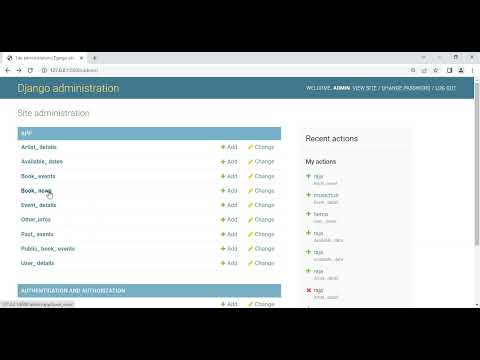
Music Event Booking App in Django Python
Music Event Booking App in Django Python
र 1000
⭐ Featured
Django Projects
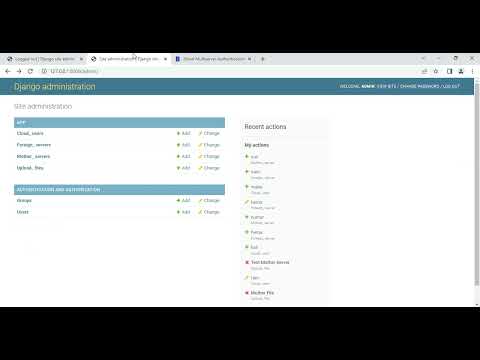
Multi Server Management System in Django Python
Multi Server Management System in Django Python
र 1000
⭐ Featured
Django Projects
Multi Authority Access Control in Django Python
Multi Authority Access Control in Django Python
र 1000