AI & ML Models
0.0 (0 reviews) • 0 downloads
Chicken Disease Prediction in Python Projects
र 1000
Chicken Disease Prediction in Python Projects
Technical Details
Domain : Python
Database : Sqlite
Tools : Anaconda
Run Tools: VS Code
Database : Sqlite
Tools : Anaconda
Run Tools: VS Code
Secure Payment
Instant Download
GST Invoice
24/7 Support
About This Product
Chicken Disease Prediction in Python Projects
Abstract
Poultry farming plays a major role in the agricultural economy, and maintaining the health of chickens is essential for maximizing productivity and preventing financial losses. However, early symptoms of poultry diseases often go unnoticed, leading to severe outbreaks. This project presents a Chicken Disease Prediction System using Machine Learning in Python that analyzes health indicators of chickens and predicts the likelihood of diseases such as Avian Influenza, Newcastle Disease, Fowl Pox, and Salmonellosis. The dataset contains parameters like body temperature, respiratory rate, feed intake, eggs production, droppings quality, and behavioral patterns. Supervised machine learning algorithms like Decision Tree, Random Forest, Support Vector Machine (SVM), and Logistic Regression are used to classify disease categories. Python libraries like Pandas, NumPy, Scikit-learn, and Matplotlib are used for data processing and visualization. This system helps poultry farmers detect diseases early and take preventive measures to reduce mortality and financial loss.
Existing System
In the existing poultry farming system, disease detection is mostly done manually by farmers or veterinary experts. Diagnosis is based on visual symptoms and clinical experience, which often leads to late detection and inaccurate diagnosis. Many farmers lack access to professional veterinary support, especially in rural areas. Traditional disease identification techniques are time-consuming and cannot handle large-scale poultry farms efficiently. There is also no automated system for predicting diseases based on historical data and real-time health parameters. The lack of early diagnosis leads to rapid disease spread and economic losses in poultry farms.
Proposed System
The proposed system introduces an intelligent machine learning-based chicken disease prediction model that analyzes multiple health parameters and generates disease predictions. The collected data is preprocessed by handling missing values, noise removal, and feature scaling. Feature selection techniques are used to identify the most significant health indicators. Multiple machine learning models are trained, and the best-performing model is selected based on accuracy, precision, and recall. A graphical user interface (GUI) or web app is built using Flask or Streamlit, allowing farmers to enter health parameters and receive instant disease predictions. The system also suggests preventive actions and treatment guidance. It is cost-effective, user-friendly, and supports smart decision-making in poultry farming.
Abstract
Poultry farming plays a major role in the agricultural economy, and maintaining the health of chickens is essential for maximizing productivity and preventing financial losses. However, early symptoms of poultry diseases often go unnoticed, leading to severe outbreaks. This project presents a Chicken Disease Prediction System using Machine Learning in Python that analyzes health indicators of chickens and predicts the likelihood of diseases such as Avian Influenza, Newcastle Disease, Fowl Pox, and Salmonellosis. The dataset contains parameters like body temperature, respiratory rate, feed intake, eggs production, droppings quality, and behavioral patterns. Supervised machine learning algorithms like Decision Tree, Random Forest, Support Vector Machine (SVM), and Logistic Regression are used to classify disease categories. Python libraries like Pandas, NumPy, Scikit-learn, and Matplotlib are used for data processing and visualization. This system helps poultry farmers detect diseases early and take preventive measures to reduce mortality and financial loss.
Existing System
In the existing poultry farming system, disease detection is mostly done manually by farmers or veterinary experts. Diagnosis is based on visual symptoms and clinical experience, which often leads to late detection and inaccurate diagnosis. Many farmers lack access to professional veterinary support, especially in rural areas. Traditional disease identification techniques are time-consuming and cannot handle large-scale poultry farms efficiently. There is also no automated system for predicting diseases based on historical data and real-time health parameters. The lack of early diagnosis leads to rapid disease spread and economic losses in poultry farms.
Proposed System
The proposed system introduces an intelligent machine learning-based chicken disease prediction model that analyzes multiple health parameters and generates disease predictions. The collected data is preprocessed by handling missing values, noise removal, and feature scaling. Feature selection techniques are used to identify the most significant health indicators. Multiple machine learning models are trained, and the best-performing model is selected based on accuracy, precision, and recall. A graphical user interface (GUI) or web app is built using Flask or Streamlit, allowing farmers to enter health parameters and receive instant disease predictions. The system also suggests preventive actions and treatment guidance. It is cost-effective, user-friendly, and supports smart decision-making in poultry farming.
Customer Reviews (0)
No reviews yet. Be the first!
Related Products
⭐ Featured
AI & ML Models
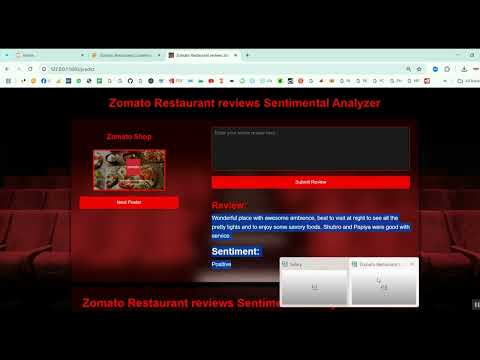
Zomato Restaurant Reviews Sentimental Analyzer in Python Projects
Zomato Restaurant Reviews Sentimental Analyzer in Python Projects
र 1000
⭐ Featured
⭐ Featured
AI & ML Models
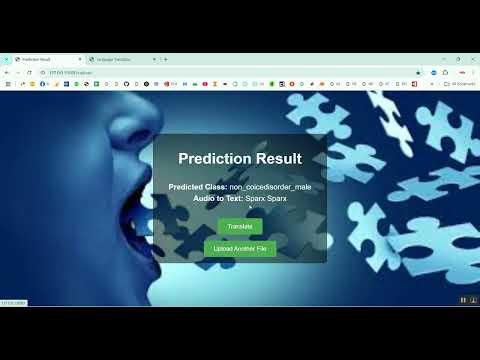
Voice Disorder Prediction using Audio Dataset in Python Projects
Voice Disorder Prediction using Audio Dataset in Python Projects
र 1000
AI & ML Models
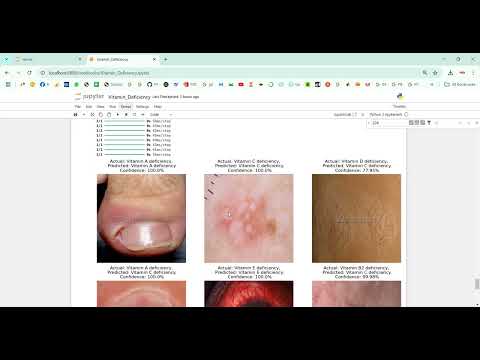
Vitamin Deficiency Detection Using Image Processing in Python Projects
Vitamin Deficiency Detection Using Image Processing in Python Projects
र 1000