AI & ML Models
0.0 (0 reviews) • 0 downloads
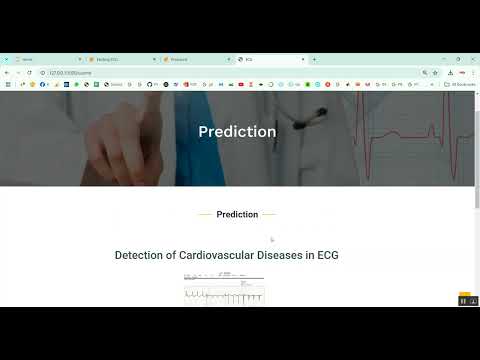
Cardiovascular Diseases in ECG Images in Python Projects
र 1000
Cardiovascular Diseases in ECG Images in Python Projects
Technical Details
Domain : Python
Database : Sqlite
Tools : Anaconda
Run Tools: VS Code
Database : Sqlite
Tools : Anaconda
Run Tools: VS Code
Secure Payment
Instant Download
GST Invoice
24/7 Support
About This Product
Cardiovascular Diseases in ECG Images in Python Projects
Abstract
Cardiovascular diseases (CVDs) are a leading cause of mortality worldwide, making early detection crucial for effective treatment and prevention. The project titled Cardiovascular Diseases Detection in ECG Images in Python Projects focuses on developing an intelligent system that can automatically detect and classify cardiovascular abnormalities from electrocardiogram (ECG) images. Python is used as the development platform because of its extensive libraries for image processing, machine learning, and deep learning, such as OpenCV, NumPy, Pandas, TensorFlow, Keras, and Scikit-learn. The system preprocesses ECG images, extracts significant features, and employs convolutional neural networks (CNNs) to classify ECG patterns into normal and various abnormal conditions such as arrhythmia, tachycardia, and bradycardia. This automated approach enables faster, accurate, and non-invasive diagnosis, assisting cardiologists in clinical decision-making and improving patient outcomes.
Existing System
Existing systems for diagnosing cardiovascular diseases rely primarily on manual interpretation of ECG signals by cardiologists. While effective, this process is time-consuming, labor-intensive, and prone to human error, especially when processing large datasets. Some conventional automated ECG analysis systems use signal processing and rule-based algorithms to detect anomalies, but these methods often struggle with noisy signals, varying heart rates, and overlapping disease patterns. Additionally, traditional approaches lack scalability and may not generalize well across diverse patient populations. As a result, early detection and classification of subtle abnormalities are often challenging, leading to delayed diagnosis and treatment.
Proposed System
The proposed system introduces a Python-based deep learning framework for detecting cardiovascular diseases from ECG images. Raw ECG images are preprocessed using techniques like noise removal, normalization, resizing, and contrast enhancement. Feature extraction is performed using convolutional layers, while a CNN or pre-trained transfer learning models such as ResNet, VGG16, or EfficientNet are employed for classification into normal and various disease categories. The system is trained on labeled ECG datasets to learn complex patterns and variations in ECG waveforms. Evaluation metrics such as accuracy, precision, recall, F1-score, and confusion matrix are used to validate model performance. The system also includes a user-friendly interface for uploading ECG images and receiving automated diagnostic results. This approach reduces manual workload, increases diagnostic accuracy, and supports early detection and monitoring of cardiovascular diseases, making it valuable for clinical applications.
Abstract
Cardiovascular diseases (CVDs) are a leading cause of mortality worldwide, making early detection crucial for effective treatment and prevention. The project titled Cardiovascular Diseases Detection in ECG Images in Python Projects focuses on developing an intelligent system that can automatically detect and classify cardiovascular abnormalities from electrocardiogram (ECG) images. Python is used as the development platform because of its extensive libraries for image processing, machine learning, and deep learning, such as OpenCV, NumPy, Pandas, TensorFlow, Keras, and Scikit-learn. The system preprocesses ECG images, extracts significant features, and employs convolutional neural networks (CNNs) to classify ECG patterns into normal and various abnormal conditions such as arrhythmia, tachycardia, and bradycardia. This automated approach enables faster, accurate, and non-invasive diagnosis, assisting cardiologists in clinical decision-making and improving patient outcomes.
Existing System
Existing systems for diagnosing cardiovascular diseases rely primarily on manual interpretation of ECG signals by cardiologists. While effective, this process is time-consuming, labor-intensive, and prone to human error, especially when processing large datasets. Some conventional automated ECG analysis systems use signal processing and rule-based algorithms to detect anomalies, but these methods often struggle with noisy signals, varying heart rates, and overlapping disease patterns. Additionally, traditional approaches lack scalability and may not generalize well across diverse patient populations. As a result, early detection and classification of subtle abnormalities are often challenging, leading to delayed diagnosis and treatment.
Proposed System
The proposed system introduces a Python-based deep learning framework for detecting cardiovascular diseases from ECG images. Raw ECG images are preprocessed using techniques like noise removal, normalization, resizing, and contrast enhancement. Feature extraction is performed using convolutional layers, while a CNN or pre-trained transfer learning models such as ResNet, VGG16, or EfficientNet are employed for classification into normal and various disease categories. The system is trained on labeled ECG datasets to learn complex patterns and variations in ECG waveforms. Evaluation metrics such as accuracy, precision, recall, F1-score, and confusion matrix are used to validate model performance. The system also includes a user-friendly interface for uploading ECG images and receiving automated diagnostic results. This approach reduces manual workload, increases diagnostic accuracy, and supports early detection and monitoring of cardiovascular diseases, making it valuable for clinical applications.
Customer Reviews (0)
No reviews yet. Be the first!
Related Products
⭐ Featured

AI & ML Models
Zomato Restaurant Reviews Sentimental Analyzer in Python Projects
Zomato Restaurant Reviews Sentimental Analyzer in Python Projects
र 1000
⭐ Featured
⭐ Featured
AI & ML Models
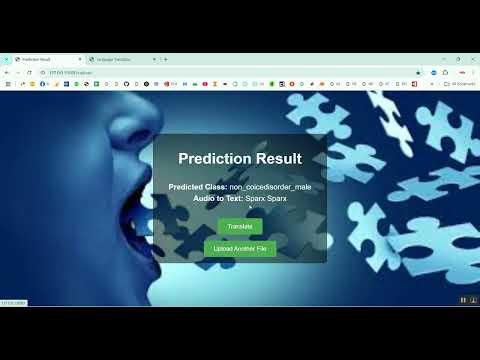
Voice Disorder Prediction using Audio Dataset in Python Projects
Voice Disorder Prediction using Audio Dataset in Python Projects
र 1000
AI & ML Models
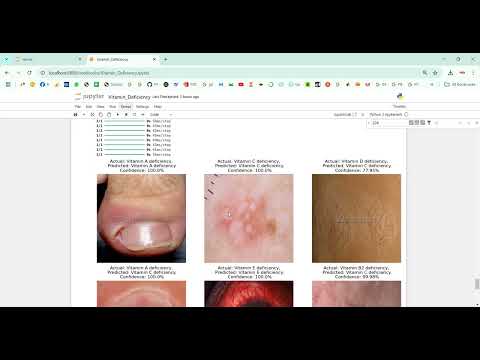
Vitamin Deficiency Detection Using Image Processing in Python Projects
Vitamin Deficiency Detection Using Image Processing in Python Projects
र 1000