AI & ML Models
0.0 (0 reviews) • 0 downloads
Building Automation Intrusion in Python Projects
र 1000
Building Automation Intrusion in Python Projects
Technical Details
Domain : Python
Database : Sqlite
Tools : Anaconda
Run Tools: VS Code
Database : Sqlite
Tools : Anaconda
Run Tools: VS Code
Secure Payment
Instant Download
GST Invoice
24/7 Support
About This Product
Building Automation Intrusion in Python Projects
Abstract
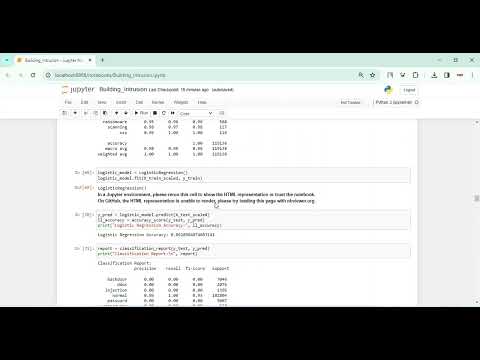
Securing automated building systems against unauthorized access is essential for protecting occupants and critical infrastructure. This project presents a Building Automation Intrusion Detection System (IDS) using Python, which monitors sensor and network data from building automation systems to detect suspicious activities and potential security breaches. The system leverages machine learning and anomaly detection techniques to identify unusual patterns in HVAC, lighting, access control, and IoT devices. Python libraries such as Scikit-learn, TensorFlow/Keras, Pandas, NumPy, and Matplotlib are used for data preprocessing, model training, anomaly detection, and visualization. By implementing automated intrusion detection, the system enhances building security, reduces manual monitoring, and provides real-time alerts for unauthorized activities.
Existing System
Existing building security systems rely primarily on manual surveillance, access control logs, and rule-based security alarms. While these systems can detect known security breaches, they are limited in identifying novel or complex intrusion patterns and often produce false positives. Some advanced building automation systems incorporate basic threshold-based anomaly detection for energy usage or access patterns, but they lack adaptive learning capabilities and cannot process large-scale sensor data efficiently. Consequently, security monitoring remains reactive rather than proactive, leaving buildings vulnerable to intelligent or coordinated attacks.
Proposed System
The proposed system introduces a Python-based machine learning framework for intrusion detection in building automation systems. Sensor and network data from IoT devices, access points, HVAC systems, and lighting controls are collected and preprocessed using normalization, noise filtering, and feature extraction. Anomaly detection models such as Isolation Forest, One-Class SVM, or Autoencoders are trained to identify unusual behavior patterns indicative of intrusions. Model performance is evaluated using metrics such as accuracy, precision, recall, F1-score, and ROC-AUC. A Streamlit or Flask dashboard provides real-time alerts, visualizations of sensor activity, and a log of detected anomalies. By combining machine learning and automation, the system enables proactive security, efficient monitoring, and rapid response to potential intrusions in smart buildings
Abstract
Securing automated building systems against unauthorized access is essential for protecting occupants and critical infrastructure. This project presents a Building Automation Intrusion Detection System (IDS) using Python, which monitors sensor and network data from building automation systems to detect suspicious activities and potential security breaches. The system leverages machine learning and anomaly detection techniques to identify unusual patterns in HVAC, lighting, access control, and IoT devices. Python libraries such as Scikit-learn, TensorFlow/Keras, Pandas, NumPy, and Matplotlib are used for data preprocessing, model training, anomaly detection, and visualization. By implementing automated intrusion detection, the system enhances building security, reduces manual monitoring, and provides real-time alerts for unauthorized activities.
Existing System
Existing building security systems rely primarily on manual surveillance, access control logs, and rule-based security alarms. While these systems can detect known security breaches, they are limited in identifying novel or complex intrusion patterns and often produce false positives. Some advanced building automation systems incorporate basic threshold-based anomaly detection for energy usage or access patterns, but they lack adaptive learning capabilities and cannot process large-scale sensor data efficiently. Consequently, security monitoring remains reactive rather than proactive, leaving buildings vulnerable to intelligent or coordinated attacks.
Proposed System
The proposed system introduces a Python-based machine learning framework for intrusion detection in building automation systems. Sensor and network data from IoT devices, access points, HVAC systems, and lighting controls are collected and preprocessed using normalization, noise filtering, and feature extraction. Anomaly detection models such as Isolation Forest, One-Class SVM, or Autoencoders are trained to identify unusual behavior patterns indicative of intrusions. Model performance is evaluated using metrics such as accuracy, precision, recall, F1-score, and ROC-AUC. A Streamlit or Flask dashboard provides real-time alerts, visualizations of sensor activity, and a log of detected anomalies. By combining machine learning and automation, the system enables proactive security, efficient monitoring, and rapid response to potential intrusions in smart buildings
Customer Reviews (0)
No reviews yet. Be the first!
Related Products
⭐ Featured

AI & ML Models
Zomato Restaurant Reviews Sentimental Analyzer in Python Projects
Zomato Restaurant Reviews Sentimental Analyzer in Python Projects
र 1000
⭐ Featured
⭐ Featured

AI & ML Models
Voice Disorder Prediction using Audio Dataset in Python Projects
Voice Disorder Prediction using Audio Dataset in Python Projects
र 1000

AI & ML Models
Vitamin Deficiency Detection Using Image Processing in Python Projects
Vitamin Deficiency Detection Using Image Processing in Python Projects
र 1000