AI & ML Models
0.0 (0 reviews) • 0 downloads
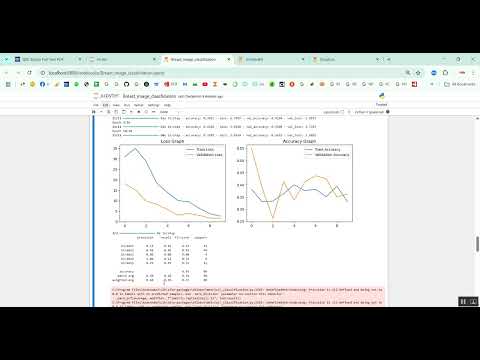
Breast Image Classification in Python Projects
र 1000
Breast Image Classification in Python Projects
Technical Details
Domain : Python
Database : Sqlite
Tools : Anaconda
Run Tools: VS Code
Database : Sqlite
Tools : Anaconda
Run Tools: VS Code
Secure Payment
Instant Download
GST Invoice
24/7 Support
About This Product
Breast Image Classification in Python Projects
Abstract
Breast cancer is one of the leading causes of cancer-related deaths among women worldwide. Early detection through imaging modalities such as mammography, ultrasound, and MRI can significantly improve treatment outcomes. The project titled Breast Image Classification in Python Projects focuses on developing an automated system to classify breast images as normal, benign, or malignant using machine learning and deep learning techniques. Python is chosen as the development platform due to its robust ecosystem of libraries for image processing and AI, including OpenCV, TensorFlow, Keras, and Scikit-learn. The system preprocesses medical images, extracts relevant features, and employs Convolutional Neural Networks (CNN) to achieve high classification accuracy. The aim of this project is to provide a reliable, efficient, and non-invasive diagnostic support tool for radiologists and healthcare professionals.
Existing System
Existing breast cancer detection systems rely heavily on manual interpretation of medical images by radiologists, which is time-consuming and subject to human error. Conventional computer-aided detection (CAD) systems use handcrafted features, such as texture, shape, and intensity, combined with classical machine learning algorithms for classification. While these systems can assist radiologists, they often suffer from lower accuracy in detecting subtle abnormalities and require expert intervention for feature selection. Additionally, traditional systems lack scalability for large datasets and real-time processing. The absence of automated deep learning models limits the ability to detect complex patterns in breast images, leading to delayed or incorrect diagnoses.
Proposed System
The proposed system introduces a Python-based deep learning framework for breast image classification. Images are first preprocessed to enhance quality through noise removal, normalization, and resizing. Data augmentation techniques such as rotation, flipping, and scaling are applied to increase dataset diversity. Convolutional Neural Networks (CNN) and pre-trained transfer learning models such as VGG16, ResNet50, or InceptionV3 are employed to extract deep features and classify images into normal, benign, or malignant categories. Python libraries like Keras and TensorFlow are used for model building and training, while OpenCV and PIL handle image preprocessing. The system is evaluated using metrics such as accuracy, precision, recall, F1-score, and ROC-AUC to ensure robust performance. The proposed approach enhances diagnostic accuracy, reduces manual workload, and provides an accessible tool for early breast cancer detection in clinical settings.
Abstract
Breast cancer is one of the leading causes of cancer-related deaths among women worldwide. Early detection through imaging modalities such as mammography, ultrasound, and MRI can significantly improve treatment outcomes. The project titled Breast Image Classification in Python Projects focuses on developing an automated system to classify breast images as normal, benign, or malignant using machine learning and deep learning techniques. Python is chosen as the development platform due to its robust ecosystem of libraries for image processing and AI, including OpenCV, TensorFlow, Keras, and Scikit-learn. The system preprocesses medical images, extracts relevant features, and employs Convolutional Neural Networks (CNN) to achieve high classification accuracy. The aim of this project is to provide a reliable, efficient, and non-invasive diagnostic support tool for radiologists and healthcare professionals.
Existing System
Existing breast cancer detection systems rely heavily on manual interpretation of medical images by radiologists, which is time-consuming and subject to human error. Conventional computer-aided detection (CAD) systems use handcrafted features, such as texture, shape, and intensity, combined with classical machine learning algorithms for classification. While these systems can assist radiologists, they often suffer from lower accuracy in detecting subtle abnormalities and require expert intervention for feature selection. Additionally, traditional systems lack scalability for large datasets and real-time processing. The absence of automated deep learning models limits the ability to detect complex patterns in breast images, leading to delayed or incorrect diagnoses.
Proposed System
The proposed system introduces a Python-based deep learning framework for breast image classification. Images are first preprocessed to enhance quality through noise removal, normalization, and resizing. Data augmentation techniques such as rotation, flipping, and scaling are applied to increase dataset diversity. Convolutional Neural Networks (CNN) and pre-trained transfer learning models such as VGG16, ResNet50, or InceptionV3 are employed to extract deep features and classify images into normal, benign, or malignant categories. Python libraries like Keras and TensorFlow are used for model building and training, while OpenCV and PIL handle image preprocessing. The system is evaluated using metrics such as accuracy, precision, recall, F1-score, and ROC-AUC to ensure robust performance. The proposed approach enhances diagnostic accuracy, reduces manual workload, and provides an accessible tool for early breast cancer detection in clinical settings.
Customer Reviews (0)
No reviews yet. Be the first!
Related Products
⭐ Featured

AI & ML Models
Zomato Restaurant Reviews Sentimental Analyzer in Python Projects
Zomato Restaurant Reviews Sentimental Analyzer in Python Projects
र 1000
⭐ Featured
⭐ Featured
AI & ML Models
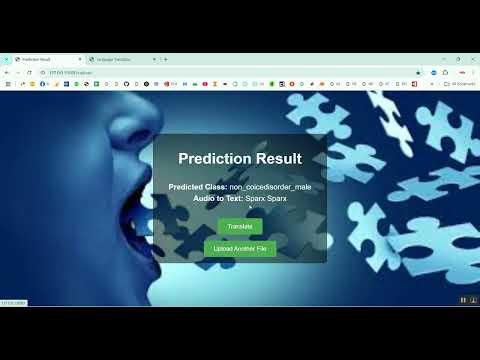
Voice Disorder Prediction using Audio Dataset in Python Projects
Voice Disorder Prediction using Audio Dataset in Python Projects
र 1000
AI & ML Models
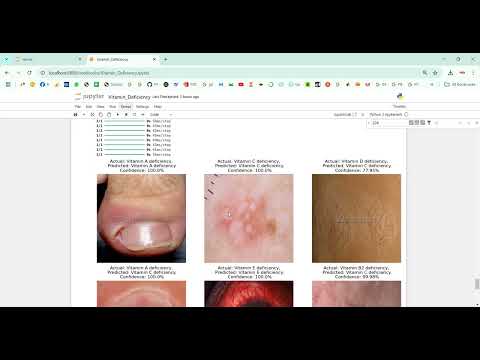
Vitamin Deficiency Detection Using Image Processing in Python Projects
Vitamin Deficiency Detection Using Image Processing in Python Projects
र 1000