AI & ML Models
0.0 (0 reviews) • 0 downloads
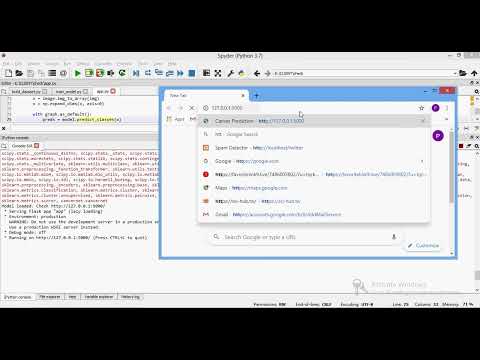
Breast Cancer Detection CNN Train Flask App in Python Projects
र 1000
Breast Cancer Detection CNN Train Flask App in Python Projects
Technical Details
Domain : Python
Database : Sqlite
Tools : Anaconda
Run Tools: VS Code
Database : Sqlite
Tools : Anaconda
Run Tools: VS Code
Secure Payment
Instant Download
GST Invoice
24/7 Support
About This Product
Breast Cancer Detection CNN Train Flask App in Python Projects
Abstract
Breast cancer is one of the most common and life-threatening diseases among women worldwide, and its early detection significantly improves survival rates. Traditional diagnostic methods such as mammography and biopsy require expert interpretation and can be time-consuming. This project, Breast Cancer Detection CNN Train Flask App in Python, aims to provide an automated system that detects breast cancer using Convolutional Neural Networks (CNNs) integrated with a Flask web application for real-time accessibility. The CNN model is trained on breast cancer datasets, where image preprocessing, feature extraction, and classification are performed to differentiate between benign and malignant cases. The trained model is deployed using Flask, allowing users to upload medical images and receive prediction results through an interactive web interface. This solution provides a faster, accurate, and user-friendly diagnostic support system for healthcare applications.
Existing System
Existing breast cancer detection systems rely on manual analysis of mammograms, ultrasounds, and biopsy samples by radiologists. While effective, these methods are often time-intensive, prone to human error, and highly dependent on expert availability. Some machine learning models like Support Vector Machines (SVM) and Random Forests have been used for cancer classification, but they require handcrafted features and do not generalize well to diverse datasets. Moreover, most of the existing automated systems lack a user-friendly deployment interface, limiting their real-world adoption.
Proposed System
The proposed system introduces a deep learning–based CNN model integrated with a Flask web application for breast cancer detection. The pipeline begins with data preprocessing (image normalization, resizing, and augmentation), followed by training a CNN to automatically extract hierarchical features and classify images into benign or malignant categories. Once trained, the CNN model is deployed in a Flask app, where users can upload breast cancer images and instantly receive prediction results. This integration ensures accessibility through a browser-based interface, eliminating the need for technical expertise. Compared to existing systems, the proposed solution provides higher accuracy, real-time usability, reduced dependency on manual diagnosis, and scalability for clinical and educational use.
Abstract
Breast cancer is one of the most common and life-threatening diseases among women worldwide, and its early detection significantly improves survival rates. Traditional diagnostic methods such as mammography and biopsy require expert interpretation and can be time-consuming. This project, Breast Cancer Detection CNN Train Flask App in Python, aims to provide an automated system that detects breast cancer using Convolutional Neural Networks (CNNs) integrated with a Flask web application for real-time accessibility. The CNN model is trained on breast cancer datasets, where image preprocessing, feature extraction, and classification are performed to differentiate between benign and malignant cases. The trained model is deployed using Flask, allowing users to upload medical images and receive prediction results through an interactive web interface. This solution provides a faster, accurate, and user-friendly diagnostic support system for healthcare applications.
Existing System
Existing breast cancer detection systems rely on manual analysis of mammograms, ultrasounds, and biopsy samples by radiologists. While effective, these methods are often time-intensive, prone to human error, and highly dependent on expert availability. Some machine learning models like Support Vector Machines (SVM) and Random Forests have been used for cancer classification, but they require handcrafted features and do not generalize well to diverse datasets. Moreover, most of the existing automated systems lack a user-friendly deployment interface, limiting their real-world adoption.
Proposed System
The proposed system introduces a deep learning–based CNN model integrated with a Flask web application for breast cancer detection. The pipeline begins with data preprocessing (image normalization, resizing, and augmentation), followed by training a CNN to automatically extract hierarchical features and classify images into benign or malignant categories. Once trained, the CNN model is deployed in a Flask app, where users can upload breast cancer images and instantly receive prediction results. This integration ensures accessibility through a browser-based interface, eliminating the need for technical expertise. Compared to existing systems, the proposed solution provides higher accuracy, real-time usability, reduced dependency on manual diagnosis, and scalability for clinical and educational use.
Customer Reviews (0)
No reviews yet. Be the first!
Related Products
⭐ Featured
AI & ML Models
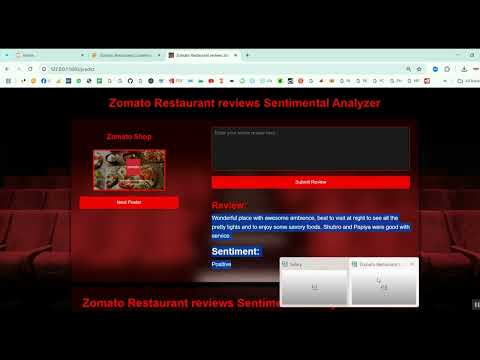
Zomato Restaurant Reviews Sentimental Analyzer in Python Projects
Zomato Restaurant Reviews Sentimental Analyzer in Python Projects
र 1000
⭐ Featured
⭐ Featured
AI & ML Models
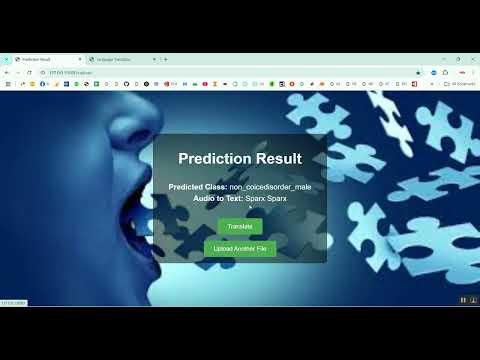
Voice Disorder Prediction using Audio Dataset in Python Projects
Voice Disorder Prediction using Audio Dataset in Python Projects
र 1000
AI & ML Models
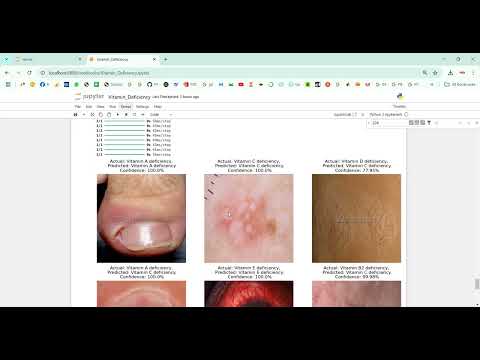
Vitamin Deficiency Detection Using Image Processing in Python Projects
Vitamin Deficiency Detection Using Image Processing in Python Projects
र 1000