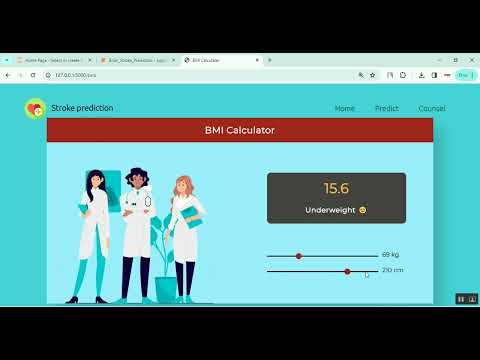
AI & ML Models
0.0 (0 reviews) • 0 downloads
Brain Stock Detection in Python Projects
र 1000
Brain Stock Detection in Python Projects
Technical Details
Domain : Python
Database : Sqlite
Tools : Anaconda
Run Tools: VS Code
Database : Sqlite
Tools : Anaconda
Run Tools: VS Code
Secure Payment
Instant Download
GST Invoice
24/7 Support
About This Product
Brain Stock Detection in Python Projects
Abstract
Stock market prediction is a challenging task due to its highly volatile and non-linear nature. This project presents a Brain Stock Detection System using Python, which leverages Artificial Neural Networks (ANNs) and deep learning techniques inspired by brain-like computation to predict stock price movements and trends. The system analyzes historical stock data, including prices, volume, and technical indicators, to forecast future prices or classify market trends. Python libraries such as Pandas, NumPy, Matplotlib, Scikit-learn, and TensorFlow/Keras are used for data preprocessing, model development, training, evaluation, and visualization. By simulating brain-like learning mechanisms, the system aims to provide more accurate and adaptive stock predictions for traders and investors.
Existing System
Existing stock prediction systems often rely on traditional statistical methods such as ARIMA, moving averages, or linear regression, which fail to capture complex patterns, non-linear relationships, and sudden market fluctuations. Some machine learning approaches like SVM or Random Forest improve prediction accuracy but are limited in modeling temporal dependencies effectively. Moreover, most existing systems focus on single-factor prediction and lack adaptive learning capabilities to respond to sudden market changes. This makes accurate forecasting challenging, and manual analysis continues to dominate trading decisions.
Proposed System
The proposed system introduces a Python-based brain-inspired neural network framework for stock prediction. Historical stock data is preprocessed by normalizing prices, calculating technical indicators (like RSI, MACD, moving averages), and segmenting sequences for temporal modeling. A feedforward ANN, LSTM, or GRU network is trained to capture complex patterns and predict future stock prices or classify market trends (uptrend, downtrend, or stable). Model performance is evaluated using metrics such as Mean Squared Error (MSE), Root Mean Squared Error (RMSE), Mean Absolute Percentage Error (MAPE), and accuracy. Visualization tools display predicted vs actual prices, trend classification, and error analysis. A dashboard using Streamlit or Jupyter Notebook allows users to input stock symbols, view predictions, and monitor trend forecasts. This approach leverages brain-like neural computation for adaptive and accurate stock prediction, supporting data-driven trading decisions.
Abstract
Stock market prediction is a challenging task due to its highly volatile and non-linear nature. This project presents a Brain Stock Detection System using Python, which leverages Artificial Neural Networks (ANNs) and deep learning techniques inspired by brain-like computation to predict stock price movements and trends. The system analyzes historical stock data, including prices, volume, and technical indicators, to forecast future prices or classify market trends. Python libraries such as Pandas, NumPy, Matplotlib, Scikit-learn, and TensorFlow/Keras are used for data preprocessing, model development, training, evaluation, and visualization. By simulating brain-like learning mechanisms, the system aims to provide more accurate and adaptive stock predictions for traders and investors.
Existing System
Existing stock prediction systems often rely on traditional statistical methods such as ARIMA, moving averages, or linear regression, which fail to capture complex patterns, non-linear relationships, and sudden market fluctuations. Some machine learning approaches like SVM or Random Forest improve prediction accuracy but are limited in modeling temporal dependencies effectively. Moreover, most existing systems focus on single-factor prediction and lack adaptive learning capabilities to respond to sudden market changes. This makes accurate forecasting challenging, and manual analysis continues to dominate trading decisions.
Proposed System
The proposed system introduces a Python-based brain-inspired neural network framework for stock prediction. Historical stock data is preprocessed by normalizing prices, calculating technical indicators (like RSI, MACD, moving averages), and segmenting sequences for temporal modeling. A feedforward ANN, LSTM, or GRU network is trained to capture complex patterns and predict future stock prices or classify market trends (uptrend, downtrend, or stable). Model performance is evaluated using metrics such as Mean Squared Error (MSE), Root Mean Squared Error (RMSE), Mean Absolute Percentage Error (MAPE), and accuracy. Visualization tools display predicted vs actual prices, trend classification, and error analysis. A dashboard using Streamlit or Jupyter Notebook allows users to input stock symbols, view predictions, and monitor trend forecasts. This approach leverages brain-like neural computation for adaptive and accurate stock prediction, supporting data-driven trading decisions.
Customer Reviews (0)
No reviews yet. Be the first!
Related Products
⭐ Featured
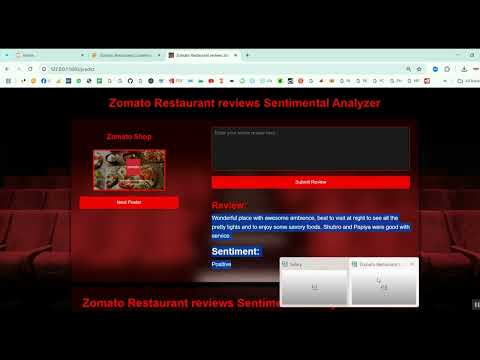
AI & ML Models
Zomato Restaurant Reviews Sentimental Analyzer in Python Projects
Zomato Restaurant Reviews Sentimental Analyzer in Python Projects
र 1000
⭐ Featured
⭐ Featured
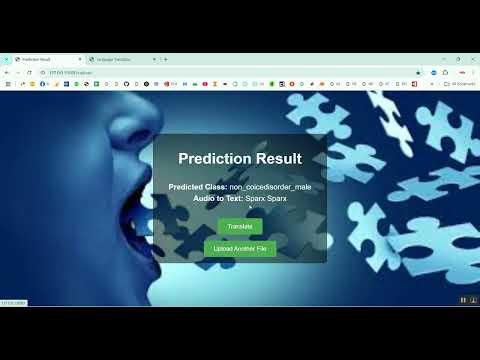
AI & ML Models
Voice Disorder Prediction using Audio Dataset in Python Projects
Voice Disorder Prediction using Audio Dataset in Python Projects
र 1000

AI & ML Models
Vitamin Deficiency Detection Using Image Processing in Python Projects
Vitamin Deficiency Detection Using Image Processing in Python Projects
र 1000