AI & ML Models
0.0 (0 reviews) • 0 downloads
Brain BLSTM in Python Projects
र 1000
Brain BLSTM in Python Projects
Technical Details
Domain : Python
Database : Sqlite
Tools : Anaconda
Run Tools: VS Code
Database : Sqlite
Tools : Anaconda
Run Tools: VS Code
Secure Payment
Instant Download
GST Invoice
24/7 Support
About This Product
Brain BLSTM in Python Projects
Abstract
Understanding brain activity and predicting neurological outcomes are essential for neuroscience research and clinical applications. This project presents a Brain BLSTM (Bidirectional Long Short-Term Memory) System using Python, which leverages deep learning for modeling temporal patterns in brain signals such as EEG or fMRI time-series data. The system captures both forward and backward dependencies in neural activity, improving the accuracy of brain state prediction, anomaly detection, or cognitive load estimation. Python libraries including TensorFlow/Keras, NumPy, Pandas, and Matplotlib are used for preprocessing, model training, evaluation, and visualization. By utilizing BLSTM networks, the system provides enhanced temporal modeling of brain signals, supporting applications in medical diagnostics, brain-computer interfaces, and neuroscience research.
Existing System
Existing brain signal analysis methods often use conventional machine learning techniques such as SVM, Random Forest, or traditional RNNs. While these methods can model temporal data to some extent, they often fail to capture long-range dependencies and bidirectional temporal patterns present in EEG or fMRI data. Manual feature extraction is also commonly required, which is time-consuming and may overlook important temporal relationships. Furthermore, most existing systems are limited to offline analysis and cannot efficiently handle high-dimensional, sequential brain data for real-time prediction or anomaly detection.
Proposed System
The proposed system introduces a Python-based BLSTM framework for brain signal analysis. Brain time-series data, such as EEG recordings or fMRI signals, are preprocessed using filtering, normalization, and segmentation to enhance signal quality. Features are either automatically learned by the BLSTM layers or combined with handcrafted features for improved performance. The BLSTM network models both forward and backward temporal dependencies, enabling more accurate predictions of brain states, detection of abnormalities, or estimation of cognitive metrics. Model performance is evaluated using metrics such as accuracy, precision, recall, F1-score, and mean squared error (MSE), depending on the task. Visualization modules display predicted brain patterns, signal reconstructions, or anomaly scores. A user interface using Streamlit or Jupyter Notebook allows researchers or clinicians to input brain signal data and obtain real-time predictions, making it suitable for neuroscience research, medical diagnostics, and brain-computer interface applications.
Abstract
Understanding brain activity and predicting neurological outcomes are essential for neuroscience research and clinical applications. This project presents a Brain BLSTM (Bidirectional Long Short-Term Memory) System using Python, which leverages deep learning for modeling temporal patterns in brain signals such as EEG or fMRI time-series data. The system captures both forward and backward dependencies in neural activity, improving the accuracy of brain state prediction, anomaly detection, or cognitive load estimation. Python libraries including TensorFlow/Keras, NumPy, Pandas, and Matplotlib are used for preprocessing, model training, evaluation, and visualization. By utilizing BLSTM networks, the system provides enhanced temporal modeling of brain signals, supporting applications in medical diagnostics, brain-computer interfaces, and neuroscience research.
Existing System
Existing brain signal analysis methods often use conventional machine learning techniques such as SVM, Random Forest, or traditional RNNs. While these methods can model temporal data to some extent, they often fail to capture long-range dependencies and bidirectional temporal patterns present in EEG or fMRI data. Manual feature extraction is also commonly required, which is time-consuming and may overlook important temporal relationships. Furthermore, most existing systems are limited to offline analysis and cannot efficiently handle high-dimensional, sequential brain data for real-time prediction or anomaly detection.
Proposed System
The proposed system introduces a Python-based BLSTM framework for brain signal analysis. Brain time-series data, such as EEG recordings or fMRI signals, are preprocessed using filtering, normalization, and segmentation to enhance signal quality. Features are either automatically learned by the BLSTM layers or combined with handcrafted features for improved performance. The BLSTM network models both forward and backward temporal dependencies, enabling more accurate predictions of brain states, detection of abnormalities, or estimation of cognitive metrics. Model performance is evaluated using metrics such as accuracy, precision, recall, F1-score, and mean squared error (MSE), depending on the task. Visualization modules display predicted brain patterns, signal reconstructions, or anomaly scores. A user interface using Streamlit or Jupyter Notebook allows researchers or clinicians to input brain signal data and obtain real-time predictions, making it suitable for neuroscience research, medical diagnostics, and brain-computer interface applications.
Customer Reviews (0)
No reviews yet. Be the first!
Related Products
⭐ Featured

AI & ML Models
Zomato Restaurant Reviews Sentimental Analyzer in Python Projects
Zomato Restaurant Reviews Sentimental Analyzer in Python Projects
र 1000
⭐ Featured
⭐ Featured
AI & ML Models
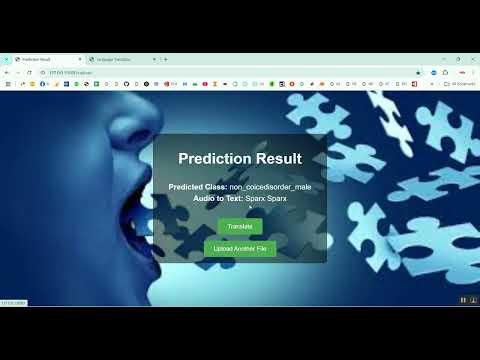
Voice Disorder Prediction using Audio Dataset in Python Projects
Voice Disorder Prediction using Audio Dataset in Python Projects
र 1000

AI & ML Models
Vitamin Deficiency Detection Using Image Processing in Python Projects
Vitamin Deficiency Detection Using Image Processing in Python Projects
र 1000