AI & ML Models
0.0 (0 reviews) • 0 downloads
Biomedical Image Segmentation in Python Projects
र 1000
Biomedical Image Segmentation in Python Projects
Technical Details
Domain : Python
Database : Sqlite
Tools : Anaconda
Run Tools: VS Code
Database : Sqlite
Tools : Anaconda
Run Tools: VS Code
Secure Payment
Instant Download
GST Invoice
24/7 Support
About This Product
Biomedical Image Segmentation in Python Projects
Abstract
Biomedical image segmentation is a critical task in medical imaging, enabling precise identification of organs, tissues, and pathological regions for diagnosis, treatment planning, and research. This project presents a Biomedical Image Segmentation System using Python, which leverages deep learning and image processing techniques to automatically segment medical images such as MRI, CT, and ultrasound scans. The system employs Convolutional Neural Networks (CNNs), particularly U-Net or its variants, to perform pixel-level classification and produce accurate segmentation masks. Python libraries including OpenCV, TensorFlow/Keras, NumPy, Pandas, and Matplotlib are used for preprocessing, model training, evaluation, and visualization. By automating segmentation, the system enhances diagnostic accuracy, reduces manual effort, and provides a scalable solution for clinical and research applications.
Existing System
In existing systems, biomedical image segmentation is often performed manually by radiologists or medical experts, which is time-consuming, labor-intensive, and prone to inter-observer variability. Some automated approaches use traditional image processing techniques like thresholding, edge detection, or region-growing algorithms, but these methods often fail to handle complex, noisy, or low-contrast medical images. Conventional machine learning methods require manual feature extraction, limiting their ability to capture spatial and contextual information. Existing systems typically lack robustness, accuracy, and scalability, especially when dealing with heterogeneous datasets or multi-class segmentation tasks.
Proposed System
The proposed system introduces a Python-based deep learning framework for biomedical image segmentation. Medical images are first preprocessed using normalization, resizing, and data augmentation techniques to improve model generalization. Features are automatically extracted using deep convolutional layers in a U-Net or similar encoder-decoder architecture, which learns to predict pixel-wise segmentation masks for organs, tissues, or lesions. The system is trained and evaluated using metrics such as Dice coefficient, Intersection over Union (IoU), precision, and recall. Python libraries such as TensorFlow/Keras and OpenCV handle model training, prediction, and visualization, while Matplotlib and Seaborn provide plots of segmented regions and performance metrics. A user interface using Streamlit or Flask can be integrated for uploading medical images, visualizing segmentation results, and generating reports. This approach improves accuracy, reduces manual annotation effort, and provides a scalable tool for clinical decision support and biomedical research.
Abstract
Biomedical image segmentation is a critical task in medical imaging, enabling precise identification of organs, tissues, and pathological regions for diagnosis, treatment planning, and research. This project presents a Biomedical Image Segmentation System using Python, which leverages deep learning and image processing techniques to automatically segment medical images such as MRI, CT, and ultrasound scans. The system employs Convolutional Neural Networks (CNNs), particularly U-Net or its variants, to perform pixel-level classification and produce accurate segmentation masks. Python libraries including OpenCV, TensorFlow/Keras, NumPy, Pandas, and Matplotlib are used for preprocessing, model training, evaluation, and visualization. By automating segmentation, the system enhances diagnostic accuracy, reduces manual effort, and provides a scalable solution for clinical and research applications.
Existing System
In existing systems, biomedical image segmentation is often performed manually by radiologists or medical experts, which is time-consuming, labor-intensive, and prone to inter-observer variability. Some automated approaches use traditional image processing techniques like thresholding, edge detection, or region-growing algorithms, but these methods often fail to handle complex, noisy, or low-contrast medical images. Conventional machine learning methods require manual feature extraction, limiting their ability to capture spatial and contextual information. Existing systems typically lack robustness, accuracy, and scalability, especially when dealing with heterogeneous datasets or multi-class segmentation tasks.
Proposed System
The proposed system introduces a Python-based deep learning framework for biomedical image segmentation. Medical images are first preprocessed using normalization, resizing, and data augmentation techniques to improve model generalization. Features are automatically extracted using deep convolutional layers in a U-Net or similar encoder-decoder architecture, which learns to predict pixel-wise segmentation masks for organs, tissues, or lesions. The system is trained and evaluated using metrics such as Dice coefficient, Intersection over Union (IoU), precision, and recall. Python libraries such as TensorFlow/Keras and OpenCV handle model training, prediction, and visualization, while Matplotlib and Seaborn provide plots of segmented regions and performance metrics. A user interface using Streamlit or Flask can be integrated for uploading medical images, visualizing segmentation results, and generating reports. This approach improves accuracy, reduces manual annotation effort, and provides a scalable tool for clinical decision support and biomedical research.
Customer Reviews (0)
No reviews yet. Be the first!
Related Products
⭐ Featured
AI & ML Models
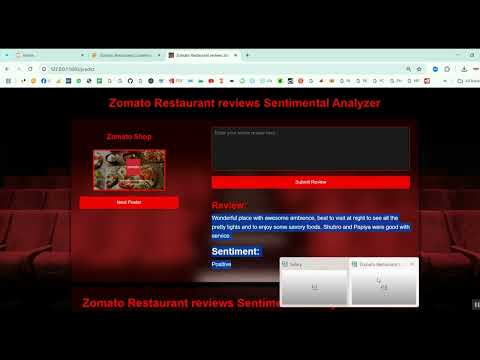
Zomato Restaurant Reviews Sentimental Analyzer in Python Projects
Zomato Restaurant Reviews Sentimental Analyzer in Python Projects
र 1000
⭐ Featured
⭐ Featured
AI & ML Models
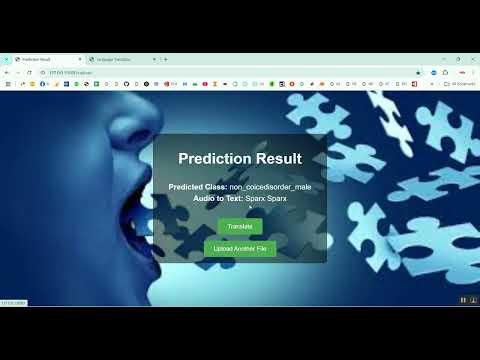
Voice Disorder Prediction using Audio Dataset in Python Projects
Voice Disorder Prediction using Audio Dataset in Python Projects
र 1000
AI & ML Models
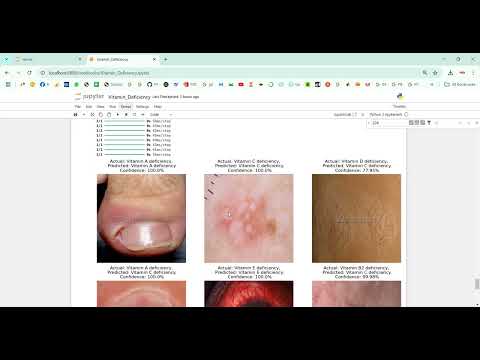
Vitamin Deficiency Detection Using Image Processing in Python Projects
Vitamin Deficiency Detection Using Image Processing in Python Projects
र 1000