AI & ML Models
0.0 (0 reviews) • 0 downloads
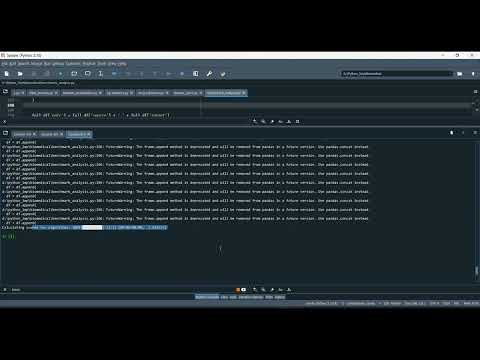
Biomedical Data Analysis in Python Projects
र 1000
Biomedical Data Analysis in Python Projects
Technical Details
Domain : Python
Database : Sqlite
Tools : Anaconda
Run Tools: VS Code
Database : Sqlite
Tools : Anaconda
Run Tools: VS Code
Secure Payment
Instant Download
GST Invoice
24/7 Support
About This Product
Biomedical Data Analysis in Python Projects
Abstract
Biomedical data analysis is one of the most rapidly evolving areas in healthcare, helping researchers and clinicians uncover hidden patterns in biological data for disease detection, diagnosis, and treatment planning. With the growth of biomedical datasets such as genomic sequences, patient records, physiological signals, and medical images, the need for efficient computational methods has increased. This project, Biomedical Data Analysis in Python, aims to build a framework for preprocessing, analyzing, and predicting biomedical outcomes using statistical methods, machine learning, and deep learning. Implemented in Python using libraries like Pandas, NumPy, Scikit-learn, TensorFlow/Keras, Matplotlib, Seaborn, and BioPython, the system supports tasks such as feature extraction, classification, clustering, and visualization. The project demonstrates how computational techniques can provide meaningful medical insights, support clinical decision-making, and contribute to precision medicine.
Existing System
Traditional biomedical analysis relies on manual interpretation, domain-specific statistical tools, or limited proprietary software such as SPSS or MATLAB. While useful for small datasets, these approaches often fail when applied to large-scale biomedical big data. Existing systems typically lack automation and struggle with integrating multi-modal data sources such as combining medical imaging with genetic and clinical data. Moreover, conventional methods are unable to capture the complex nonlinear patterns present in biomedical datasets, leading to reduced predictive power and scalability issues.
Proposed System
The proposed system introduces a Python-based biomedical data analysis framework that leverages both machine learning and deep learning models for improved predictive performance. The process includes data cleaning, normalization, dimensionality reduction, and visualization to handle noisy biomedical datasets. Depending on the application, models such as Random Forest, SVM, Logistic Regression, CNN (for medical images), LSTM (for sequential biomedical signals), and Autoencoders (for anomaly detection) are applied. The system enables integration of multi-modal biomedical data and provides accurate classification, clustering, and prediction results. Compared to existing systems, this approach provides higher scalability, automation, better accuracy, and adaptability to various biomedical domains, making it suitable for both research laboratories and clinical applications.
Abstract
Biomedical data analysis is one of the most rapidly evolving areas in healthcare, helping researchers and clinicians uncover hidden patterns in biological data for disease detection, diagnosis, and treatment planning. With the growth of biomedical datasets such as genomic sequences, patient records, physiological signals, and medical images, the need for efficient computational methods has increased. This project, Biomedical Data Analysis in Python, aims to build a framework for preprocessing, analyzing, and predicting biomedical outcomes using statistical methods, machine learning, and deep learning. Implemented in Python using libraries like Pandas, NumPy, Scikit-learn, TensorFlow/Keras, Matplotlib, Seaborn, and BioPython, the system supports tasks such as feature extraction, classification, clustering, and visualization. The project demonstrates how computational techniques can provide meaningful medical insights, support clinical decision-making, and contribute to precision medicine.
Existing System
Traditional biomedical analysis relies on manual interpretation, domain-specific statistical tools, or limited proprietary software such as SPSS or MATLAB. While useful for small datasets, these approaches often fail when applied to large-scale biomedical big data. Existing systems typically lack automation and struggle with integrating multi-modal data sources such as combining medical imaging with genetic and clinical data. Moreover, conventional methods are unable to capture the complex nonlinear patterns present in biomedical datasets, leading to reduced predictive power and scalability issues.
Proposed System
The proposed system introduces a Python-based biomedical data analysis framework that leverages both machine learning and deep learning models for improved predictive performance. The process includes data cleaning, normalization, dimensionality reduction, and visualization to handle noisy biomedical datasets. Depending on the application, models such as Random Forest, SVM, Logistic Regression, CNN (for medical images), LSTM (for sequential biomedical signals), and Autoencoders (for anomaly detection) are applied. The system enables integration of multi-modal biomedical data and provides accurate classification, clustering, and prediction results. Compared to existing systems, this approach provides higher scalability, automation, better accuracy, and adaptability to various biomedical domains, making it suitable for both research laboratories and clinical applications.
Customer Reviews (0)
No reviews yet. Be the first!
Related Products
⭐ Featured
AI & ML Models
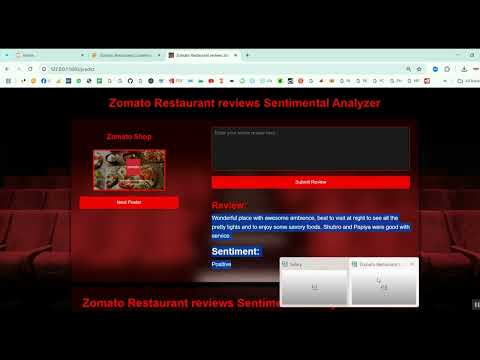
Zomato Restaurant Reviews Sentimental Analyzer in Python Projects
Zomato Restaurant Reviews Sentimental Analyzer in Python Projects
र 1000
⭐ Featured
⭐ Featured
AI & ML Models
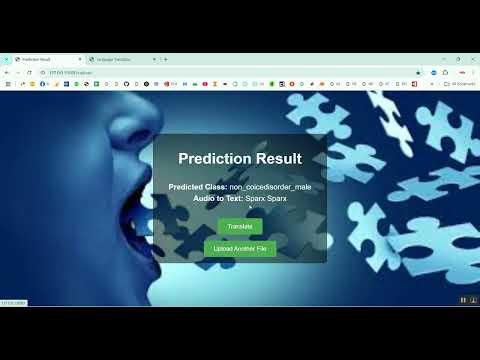
Voice Disorder Prediction using Audio Dataset in Python Projects
Voice Disorder Prediction using Audio Dataset in Python Projects
र 1000
AI & ML Models
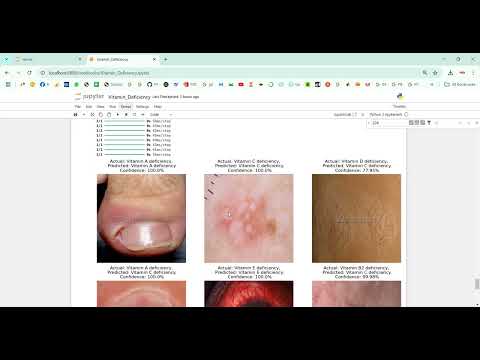
Vitamin Deficiency Detection Using Image Processing in Python Projects
Vitamin Deficiency Detection Using Image Processing in Python Projects
र 1000