AI & ML Models
0.0 (0 reviews) • 0 downloads
Big Data Intrusion Detection CNN Train Analysis in Python Projects
र 1000
Big Data Intrusion Detection CNN Train Analysis in Python Projects
Technical Details
Domain : Python
Database : Sqlite
Tools : Anaconda
Run Tools: VS Code
Database : Sqlite
Tools : Anaconda
Run Tools: VS Code
Secure Payment
Instant Download
GST Invoice
24/7 Support
About This Product
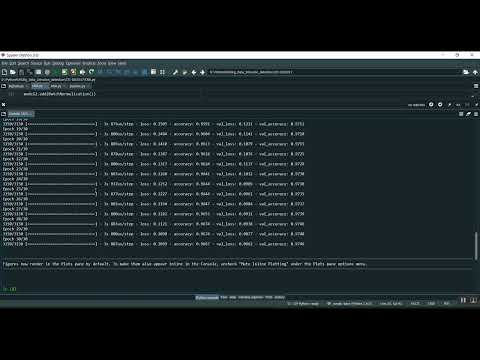
Big Data Intrusion Detection CNN Train Analysis in Python Projects
Abstract
With the rapid growth of digital technologies, cybersecurity threats have become more sophisticated, posing serious risks to organizations and individuals. Traditional intrusion detection systems (IDS) often fail to cope with the volume, velocity, and variety of big data traffic in modern networks. This project, Big Data Intrusion Detection using CNN Train Analysis in Python, aims to design and implement an intelligent IDS framework using Convolutional Neural Networks (CNNs). By training CNN models on large-scale network traffic datasets (such as NSL-KDD, CICIDS2017, or UNSW-NB15), the system learns to identify both known and unknown intrusion patterns. Implemented in Python with libraries such as TensorFlow/Keras, Scikit-learn, Pandas, NumPy, and Matplotlib, the project ensures accurate, scalable, and automated intrusion detection suitable for big data environments.
Existing System
Existing intrusion detection systems primarily rely on signature-based methods or traditional machine learning algorithms (e.g., SVM, Decision Trees, Naïve Bayes). While effective against known threats, these systems struggle to detect zero-day attacks, polymorphic malware, and complex intrusion patterns. Moreover, most traditional systems cannot efficiently process big data traffic generated in real time, resulting in high false positives, scalability issues, and slower response times. These limitations make them inadequate for protecting modern large-scale and dynamic network infrastructures.
Proposed System
The proposed system introduces a CNN-based deep learning model for intrusion detection in big data environments. CNNs excel at extracting spatial and hierarchical patterns from network traffic features, allowing the system to detect both known and novel attacks with high accuracy. The data pipeline includes data preprocessing (feature scaling, dimensionality reduction), CNN training, model evaluation (accuracy, precision, recall, F1-score), and anomaly classification. The system can handle large-scale datasets efficiently, enabling real-time monitoring and detection. Compared to existing methods, this approach provides higher detection accuracy, better adaptability to new attacks, scalability for big data, and reduced false positives, making it a robust solution for modern cybersecurity challenges.
Abstract
With the rapid growth of digital technologies, cybersecurity threats have become more sophisticated, posing serious risks to organizations and individuals. Traditional intrusion detection systems (IDS) often fail to cope with the volume, velocity, and variety of big data traffic in modern networks. This project, Big Data Intrusion Detection using CNN Train Analysis in Python, aims to design and implement an intelligent IDS framework using Convolutional Neural Networks (CNNs). By training CNN models on large-scale network traffic datasets (such as NSL-KDD, CICIDS2017, or UNSW-NB15), the system learns to identify both known and unknown intrusion patterns. Implemented in Python with libraries such as TensorFlow/Keras, Scikit-learn, Pandas, NumPy, and Matplotlib, the project ensures accurate, scalable, and automated intrusion detection suitable for big data environments.
Existing System
Existing intrusion detection systems primarily rely on signature-based methods or traditional machine learning algorithms (e.g., SVM, Decision Trees, Naïve Bayes). While effective against known threats, these systems struggle to detect zero-day attacks, polymorphic malware, and complex intrusion patterns. Moreover, most traditional systems cannot efficiently process big data traffic generated in real time, resulting in high false positives, scalability issues, and slower response times. These limitations make them inadequate for protecting modern large-scale and dynamic network infrastructures.
Proposed System
The proposed system introduces a CNN-based deep learning model for intrusion detection in big data environments. CNNs excel at extracting spatial and hierarchical patterns from network traffic features, allowing the system to detect both known and novel attacks with high accuracy. The data pipeline includes data preprocessing (feature scaling, dimensionality reduction), CNN training, model evaluation (accuracy, precision, recall, F1-score), and anomaly classification. The system can handle large-scale datasets efficiently, enabling real-time monitoring and detection. Compared to existing methods, this approach provides higher detection accuracy, better adaptability to new attacks, scalability for big data, and reduced false positives, making it a robust solution for modern cybersecurity challenges.
Customer Reviews (0)
No reviews yet. Be the first!
Related Products
⭐ Featured

AI & ML Models
Zomato Restaurant Reviews Sentimental Analyzer in Python Projects
Zomato Restaurant Reviews Sentimental Analyzer in Python Projects
र 1000
⭐ Featured

⭐ Featured

AI & ML Models
Voice Disorder Prediction using Audio Dataset in Python Projects
Voice Disorder Prediction using Audio Dataset in Python Projects
र 1000

AI & ML Models
Vitamin Deficiency Detection Using Image Processing in Python Projects
Vitamin Deficiency Detection Using Image Processing in Python Projects
र 1000