Django Projects
0.0 (0 reviews) • 0 downloads
BE Student Open Elective Paper in Django Python
र 1000
BE Student Open Elective Paper in Django Python
Technical Details
Domain : Python
Database : Sqlite
Tools : Anaconda
Run Tools: VS Code
Database : Sqlite
Tools : Anaconda
Run Tools: VS Code
Secure Payment
Instant Download
GST Invoice
24/7 Support
About This Product
BE Student Open Elective Paper in Django Python
Abstract
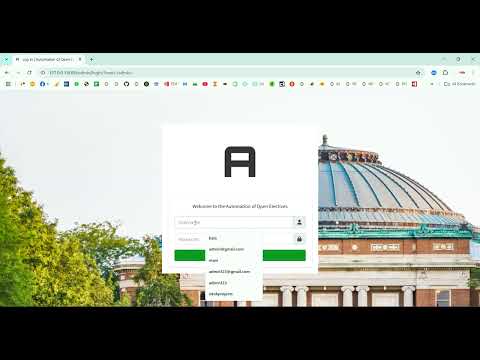
In Bachelor of Engineering (BE) programs, open elective papers allow students to select subjects outside their core discipline, enabling interdisciplinary learning. However, the manual process of managing student registrations, elective availability, and seat allotments often creates inefficiencies and confusion. This project, BE Student Open Elective Paper in Django Python, proposes a web-based application where students can log in, browse available electives, view eligibility, check seat limits, and register online. Faculty and administrators can define electives, manage seat allocations, monitor student enrollments, and generate reports. Built using the Django framework, the system ensures real-time seat tracking, transparent allocation, and automated conflict resolution, providing a fair and efficient way to manage open elective papers in BE courses.
Existing System
The existing system in many universities relies on manual registration forms, spreadsheets, or outdated portals. These methods often lead to errors, delays, and lack of transparency in elective allocation. Students may not be aware of real-time seat availability, resulting in conflicts and unfair distribution when demand exceeds capacity. Administrators and faculty spend excessive time manually updating records, resolving seat conflicts, and preparing reports. Additionally, students receive little clarity about their elective selection until the final confirmation, which delays academic planning.
Proposed System
The proposed system automates the open elective selection process using a Django-powered web platform. Students can log in securely, browse elective papers offered for their semester, check seat availability, and register instantly. The system automatically updates available seats, prevents duplicate registrations, and ensures fair distribution based on rules set by administrators. Faculty members can manage elective offerings, seat capacity, and eligibility criteria, while administrators can track enrollments, generate student-wise and course-wise reports, and handle conflicts automatically. Features like email/SMS notifications, student preference ranking, and real-time dashboards make the process seamless. Compared to the manual approach, the proposed system saves time, reduces workload, enhances transparency, and improves the overall academic experience.
Abstract
In Bachelor of Engineering (BE) programs, open elective papers allow students to select subjects outside their core discipline, enabling interdisciplinary learning. However, the manual process of managing student registrations, elective availability, and seat allotments often creates inefficiencies and confusion. This project, BE Student Open Elective Paper in Django Python, proposes a web-based application where students can log in, browse available electives, view eligibility, check seat limits, and register online. Faculty and administrators can define electives, manage seat allocations, monitor student enrollments, and generate reports. Built using the Django framework, the system ensures real-time seat tracking, transparent allocation, and automated conflict resolution, providing a fair and efficient way to manage open elective papers in BE courses.
Existing System
The existing system in many universities relies on manual registration forms, spreadsheets, or outdated portals. These methods often lead to errors, delays, and lack of transparency in elective allocation. Students may not be aware of real-time seat availability, resulting in conflicts and unfair distribution when demand exceeds capacity. Administrators and faculty spend excessive time manually updating records, resolving seat conflicts, and preparing reports. Additionally, students receive little clarity about their elective selection until the final confirmation, which delays academic planning.
Proposed System
The proposed system automates the open elective selection process using a Django-powered web platform. Students can log in securely, browse elective papers offered for their semester, check seat availability, and register instantly. The system automatically updates available seats, prevents duplicate registrations, and ensures fair distribution based on rules set by administrators. Faculty members can manage elective offerings, seat capacity, and eligibility criteria, while administrators can track enrollments, generate student-wise and course-wise reports, and handle conflicts automatically. Features like email/SMS notifications, student preference ranking, and real-time dashboards make the process seamless. Compared to the manual approach, the proposed system saves time, reduces workload, enhances transparency, and improves the overall academic experience.
Customer Reviews (0)
No reviews yet. Be the first!
Related Products
⭐ Featured
⭐ Featured
Django Projects
Music Event Booking App in Django Python
Music Event Booking App in Django Python
र 1000
⭐ Featured
Django Projects
Multi Server Management System in Django Python
Multi Server Management System in Django Python
र 1000
⭐ Featured

Django Projects
Multi Authority Access Control in Django Python
Multi Authority Access Control in Django Python
र 1000