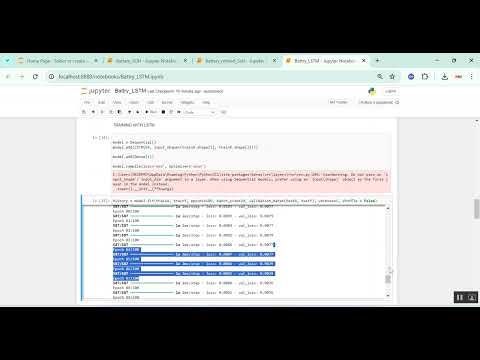
AI & ML Models
0.0 (0 reviews) • 0 downloads
Battery Management in Python Projects
र 1000
Battery Management in Python Projects
Technical Details
Domain : Python
Database : Sqlite
Tools : Anaconda
Run Tools: VS Code
Database : Sqlite
Tools : Anaconda
Run Tools: VS Code
Secure Payment
Instant Download
GST Invoice
24/7 Support
About This Product
Battery Management in Python Projects
Abstract
Efficient battery management is crucial for extending battery life, ensuring safety, and optimizing energy usage in applications ranging from electric vehicles to renewable energy storage. This project presents a Battery Management System (BMS) using Python, which monitors battery parameters such as voltage, current, temperature, and state of charge (SOC) to provide real-time analysis and predictive insights. The system leverages data-driven algorithms and machine learning models to estimate battery health, predict remaining useful life, and optimize charging and discharging cycles. Python libraries such as Pandas, NumPy, Matplotlib, Scikit-learn, and TensorFlow/Keras are used for data handling, visualization, modeling, and simulation. By enabling automated monitoring and intelligent decision-making, the system improves battery performance, safety, and longevity.
Existing System
In existing battery management systems, monitoring is often performed using simple threshold-based controllers or hardware circuits that track battery voltage and current. These systems can alert users to overcharging, over-discharging, or overheating but lack predictive capabilities and advanced analytics. Traditional BMS solutions are usually proprietary, inflexible, and limited to basic monitoring without providing data-driven insights into battery degradation or life expectancy. Additionally, manual analysis or static monitoring methods cannot adapt to dynamic usage patterns, which reduces efficiency and may result in premature battery failure or reduced performance over time.
Proposed System
The proposed system introduces a Python-based intelligent battery management framework that collects real-time data from battery sensors or datasets. The system preprocesses voltage, current, and temperature readings, and calculates derived metrics like SOC, state of health (SOH), and charge/discharge efficiency. Machine learning algorithms such as Random Forest, Support Vector Regression (SVR), or LSTM networks are applied to predict battery degradation trends, estimate remaining useful life, and optimize charging strategies. Visualization modules using Matplotlib and Seaborn provide interactive plots of battery parameters, alert thresholds, and predictive insights. Optionally, the system can integrate a dashboard using Streamlit or Flask, enabling users to monitor batteries remotely, receive automated alerts, and analyze historical data for better decision-making. This approach enhances battery performance, prevents failures, and enables predictive maintenance, making it suitable for electric vehicles, renewable energy systems, and industrial applications.
Abstract
Efficient battery management is crucial for extending battery life, ensuring safety, and optimizing energy usage in applications ranging from electric vehicles to renewable energy storage. This project presents a Battery Management System (BMS) using Python, which monitors battery parameters such as voltage, current, temperature, and state of charge (SOC) to provide real-time analysis and predictive insights. The system leverages data-driven algorithms and machine learning models to estimate battery health, predict remaining useful life, and optimize charging and discharging cycles. Python libraries such as Pandas, NumPy, Matplotlib, Scikit-learn, and TensorFlow/Keras are used for data handling, visualization, modeling, and simulation. By enabling automated monitoring and intelligent decision-making, the system improves battery performance, safety, and longevity.
Existing System
In existing battery management systems, monitoring is often performed using simple threshold-based controllers or hardware circuits that track battery voltage and current. These systems can alert users to overcharging, over-discharging, or overheating but lack predictive capabilities and advanced analytics. Traditional BMS solutions are usually proprietary, inflexible, and limited to basic monitoring without providing data-driven insights into battery degradation or life expectancy. Additionally, manual analysis or static monitoring methods cannot adapt to dynamic usage patterns, which reduces efficiency and may result in premature battery failure or reduced performance over time.
Proposed System
The proposed system introduces a Python-based intelligent battery management framework that collects real-time data from battery sensors or datasets. The system preprocesses voltage, current, and temperature readings, and calculates derived metrics like SOC, state of health (SOH), and charge/discharge efficiency. Machine learning algorithms such as Random Forest, Support Vector Regression (SVR), or LSTM networks are applied to predict battery degradation trends, estimate remaining useful life, and optimize charging strategies. Visualization modules using Matplotlib and Seaborn provide interactive plots of battery parameters, alert thresholds, and predictive insights. Optionally, the system can integrate a dashboard using Streamlit or Flask, enabling users to monitor batteries remotely, receive automated alerts, and analyze historical data for better decision-making. This approach enhances battery performance, prevents failures, and enables predictive maintenance, making it suitable for electric vehicles, renewable energy systems, and industrial applications.
Customer Reviews (0)
No reviews yet. Be the first!
Related Products
⭐ Featured
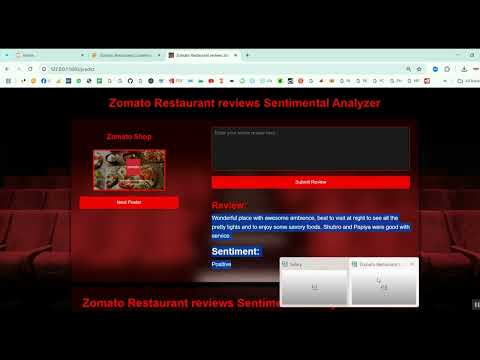
AI & ML Models
Zomato Restaurant Reviews Sentimental Analyzer in Python Projects
Zomato Restaurant Reviews Sentimental Analyzer in Python Projects
र 1000
⭐ Featured
⭐ Featured
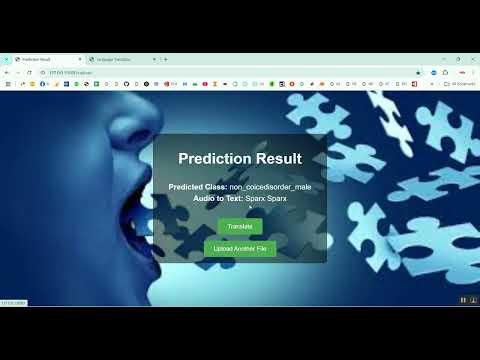
AI & ML Models
Voice Disorder Prediction using Audio Dataset in Python Projects
Voice Disorder Prediction using Audio Dataset in Python Projects
र 1000
AI & ML Models
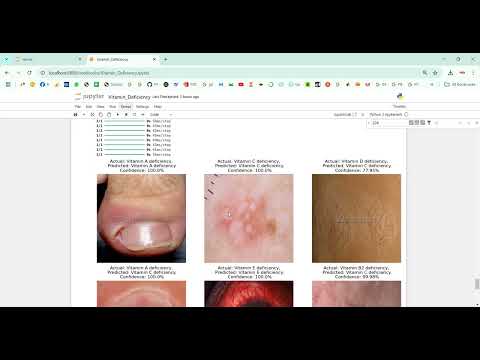
Vitamin Deficiency Detection Using Image Processing in Python Projects
Vitamin Deficiency Detection Using Image Processing in Python Projects
र 1000