AI & ML Models
0.0 (0 reviews) • 0 downloads
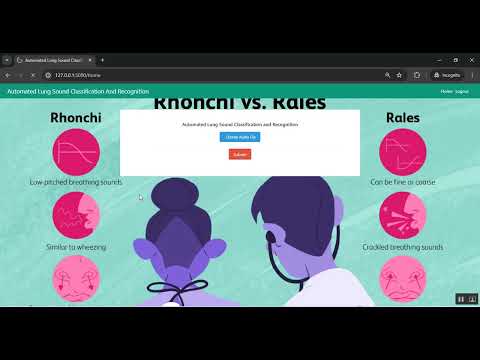
Automated Lung Sound Classification in Python Projects
र 1000
Automated Lung Sound Classification in Python Projects
Technical Details
Domain : Python
Database : Sqlite
Tools : Anaconda
Run Tools: VS Code
Database : Sqlite
Tools : Anaconda
Run Tools: VS Code
Secure Payment
Instant Download
GST Invoice
24/7 Support
About This Product
Automated Lung Sound Classification in Python Projects
Abstract
Respiratory diseases such as pneumonia, asthma, and chronic obstructive pulmonary disease (COPD) can be diagnosed through analysis of lung sounds, including wheezes, crackles, and normal breathing patterns. This project presents an Automated Lung Sound Classification System using Python, which leverages signal processing and machine learning techniques to classify lung sounds recorded via stethoscopes or digital sensors. Audio signals are preprocessed using filtering, segmentation, and feature extraction techniques like Mel-Frequency Cepstral Coefficients (MFCCs), spectral features, and wavelet transforms. Machine learning models, including Random Forest, Support Vector Machines (SVM), and Convolutional Neural Networks (CNNs), are trained to distinguish between normal and pathological lung sounds. Python libraries such as Librosa, NumPy, Pandas, Scikit-learn, and TensorFlow/Keras are used for preprocessing, modeling, and evaluation. The system provides a fast, accurate, and non-invasive diagnostic aid, supporting healthcare professionals in early detection and monitoring of respiratory disorders.
Existing System
In the existing system, lung sound analysis is primarily performed manually by clinicians using stethoscopes, which is highly dependent on the experience and skill of the healthcare professional. Traditional computer-aided methods rely on simple statistical analysis or handcrafted features for classification, which may not capture the complex patterns in lung sounds. Many existing automated systems are limited to binary classification (normal vs abnormal) and cannot accurately distinguish among multiple types of respiratory disorders. Additionally, most systems lack scalability, real-time processing, and integration with user-friendly interfaces, making them less practical for large-scale clinical deployment.
Proposed System
The proposed system introduces a Python-based automated lung sound classification framework that combines advanced signal processing and machine learning techniques. Recorded lung sounds are preprocessed to remove noise and segment breathing cycles. Features such as MFCCs, spectral roll-off, zero-crossing rate, and wavelet coefficients are extracted to represent the audio signals effectively. These features are fed into machine learning models like CNNs or hybrid models (CNN + LSTM) to classify lung sounds into multiple categories: normal, wheeze, crackle, or other abnormal patterns. The system is implemented using Python libraries including Librosa for audio processing, TensorFlow/Keras for deep learning, and Scikit-learn for classical machine learning models. A simple user interface can be developed using Streamlit or Tkinter, allowing healthcare providers to upload audio files, view real-time classification results, and visualize relevant features. This approach enhances diagnostic accuracy, reduces dependence on expert clinicians, and provides a scalable, non-invasive tool for monitoring respiratory health.
Abstract
Respiratory diseases such as pneumonia, asthma, and chronic obstructive pulmonary disease (COPD) can be diagnosed through analysis of lung sounds, including wheezes, crackles, and normal breathing patterns. This project presents an Automated Lung Sound Classification System using Python, which leverages signal processing and machine learning techniques to classify lung sounds recorded via stethoscopes or digital sensors. Audio signals are preprocessed using filtering, segmentation, and feature extraction techniques like Mel-Frequency Cepstral Coefficients (MFCCs), spectral features, and wavelet transforms. Machine learning models, including Random Forest, Support Vector Machines (SVM), and Convolutional Neural Networks (CNNs), are trained to distinguish between normal and pathological lung sounds. Python libraries such as Librosa, NumPy, Pandas, Scikit-learn, and TensorFlow/Keras are used for preprocessing, modeling, and evaluation. The system provides a fast, accurate, and non-invasive diagnostic aid, supporting healthcare professionals in early detection and monitoring of respiratory disorders.
Existing System
In the existing system, lung sound analysis is primarily performed manually by clinicians using stethoscopes, which is highly dependent on the experience and skill of the healthcare professional. Traditional computer-aided methods rely on simple statistical analysis or handcrafted features for classification, which may not capture the complex patterns in lung sounds. Many existing automated systems are limited to binary classification (normal vs abnormal) and cannot accurately distinguish among multiple types of respiratory disorders. Additionally, most systems lack scalability, real-time processing, and integration with user-friendly interfaces, making them less practical for large-scale clinical deployment.
Proposed System
The proposed system introduces a Python-based automated lung sound classification framework that combines advanced signal processing and machine learning techniques. Recorded lung sounds are preprocessed to remove noise and segment breathing cycles. Features such as MFCCs, spectral roll-off, zero-crossing rate, and wavelet coefficients are extracted to represent the audio signals effectively. These features are fed into machine learning models like CNNs or hybrid models (CNN + LSTM) to classify lung sounds into multiple categories: normal, wheeze, crackle, or other abnormal patterns. The system is implemented using Python libraries including Librosa for audio processing, TensorFlow/Keras for deep learning, and Scikit-learn for classical machine learning models. A simple user interface can be developed using Streamlit or Tkinter, allowing healthcare providers to upload audio files, view real-time classification results, and visualize relevant features. This approach enhances diagnostic accuracy, reduces dependence on expert clinicians, and provides a scalable, non-invasive tool for monitoring respiratory health.
Customer Reviews (0)
No reviews yet. Be the first!
Related Products
⭐ Featured
AI & ML Models
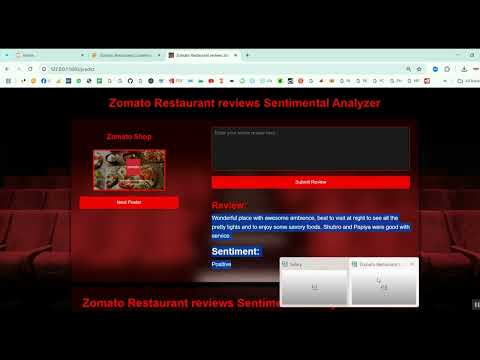
Zomato Restaurant Reviews Sentimental Analyzer in Python Projects
Zomato Restaurant Reviews Sentimental Analyzer in Python Projects
र 1000
⭐ Featured
⭐ Featured
AI & ML Models
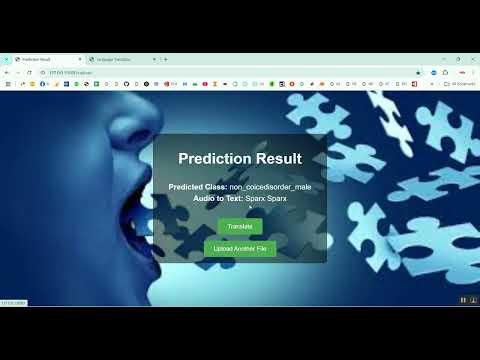
Voice Disorder Prediction using Audio Dataset in Python Projects
Voice Disorder Prediction using Audio Dataset in Python Projects
र 1000
AI & ML Models
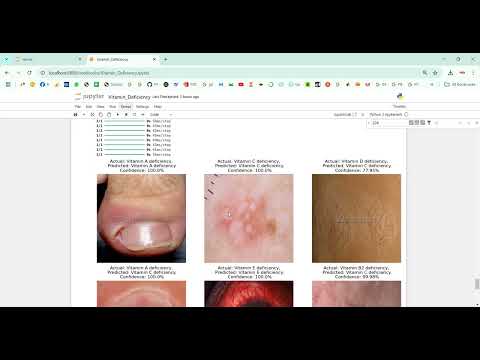
Vitamin Deficiency Detection Using Image Processing in Python Projects
Vitamin Deficiency Detection Using Image Processing in Python Projects
र 1000