AI & ML Models
0.0 (0 reviews) • 0 downloads
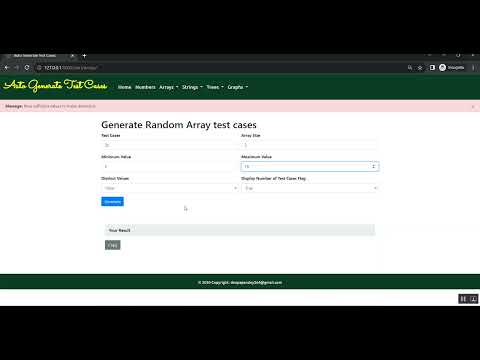
Auto Generative Test Case in Python Projects
र 1000
Auto Generative Test Case in Python Projects
Technical Details
Domain : Python
Database : Sqlite
Tools : Anaconda
Run Tools: VS Code
Database : Sqlite
Tools : Anaconda
Run Tools: VS Code
Secure Payment
Instant Download
GST Invoice
24/7 Support
About This Product
Auto Generative Test Case in Python Projects
Abstract
Software testing is a critical phase of the development life cycle, ensuring that applications function as expected and meet quality standards. However, manual test case design is often time-consuming, repetitive, and prone to human error. This project, Auto Generative Test Case in Python, introduces a framework that automatically generates test cases for software applications using predefined requirements, code analysis, or input/output mappings. By leveraging machine learning, natural language processing (NLP), and rule-based methods, the system generates functional and unit test cases dynamically. Implemented in Python with libraries such as PyTest, Unittest, Pandas, and Scikit-learn, this system helps developers improve testing efficiency, maximize coverage, and reduce manual effort in software testing.
Existing System
The existing testing environment largely depends on manual test case creation and execution. While tools like JUnit, Selenium, and PyTest exist, they still require testers to write test cases manually based on specifications or source code. Some advanced systems use script-based automation, but they are limited to repetitive tasks and cannot generate new test cases intelligently. These methods suffer from incomplete coverage, higher costs, and longer testing cycles, and they fail to adapt to frequent changes in software requirements.
Proposed System
The proposed system introduces an auto-generative test case framework that leverages Python-based analysis techniques to automate the process. Using requirement documents, source code parsing, and user-defined rules, the system dynamically generates test cases. Machine learning models can be integrated to predict missing test cases, while NLP techniques can convert natural language requirements into structured test scenarios. The framework executes the generated test cases using PyTest or Unittest, evaluates the outputs, and generates detailed reports. Compared to existing systems, this approach offers higher coverage, adaptability to requirement changes, reduced manual effort, and intelligent test generation, ultimately improving software quality and reducing development time.
Abstract
Software testing is a critical phase of the development life cycle, ensuring that applications function as expected and meet quality standards. However, manual test case design is often time-consuming, repetitive, and prone to human error. This project, Auto Generative Test Case in Python, introduces a framework that automatically generates test cases for software applications using predefined requirements, code analysis, or input/output mappings. By leveraging machine learning, natural language processing (NLP), and rule-based methods, the system generates functional and unit test cases dynamically. Implemented in Python with libraries such as PyTest, Unittest, Pandas, and Scikit-learn, this system helps developers improve testing efficiency, maximize coverage, and reduce manual effort in software testing.
Existing System
The existing testing environment largely depends on manual test case creation and execution. While tools like JUnit, Selenium, and PyTest exist, they still require testers to write test cases manually based on specifications or source code. Some advanced systems use script-based automation, but they are limited to repetitive tasks and cannot generate new test cases intelligently. These methods suffer from incomplete coverage, higher costs, and longer testing cycles, and they fail to adapt to frequent changes in software requirements.
Proposed System
The proposed system introduces an auto-generative test case framework that leverages Python-based analysis techniques to automate the process. Using requirement documents, source code parsing, and user-defined rules, the system dynamically generates test cases. Machine learning models can be integrated to predict missing test cases, while NLP techniques can convert natural language requirements into structured test scenarios. The framework executes the generated test cases using PyTest or Unittest, evaluates the outputs, and generates detailed reports. Compared to existing systems, this approach offers higher coverage, adaptability to requirement changes, reduced manual effort, and intelligent test generation, ultimately improving software quality and reducing development time.
Customer Reviews (0)
No reviews yet. Be the first!
Related Products
⭐ Featured

AI & ML Models
Zomato Restaurant Reviews Sentimental Analyzer in Python Projects
Zomato Restaurant Reviews Sentimental Analyzer in Python Projects
र 1000
⭐ Featured
⭐ Featured
AI & ML Models
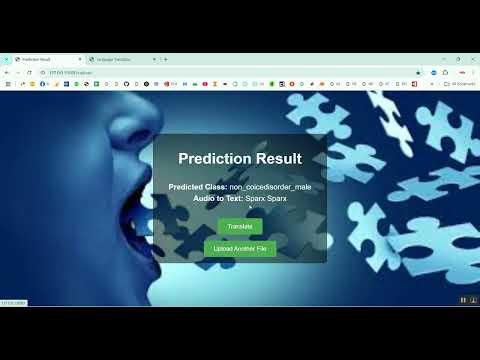
Voice Disorder Prediction using Audio Dataset in Python Projects
Voice Disorder Prediction using Audio Dataset in Python Projects
र 1000
AI & ML Models
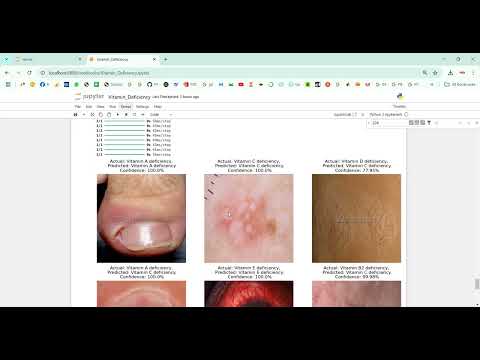
Vitamin Deficiency Detection Using Image Processing in Python Projects
Vitamin Deficiency Detection Using Image Processing in Python Projects
र 1000