AI & ML Models
0.0 (0 reviews) • 0 downloads
Audio to Sign Language in Python Projects
र 1000
Audio to Sign Language in Python Projects
Technical Details
Domain : Python
Database : Sqlite
Tools : Anaconda
Run Tools: VS Code
Database : Sqlite
Tools : Anaconda
Run Tools: VS Code
Secure Payment
Instant Download
GST Invoice
24/7 Support
About This Product
Audio to Sign Language in Python Projects
Abstract
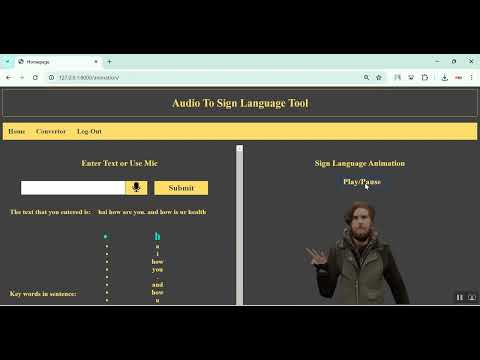
Communication barriers between hearing-impaired individuals and the general public pose significant challenges in daily life. This project presents an Audio to Sign Language Conversion System using Python, which translates spoken language into corresponding sign language gestures in real-time. The system captures audio input, performs speech recognition to convert it into text, and then maps the text to pre-defined sign language gestures using image sequences or animated avatars. Python libraries such as SpeechRecognition, PyAudio, OpenCV, Mediapipe, and TensorFlow/Keras are used for audio processing, gesture recognition, and animation. By enabling real-time audio-to-sign translation, this system facilitates effective communication for hearing-impaired users, making interactions more inclusive and accessible.
Existing System
In existing systems, communication with hearing-impaired individuals often relies on manual interpretation by sign language experts or the use of pre-recorded video dictionaries. These approaches are limited in scalability and cannot handle real-time conversation efficiently. Some mobile or desktop applications perform speech-to-text conversion, but they do not provide a direct translation to sign language gestures. Additionally, existing solutions may lack interactivity, gesture accuracy, or multilingual support, making them less effective for spontaneous communication. Real-time translation systems are often computationally intensive and require sophisticated hardware, which limits accessibility for everyday users.
Proposed System
The proposed system introduces a Python-based real-time audio-to-sign language conversion platform. Spoken audio is captured using a microphone and processed using speech recognition libraries to extract text. Natural Language Processing (NLP) techniques are applied to parse and tokenize the text, and a mapping module converts each word or phrase into corresponding sign language gestures. Gestures are represented using either animated avatars, images, or hand pose estimation models generated with Mediapipe and OpenCV. The system can support multiple sign language datasets and provides a visual interface for real-time feedback. By integrating audio processing, NLP, and gesture visualization in Python, the system enables seamless, interactive, and accessible communication for hearing-impaired individuals, improving inclusivity and social interaction.
Abstract
Communication barriers between hearing-impaired individuals and the general public pose significant challenges in daily life. This project presents an Audio to Sign Language Conversion System using Python, which translates spoken language into corresponding sign language gestures in real-time. The system captures audio input, performs speech recognition to convert it into text, and then maps the text to pre-defined sign language gestures using image sequences or animated avatars. Python libraries such as SpeechRecognition, PyAudio, OpenCV, Mediapipe, and TensorFlow/Keras are used for audio processing, gesture recognition, and animation. By enabling real-time audio-to-sign translation, this system facilitates effective communication for hearing-impaired users, making interactions more inclusive and accessible.
Existing System
In existing systems, communication with hearing-impaired individuals often relies on manual interpretation by sign language experts or the use of pre-recorded video dictionaries. These approaches are limited in scalability and cannot handle real-time conversation efficiently. Some mobile or desktop applications perform speech-to-text conversion, but they do not provide a direct translation to sign language gestures. Additionally, existing solutions may lack interactivity, gesture accuracy, or multilingual support, making them less effective for spontaneous communication. Real-time translation systems are often computationally intensive and require sophisticated hardware, which limits accessibility for everyday users.
Proposed System
The proposed system introduces a Python-based real-time audio-to-sign language conversion platform. Spoken audio is captured using a microphone and processed using speech recognition libraries to extract text. Natural Language Processing (NLP) techniques are applied to parse and tokenize the text, and a mapping module converts each word or phrase into corresponding sign language gestures. Gestures are represented using either animated avatars, images, or hand pose estimation models generated with Mediapipe and OpenCV. The system can support multiple sign language datasets and provides a visual interface for real-time feedback. By integrating audio processing, NLP, and gesture visualization in Python, the system enables seamless, interactive, and accessible communication for hearing-impaired individuals, improving inclusivity and social interaction.
Customer Reviews (0)
No reviews yet. Be the first!
Related Products
⭐ Featured
AI & ML Models
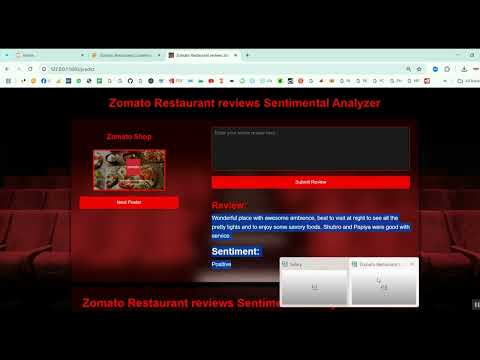
Zomato Restaurant Reviews Sentimental Analyzer in Python Projects
Zomato Restaurant Reviews Sentimental Analyzer in Python Projects
र 1000
⭐ Featured
⭐ Featured
AI & ML Models
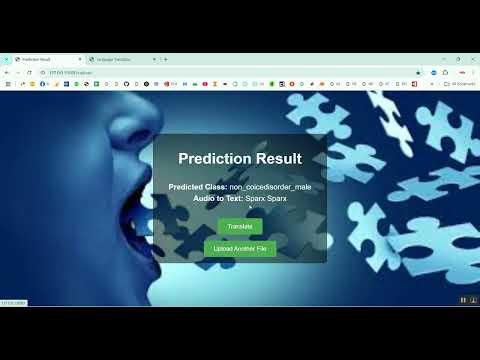
Voice Disorder Prediction using Audio Dataset in Python Projects
Voice Disorder Prediction using Audio Dataset in Python Projects
र 1000
AI & ML Models
Vitamin Deficiency Detection Using Image Processing in Python Projects
Vitamin Deficiency Detection Using Image Processing in Python Projects
र 1000