AI & ML Models
0.0 (0 reviews) • 0 downloads
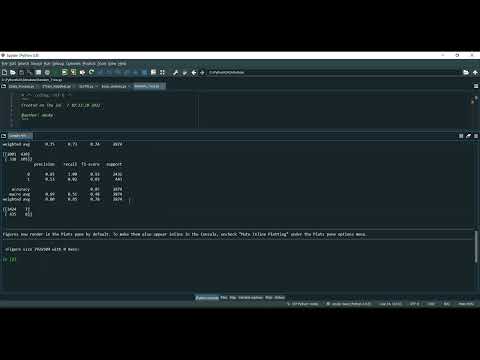
Attribute Based Business Model LSTM Train Analysis in Python Projects
र 1000
Attribute Based Business Model LSTM Train Analysis in Python Projects
Technical Details
Domain : Python
Database : Sqlite
Tools : Anaconda
Run Tools: VS Code
Database : Sqlite
Tools : Anaconda
Run Tools: VS Code
Secure Payment
Instant Download
GST Invoice
24/7 Support
About This Product
Attribute Based Business Model LSTM Train Analysis in Python Projects
Abstract
Business models often rely on analyzing multiple attributes such as sales, pricing, customer behavior, and product demand to make informed decisions. Traditional forecasting approaches struggle to capture the temporal dependencies in sequential business data, which limits their prediction accuracy. This project, Attribute-Based Business Model Analysis using LSTM in Python, develops a Long Short-Term Memory (LSTM)–based prediction system to analyze business attributes and forecast future outcomes. By training the LSTM on historical business datasets containing features like revenue, product demand, marketing spend, and customer engagement, the system can identify hidden patterns and generate accurate predictions. Implemented in Python using TensorFlow/Keras, Pandas, NumPy, and Matplotlib, the project provides a powerful tool for attribute-driven business intelligence and decision support.
Existing System
Existing business analysis systems rely largely on statistical forecasting methods such as ARIMA, regression, and moving averages. While effective for short-term or linear trends, these models fail to capture complex dependencies and nonlinear relationships in attribute-based business data. Machine learning approaches such as decision trees or random forests have been applied, but they require handcrafted feature engineering and cannot efficiently process sequential time-series data. Moreover, most current systems focus on single-variable analysis (e.g., sales alone) instead of integrating multiple business attributes, leading to incomplete insights and limited decision-making capabilities.
Proposed System
The proposed system introduces an LSTM-based deep learning model that considers multiple business attributes for accurate forecasting and analysis. Data is preprocessed through normalization, missing value handling, and feature selection to ensure high-quality input. The LSTM network is trained on sequences of business data, learning temporal dependencies and long-term patterns across attributes. This allows the model to predict outcomes such as future sales, customer demand, or profitability more accurately. Visualization techniques are incorporated to display attribute correlations and forecasted results. Compared to existing systems, this approach provides better accuracy, robustness, and adaptability, while enabling multi-attribute business analysis for real-world decision-making in finance, retail, and supply chain management.
Abstract
Business models often rely on analyzing multiple attributes such as sales, pricing, customer behavior, and product demand to make informed decisions. Traditional forecasting approaches struggle to capture the temporal dependencies in sequential business data, which limits their prediction accuracy. This project, Attribute-Based Business Model Analysis using LSTM in Python, develops a Long Short-Term Memory (LSTM)–based prediction system to analyze business attributes and forecast future outcomes. By training the LSTM on historical business datasets containing features like revenue, product demand, marketing spend, and customer engagement, the system can identify hidden patterns and generate accurate predictions. Implemented in Python using TensorFlow/Keras, Pandas, NumPy, and Matplotlib, the project provides a powerful tool for attribute-driven business intelligence and decision support.
Existing System
Existing business analysis systems rely largely on statistical forecasting methods such as ARIMA, regression, and moving averages. While effective for short-term or linear trends, these models fail to capture complex dependencies and nonlinear relationships in attribute-based business data. Machine learning approaches such as decision trees or random forests have been applied, but they require handcrafted feature engineering and cannot efficiently process sequential time-series data. Moreover, most current systems focus on single-variable analysis (e.g., sales alone) instead of integrating multiple business attributes, leading to incomplete insights and limited decision-making capabilities.
Proposed System
The proposed system introduces an LSTM-based deep learning model that considers multiple business attributes for accurate forecasting and analysis. Data is preprocessed through normalization, missing value handling, and feature selection to ensure high-quality input. The LSTM network is trained on sequences of business data, learning temporal dependencies and long-term patterns across attributes. This allows the model to predict outcomes such as future sales, customer demand, or profitability more accurately. Visualization techniques are incorporated to display attribute correlations and forecasted results. Compared to existing systems, this approach provides better accuracy, robustness, and adaptability, while enabling multi-attribute business analysis for real-world decision-making in finance, retail, and supply chain management.
Customer Reviews (0)
No reviews yet. Be the first!
Related Products
⭐ Featured
AI & ML Models
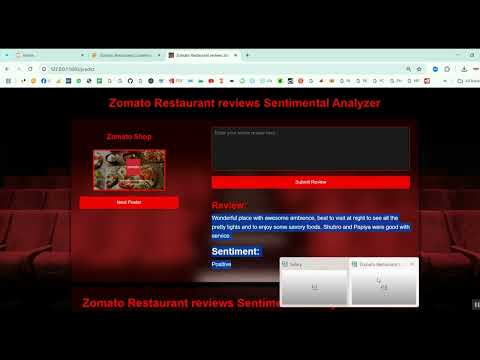
Zomato Restaurant Reviews Sentimental Analyzer in Python Projects
Zomato Restaurant Reviews Sentimental Analyzer in Python Projects
र 1000
⭐ Featured
⭐ Featured
AI & ML Models
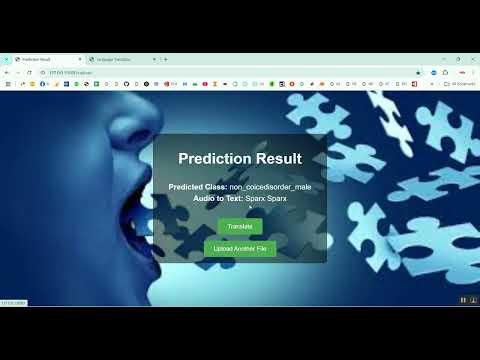
Voice Disorder Prediction using Audio Dataset in Python Projects
Voice Disorder Prediction using Audio Dataset in Python Projects
र 1000

AI & ML Models
Vitamin Deficiency Detection Using Image Processing in Python Projects
Vitamin Deficiency Detection Using Image Processing in Python Projects
र 1000