AI & ML Models
0.0 (0 reviews) • 0 downloads
Aspect Extraction from Online Text in Python Projects
र 1000
Aspect Extraction from Online Text in Python Projects
Technical Details
Domain : Python
Database : Sqlite
Tools : Anaconda
Run Tools: VS Code
Database : Sqlite
Tools : Anaconda
Run Tools: VS Code
Secure Payment
Instant Download
GST Invoice
24/7 Support
About This Product
Aspect Extraction from Online Text in Python Projects
Abstract
Aspect extraction is a key task in sentiment analysis and opinion mining, where the goal is to identify specific attributes or features of products, services, or topics mentioned in online text. This project presents an Aspect Extraction System using Python, which analyzes reviews, social media posts, or forums to automatically extract relevant aspects and classify sentiments associated with them. The system leverages natural language processing (NLP) techniques such as tokenization, part-of-speech tagging, dependency parsing, and named entity recognition. Machine learning models like Conditional Random Fields (CRF), LSTM, or BERT-based models are employed for accurate aspect identification. Python libraries including NLTK, SpaCy, Transformers, Pandas, and Scikit-learn are used for preprocessing, modeling, and evaluation. The system provides structured insights from unstructured online text, helping businesses, researchers, and analysts understand user opinions and improve decision-making.
Existing System
In existing systems, aspect extraction is performed manually or using basic rule-based methods that rely on keyword matching, lexicons, or simple pattern recognition. These approaches often fail to handle the complexity and variability of natural language, such as synonyms, context-dependent meanings, and implicit aspects. Many traditional methods cannot capture long-range dependencies or semantic nuances, resulting in low accuracy for large-scale online reviews. Furthermore, most existing systems do not integrate modern NLP techniques like deep learning-based contextual embeddings, limiting their ability to extract aspects from diverse and dynamic online content efficiently. Consequently, businesses and analysts often miss key insights from customer opinions.
Proposed System
The proposed system introduces a Python-based aspect extraction framework that leverages advanced NLP and deep learning techniques to identify aspects in online text automatically. The system preprocesses text data using tokenization, stopword removal, lemmatization, and POS tagging. Contextual embeddings are generated using models like BERT or RoBERTa, which capture semantic meaning and context. These embeddings are fed into a sequence labeling model (e.g., LSTM-CRF) to detect aspects and their associated sentiments. Extracted aspects are visualized using word clouds, bar charts, or network graphs to provide actionable insights. The system can process large-scale online reviews or social media posts efficiently and can be integrated with a simple user interface using Streamlit or Flask for interactive aspect extraction and sentiment visualization. This approach improves accuracy, scalability, and interpretability, offering a practical solution for opinion mining and market intelligence.
Abstract
Aspect extraction is a key task in sentiment analysis and opinion mining, where the goal is to identify specific attributes or features of products, services, or topics mentioned in online text. This project presents an Aspect Extraction System using Python, which analyzes reviews, social media posts, or forums to automatically extract relevant aspects and classify sentiments associated with them. The system leverages natural language processing (NLP) techniques such as tokenization, part-of-speech tagging, dependency parsing, and named entity recognition. Machine learning models like Conditional Random Fields (CRF), LSTM, or BERT-based models are employed for accurate aspect identification. Python libraries including NLTK, SpaCy, Transformers, Pandas, and Scikit-learn are used for preprocessing, modeling, and evaluation. The system provides structured insights from unstructured online text, helping businesses, researchers, and analysts understand user opinions and improve decision-making.
Existing System
In existing systems, aspect extraction is performed manually or using basic rule-based methods that rely on keyword matching, lexicons, or simple pattern recognition. These approaches often fail to handle the complexity and variability of natural language, such as synonyms, context-dependent meanings, and implicit aspects. Many traditional methods cannot capture long-range dependencies or semantic nuances, resulting in low accuracy for large-scale online reviews. Furthermore, most existing systems do not integrate modern NLP techniques like deep learning-based contextual embeddings, limiting their ability to extract aspects from diverse and dynamic online content efficiently. Consequently, businesses and analysts often miss key insights from customer opinions.
Proposed System
The proposed system introduces a Python-based aspect extraction framework that leverages advanced NLP and deep learning techniques to identify aspects in online text automatically. The system preprocesses text data using tokenization, stopword removal, lemmatization, and POS tagging. Contextual embeddings are generated using models like BERT or RoBERTa, which capture semantic meaning and context. These embeddings are fed into a sequence labeling model (e.g., LSTM-CRF) to detect aspects and their associated sentiments. Extracted aspects are visualized using word clouds, bar charts, or network graphs to provide actionable insights. The system can process large-scale online reviews or social media posts efficiently and can be integrated with a simple user interface using Streamlit or Flask for interactive aspect extraction and sentiment visualization. This approach improves accuracy, scalability, and interpretability, offering a practical solution for opinion mining and market intelligence.
Customer Reviews (0)
No reviews yet. Be the first!
Related Products
⭐ Featured
AI & ML Models
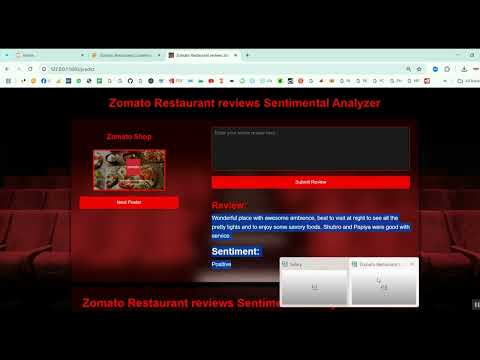
Zomato Restaurant Reviews Sentimental Analyzer in Python Projects
Zomato Restaurant Reviews Sentimental Analyzer in Python Projects
र 1000
⭐ Featured
⭐ Featured
AI & ML Models
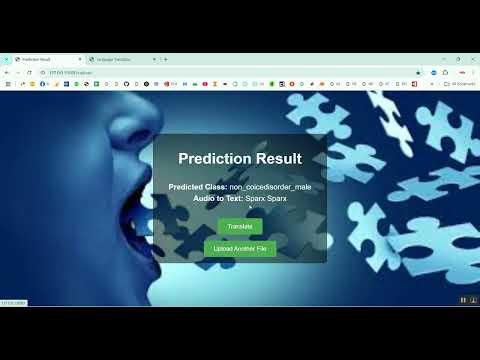
Voice Disorder Prediction using Audio Dataset in Python Projects
Voice Disorder Prediction using Audio Dataset in Python Projects
र 1000
AI & ML Models
Vitamin Deficiency Detection Using Image Processing in Python Projects
Vitamin Deficiency Detection Using Image Processing in Python Projects
र 1000