AI & ML Models
0.0 (0 reviews) • 0 downloads
Arrhythmia Detection LSTM EDA ACO in Python Projects
र 1000
Arrhythmia Detection LSTM EDA ACO in Python Projects
Technical Details
Domain : Python
Database : Sqlite
Tools : Anaconda
Run Tools: VS Code
Database : Sqlite
Tools : Anaconda
Run Tools: VS Code
Secure Payment
Instant Download
GST Invoice
24/7 Support
About This Product
Arrhythmia Detection LSTM EDA ACO in Python Projects
Abstract
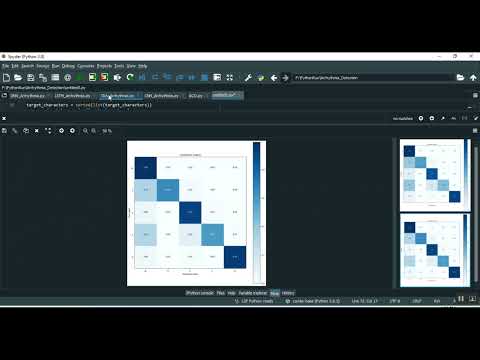
Cardiac arrhythmia is a life-threatening condition characterized by irregularities in heartbeats, which, if undetected, can lead to severe complications such as stroke, heart failure, or sudden cardiac arrest. Early and accurate detection of arrhythmias is crucial for timely intervention. This project, Arrhythmia Detection using LSTM, EDA, and ACO in Python, integrates Electrocardiogram (ECG) data analysis, Long Short-Term Memory (LSTM) networks, and Ant Colony Optimization (ACO) for efficient disease prediction. The system preprocesses ECG signals, performs Exploratory Data Analysis (EDA) to visualize heartbeat patterns, and then uses LSTM deep learning models to classify normal and abnormal heart rhythms. To enhance performance, ACO is applied for feature optimization and hyperparameter tuning, improving detection accuracy and reducing computational overhead. Implemented in Python with libraries such as TensorFlow/Keras, Pandas, NumPy, Matplotlib, and Scikit-learn, this project provides a robust, intelligent solution for arrhythmia detection.
Existing System
Currently, arrhythmia detection in medical practice relies on manual interpretation of ECG readings by cardiologists or traditional machine learning models like Support Vector Machines, Decision Trees, and k-Nearest Neighbors. While these methods provide useful insights, they suffer from several drawbacks: manual ECG analysis is time-consuming and prone to human error, while traditional ML models require handcrafted features and fail to capture the temporal dependencies in ECG sequences. Some existing systems use rule-based or statistical models, which cannot adapt well to diverse arrhythmia types or noise present in ECG signals. Consequently, these systems often have limited accuracy and lack real-time applicability.
Proposed System
The proposed system introduces a Python-based deep learning framework for arrhythmia detection that leverages LSTM networks for sequential data learning and ACO optimization for feature selection and model parameter tuning. ECG signals are preprocessed using noise reduction and normalization techniques, followed by EDA to visualize heart rate variability and waveform patterns. The LSTM model captures long-term dependencies in the ECG sequence, effectively distinguishing between normal and abnormal heartbeats. To further improve classification accuracy, ACO is used to optimize critical parameters, ensuring faster convergence and reduced overfitting. The system outperforms traditional models by providing higher accuracy, adaptability to diverse arrhythmia types, and real-time predictive capability, making it suitable for healthcare monitoring systems, wearable devices, and clinical decision support tools.
Abstract
Cardiac arrhythmia is a life-threatening condition characterized by irregularities in heartbeats, which, if undetected, can lead to severe complications such as stroke, heart failure, or sudden cardiac arrest. Early and accurate detection of arrhythmias is crucial for timely intervention. This project, Arrhythmia Detection using LSTM, EDA, and ACO in Python, integrates Electrocardiogram (ECG) data analysis, Long Short-Term Memory (LSTM) networks, and Ant Colony Optimization (ACO) for efficient disease prediction. The system preprocesses ECG signals, performs Exploratory Data Analysis (EDA) to visualize heartbeat patterns, and then uses LSTM deep learning models to classify normal and abnormal heart rhythms. To enhance performance, ACO is applied for feature optimization and hyperparameter tuning, improving detection accuracy and reducing computational overhead. Implemented in Python with libraries such as TensorFlow/Keras, Pandas, NumPy, Matplotlib, and Scikit-learn, this project provides a robust, intelligent solution for arrhythmia detection.
Existing System
Currently, arrhythmia detection in medical practice relies on manual interpretation of ECG readings by cardiologists or traditional machine learning models like Support Vector Machines, Decision Trees, and k-Nearest Neighbors. While these methods provide useful insights, they suffer from several drawbacks: manual ECG analysis is time-consuming and prone to human error, while traditional ML models require handcrafted features and fail to capture the temporal dependencies in ECG sequences. Some existing systems use rule-based or statistical models, which cannot adapt well to diverse arrhythmia types or noise present in ECG signals. Consequently, these systems often have limited accuracy and lack real-time applicability.
Proposed System
The proposed system introduces a Python-based deep learning framework for arrhythmia detection that leverages LSTM networks for sequential data learning and ACO optimization for feature selection and model parameter tuning. ECG signals are preprocessed using noise reduction and normalization techniques, followed by EDA to visualize heart rate variability and waveform patterns. The LSTM model captures long-term dependencies in the ECG sequence, effectively distinguishing between normal and abnormal heartbeats. To further improve classification accuracy, ACO is used to optimize critical parameters, ensuring faster convergence and reduced overfitting. The system outperforms traditional models by providing higher accuracy, adaptability to diverse arrhythmia types, and real-time predictive capability, making it suitable for healthcare monitoring systems, wearable devices, and clinical decision support tools.
Customer Reviews (0)
No reviews yet. Be the first!
Related Products
⭐ Featured

AI & ML Models
Zomato Restaurant Reviews Sentimental Analyzer in Python Projects
Zomato Restaurant Reviews Sentimental Analyzer in Python Projects
र 1000
⭐ Featured
⭐ Featured

AI & ML Models
Voice Disorder Prediction using Audio Dataset in Python Projects
Voice Disorder Prediction using Audio Dataset in Python Projects
र 1000

AI & ML Models
Vitamin Deficiency Detection Using Image Processing in Python Projects
Vitamin Deficiency Detection Using Image Processing in Python Projects
र 1000