AI & ML Models
0.0 (0 reviews) • 0 downloads
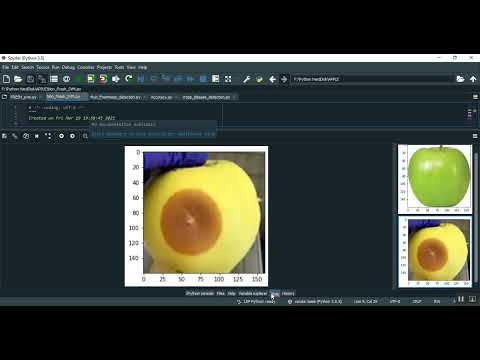
Apple Healthy and Non Healthy Prediction CNN Flask in Python Projects
र 1000
Apple Healthy and Non Healthy Prediction CNN Flask in Python Projects
Technical Details
Domain : Python
Database : Sqlite
Tools : Anaconda
Run Tools: VS Code
Database : Sqlite
Tools : Anaconda
Run Tools: VS Code
Secure Payment
Instant Download
GST Invoice
24/7 Support
About This Product
Apple Healthy and Non Healthy Prediction CNN Flask in Python Projects
Abstract
Apple fruits are prone to several diseases that affect their appearance, quality, and yield. Early detection of unhealthy apples helps farmers and distributors maintain crop quality and avoid economic losses. This project, Apple Healthy and Non-Healthy Prediction using CNN and Flask in Python, focuses on building a deep learning–based classification system that can automatically identify whether an apple is healthy or diseased from an image. A Convolutional Neural Network (CNN) is trained on a dataset of apple images, distinguishing between healthy and infected samples. The trained model is then deployed using Flask to provide a simple web application where users can upload apple images and instantly receive classification results. Python libraries such as TensorFlow/Keras, OpenCV, NumPy, and Flask are used to implement the solution. This system enables real-time fruit quality monitoring with high accuracy.
Existing System
Traditionally, disease identification in apples relies on manual inspection by farmers or agricultural experts, which is slow, subjective, and prone to errors. Some existing digital systems apply traditional image processing techniques like thresholding, color segmentation, or texture analysis, but these approaches fail to handle complex variations in apple disease symptoms such as spots, discoloration, or overlapping features. Moreover, most systems lack real-time usability and are not accessible to general farmers or distributors without technical expertise. This results in delayed diagnosis and excessive use of pesticides, which increases costs and affects crop quality.
Proposed System
The proposed system introduces a CNN-based automated classification model integrated with a Flask web application to make disease detection more practical and user-friendly. The CNN is trained on preprocessed apple images (resized, normalized, and augmented) to classify fruits into healthy or non-healthy categories. Once trained, the model is deployed via Flask, enabling users to upload apple images through a web interface. The backend processes the input and outputs whether the apple is healthy or diseased, along with a confidence score. This system provides automation, higher accuracy, and real-time detection compared to manual and traditional methods. It can be applied in smart farming, supply chain quality control, and agricultural research, making disease monitoring more efficient and scalable.
Abstract
Apple fruits are prone to several diseases that affect their appearance, quality, and yield. Early detection of unhealthy apples helps farmers and distributors maintain crop quality and avoid economic losses. This project, Apple Healthy and Non-Healthy Prediction using CNN and Flask in Python, focuses on building a deep learning–based classification system that can automatically identify whether an apple is healthy or diseased from an image. A Convolutional Neural Network (CNN) is trained on a dataset of apple images, distinguishing between healthy and infected samples. The trained model is then deployed using Flask to provide a simple web application where users can upload apple images and instantly receive classification results. Python libraries such as TensorFlow/Keras, OpenCV, NumPy, and Flask are used to implement the solution. This system enables real-time fruit quality monitoring with high accuracy.
Existing System
Traditionally, disease identification in apples relies on manual inspection by farmers or agricultural experts, which is slow, subjective, and prone to errors. Some existing digital systems apply traditional image processing techniques like thresholding, color segmentation, or texture analysis, but these approaches fail to handle complex variations in apple disease symptoms such as spots, discoloration, or overlapping features. Moreover, most systems lack real-time usability and are not accessible to general farmers or distributors without technical expertise. This results in delayed diagnosis and excessive use of pesticides, which increases costs and affects crop quality.
Proposed System
The proposed system introduces a CNN-based automated classification model integrated with a Flask web application to make disease detection more practical and user-friendly. The CNN is trained on preprocessed apple images (resized, normalized, and augmented) to classify fruits into healthy or non-healthy categories. Once trained, the model is deployed via Flask, enabling users to upload apple images through a web interface. The backend processes the input and outputs whether the apple is healthy or diseased, along with a confidence score. This system provides automation, higher accuracy, and real-time detection compared to manual and traditional methods. It can be applied in smart farming, supply chain quality control, and agricultural research, making disease monitoring more efficient and scalable.
Customer Reviews (0)
No reviews yet. Be the first!
Related Products
⭐ Featured
AI & ML Models
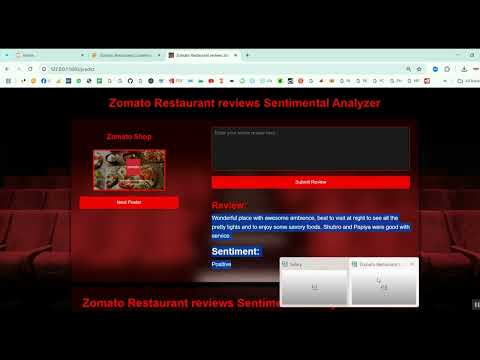
Zomato Restaurant Reviews Sentimental Analyzer in Python Projects
Zomato Restaurant Reviews Sentimental Analyzer in Python Projects
र 1000
⭐ Featured
⭐ Featured
AI & ML Models
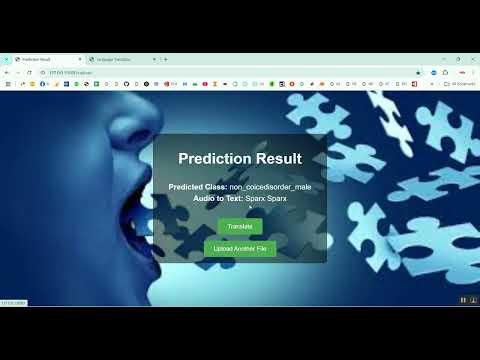
Voice Disorder Prediction using Audio Dataset in Python Projects
Voice Disorder Prediction using Audio Dataset in Python Projects
र 1000
AI & ML Models
Vitamin Deficiency Detection Using Image Processing in Python Projects
Vitamin Deficiency Detection Using Image Processing in Python Projects
र 1000