AI & ML Models
0.0 (0 reviews) • 0 downloads
Aomdv Protocol Based Node Simulation in Python Projects
र 1000
Aomdv Protocol Based Node Simulation in Python Projects
Technical Details
Domain : Python
Database : Sqlite
Tools : Anaconda
Run Tools: VS Code
Database : Sqlite
Tools : Anaconda
Run Tools: VS Code
Secure Payment
Instant Download
GST Invoice
24/7 Support
About This Product
Aomdv Protocol Based Node Simulation in Python Projects
Abstract
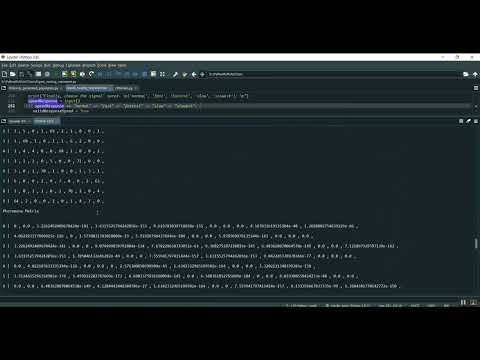
In mobile ad hoc networks (MANETs), efficient routing is a major challenge due to node mobility, dynamic topology, and limited bandwidth. The Ad hoc On-demand Multipath Distance Vector (AOMDV) protocol is an enhancement of the AODV protocol, designed to provide multiple loop-free and link-disjoint paths between source and destination. This increases reliability and reduces packet loss in dynamic networks. This project, AOMDV Protocol Based Node Simulation in Python, focuses on simulating MANET nodes and their routing using the AOMDV protocol. The system models node movement, packet transmission, and route discovery while analyzing performance metrics such as packet delivery ratio, throughput, and end-to-end delay. Python libraries such as NetworkX, Matplotlib, and NumPy are used to implement and visualize the simulation, making it useful for researchers and students studying wireless networks.
Existing System
Existing systems in MANET routing primarily rely on AODV (Ad hoc On-demand Distance Vector) or DSDV (Destination-Sequenced Distance Vector) protocols. While these protocols establish routes effectively, they often fail when nodes move rapidly, leading to frequent route breaks. AODV, for instance, discovers only a single route at a time, which results in increased packet loss when that route fails. DSR (Dynamic Source Routing) is also used but suffers from high overhead in larger networks. Moreover, many current simulation tools, such as NS2 and NS3, though powerful, are complex for beginners, requiring steep learning curves and system-level configurations.
Proposed System
The proposed system introduces a Python-based AOMDV simulation tool that models multipath routing in MANETs. Unlike AODV, the AOMDV protocol maintains multiple alternative paths during route discovery, allowing seamless switching when one path fails. This improves fault tolerance and reduces packet drops. In the simulation, nodes are placed in a defined topology, and data packets are transmitted between them while AOMDV manages route discovery and maintenance. Performance metrics like packet delivery ratio, routing overhead, and latency are computed and visualized using Python plots. Compared to traditional single-path routing, the proposed simulation provides greater resilience, better throughput, and improved reliability. Additionally, it offers a simpler and more customizable environment compared to complex simulators, making it ideal for academic research and project demonstrations.
Abstract
In mobile ad hoc networks (MANETs), efficient routing is a major challenge due to node mobility, dynamic topology, and limited bandwidth. The Ad hoc On-demand Multipath Distance Vector (AOMDV) protocol is an enhancement of the AODV protocol, designed to provide multiple loop-free and link-disjoint paths between source and destination. This increases reliability and reduces packet loss in dynamic networks. This project, AOMDV Protocol Based Node Simulation in Python, focuses on simulating MANET nodes and their routing using the AOMDV protocol. The system models node movement, packet transmission, and route discovery while analyzing performance metrics such as packet delivery ratio, throughput, and end-to-end delay. Python libraries such as NetworkX, Matplotlib, and NumPy are used to implement and visualize the simulation, making it useful for researchers and students studying wireless networks.
Existing System
Existing systems in MANET routing primarily rely on AODV (Ad hoc On-demand Distance Vector) or DSDV (Destination-Sequenced Distance Vector) protocols. While these protocols establish routes effectively, they often fail when nodes move rapidly, leading to frequent route breaks. AODV, for instance, discovers only a single route at a time, which results in increased packet loss when that route fails. DSR (Dynamic Source Routing) is also used but suffers from high overhead in larger networks. Moreover, many current simulation tools, such as NS2 and NS3, though powerful, are complex for beginners, requiring steep learning curves and system-level configurations.
Proposed System
The proposed system introduces a Python-based AOMDV simulation tool that models multipath routing in MANETs. Unlike AODV, the AOMDV protocol maintains multiple alternative paths during route discovery, allowing seamless switching when one path fails. This improves fault tolerance and reduces packet drops. In the simulation, nodes are placed in a defined topology, and data packets are transmitted between them while AOMDV manages route discovery and maintenance. Performance metrics like packet delivery ratio, routing overhead, and latency are computed and visualized using Python plots. Compared to traditional single-path routing, the proposed simulation provides greater resilience, better throughput, and improved reliability. Additionally, it offers a simpler and more customizable environment compared to complex simulators, making it ideal for academic research and project demonstrations.
Customer Reviews (0)
No reviews yet. Be the first!
Related Products
⭐ Featured

AI & ML Models
Zomato Restaurant Reviews Sentimental Analyzer in Python Projects
Zomato Restaurant Reviews Sentimental Analyzer in Python Projects
र 1000
⭐ Featured
⭐ Featured

AI & ML Models
Voice Disorder Prediction using Audio Dataset in Python Projects
Voice Disorder Prediction using Audio Dataset in Python Projects
र 1000

AI & ML Models
Vitamin Deficiency Detection Using Image Processing in Python Projects
Vitamin Deficiency Detection Using Image Processing in Python Projects
र 1000