AI & ML Models
0.0 (0 reviews) • 0 downloads
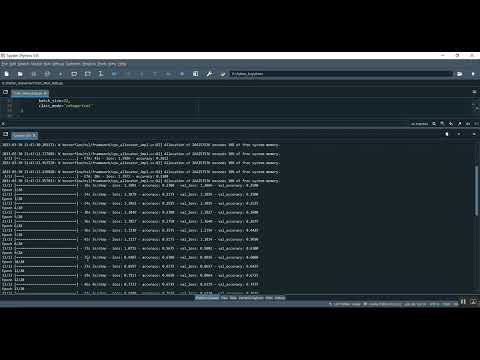
Anonymous Driver Prediction CNN Train Flask in Python Projects
र 1000
Anonymous Driver Prediction CNN Train Flask in Python Projects
Technical Details
Domain : Python
Database : Sqlite
Tools : Anaconda
Run Tools: VS Code
Database : Sqlite
Tools : Anaconda
Run Tools: VS Code
Secure Payment
Instant Download
GST Invoice
24/7 Support
About This Product
Anonymous Driver Prediction CNN Train Flask in Python Projects
Abstract
Driver behavior prediction has become a critical area of research, especially with the rise of intelligent transportation systems and smart vehicles. Predicting driver identity and detecting driving patterns can help in improving road safety, insurance claim analysis, and personalized in-car experiences. This project, Anonymous Driver Prediction using CNN and Flask in Python, focuses on training a Convolutional Neural Network (CNN) model to classify and predict anonymous driver behavior from driving datasets such as GPS traces, speed variations, or driving style logs. The trained model is then deployed using Flask as a web application, where new driving data can be uploaded, and the system predicts the driver’s identity or behavior category. Python libraries such as TensorFlow/Keras, Pandas, NumPy, and Scikit-learn are used for data preprocessing and training, while Flask ensures a user-friendly interface for real-time prediction.
Existing System
Current systems for driver identification and behavior monitoring rely largely on manual analysis, rule-based systems, or simple statistical models. While these methods can detect basic anomalies, they lack the intelligence to handle large-scale, high-dimensional driving data. Existing systems also fail to differentiate between different drivers with high accuracy, especially when the data is anonymous or partially missing. Moreover, most traditional systems lack a real-time prediction interface, limiting their applicability in modern intelligent transport and connected car environments.
Proposed System
The proposed system introduces a deep learning–based framework using CNN to automatically extract features from driving data and predict anonymous drivers with high accuracy. The dataset is preprocessed to normalize driving parameters and convert them into structured input formats for CNN training. The trained CNN learns hidden driving patterns and classifies each driving session to a specific driver or category. This model is then integrated into a Flask web application, where users can upload new driving data (CSV, logs, or sensor inputs) and instantly receive predictions. Compared to existing systems, this approach provides automation, scalability, high accuracy, and real-time usability. It can be applied in fleet management, insurance fraud detection, driver monitoring systems, and autonomous vehicle research.
Abstract
Driver behavior prediction has become a critical area of research, especially with the rise of intelligent transportation systems and smart vehicles. Predicting driver identity and detecting driving patterns can help in improving road safety, insurance claim analysis, and personalized in-car experiences. This project, Anonymous Driver Prediction using CNN and Flask in Python, focuses on training a Convolutional Neural Network (CNN) model to classify and predict anonymous driver behavior from driving datasets such as GPS traces, speed variations, or driving style logs. The trained model is then deployed using Flask as a web application, where new driving data can be uploaded, and the system predicts the driver’s identity or behavior category. Python libraries such as TensorFlow/Keras, Pandas, NumPy, and Scikit-learn are used for data preprocessing and training, while Flask ensures a user-friendly interface for real-time prediction.
Existing System
Current systems for driver identification and behavior monitoring rely largely on manual analysis, rule-based systems, or simple statistical models. While these methods can detect basic anomalies, they lack the intelligence to handle large-scale, high-dimensional driving data. Existing systems also fail to differentiate between different drivers with high accuracy, especially when the data is anonymous or partially missing. Moreover, most traditional systems lack a real-time prediction interface, limiting their applicability in modern intelligent transport and connected car environments.
Proposed System
The proposed system introduces a deep learning–based framework using CNN to automatically extract features from driving data and predict anonymous drivers with high accuracy. The dataset is preprocessed to normalize driving parameters and convert them into structured input formats for CNN training. The trained CNN learns hidden driving patterns and classifies each driving session to a specific driver or category. This model is then integrated into a Flask web application, where users can upload new driving data (CSV, logs, or sensor inputs) and instantly receive predictions. Compared to existing systems, this approach provides automation, scalability, high accuracy, and real-time usability. It can be applied in fleet management, insurance fraud detection, driver monitoring systems, and autonomous vehicle research.
Customer Reviews (0)
No reviews yet. Be the first!
Related Products
⭐ Featured
AI & ML Models
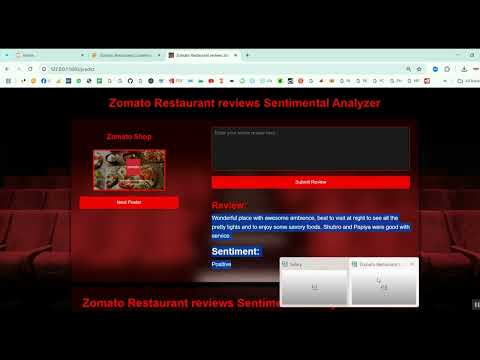
Zomato Restaurant Reviews Sentimental Analyzer in Python Projects
Zomato Restaurant Reviews Sentimental Analyzer in Python Projects
र 1000
⭐ Featured
⭐ Featured

AI & ML Models
Voice Disorder Prediction using Audio Dataset in Python Projects
Voice Disorder Prediction using Audio Dataset in Python Projects
र 1000

AI & ML Models
Vitamin Deficiency Detection Using Image Processing in Python Projects
Vitamin Deficiency Detection Using Image Processing in Python Projects
र 1000