AI & ML Models
0.0 (0 reviews) • 0 downloads
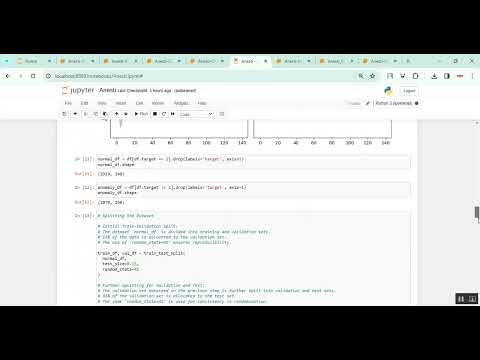
Anesthesia using EEG Data in Python Projects
र 1000
Anesthesia using EEG Data in Python Projects
Secure Payment
Instant Download
GST Invoice
24/7 Support
About This Product
Anesthesia using EEG Data in Python Projects
Abstract
Monitoring the depth of anesthesia is critical for patient safety during surgical procedures. Electroencephalogram (EEG) signals provide real-time information about brain activity, making them a valuable source for assessing anesthesia levels. This project presents an Anesthesia Prediction System using EEG Data in Python, which analyzes EEG recordings to classify the depth of anesthesia into categories such as awake, light, moderate, or deep anesthesia. The system leverages machine learning and deep learning algorithms, including Random Forest, Support Vector Machines (SVM), and Convolutional Neural Networks (CNNs), to extract meaningful patterns from EEG features. Python libraries such as Pandas, NumPy, MNE, Scikit-learn, and TensorFlow/Keras are used for preprocessing, feature extraction, model training, and evaluation. The system provides a data-driven approach for real-time anesthesia monitoring, enhancing patient safety and supporting anesthesiologists in clinical decision-making.
Existing System
In existing systems, anesthesia depth is monitored primarily through manual observation of physiological signs such as heart rate, blood pressure, respiratory rate, and patient responsiveness. While devices like BIS monitors provide quantitative indices based on EEG, many traditional approaches rely on single-channel monitoring or simple signal processing methods, which may not fully capture complex brain activity patterns. Manual interpretation can be subjective and prone to errors, especially in cases with patient variability or multi-drug anesthesia. Moreover, conventional systems may not leverage advanced machine learning models to improve prediction accuracy or provide automated, real-time feedback for anesthesia management.
Proposed System
The proposed system introduces a machine learning and deep learning-based EEG analysis model to predict the depth of anesthesia accurately. Multichannel EEG signals are collected, preprocessed (including noise filtering, artifact removal, and normalization), and relevant features such as frequency bands, power spectral density, and entropy measures are extracted. The extracted features are then input into classifiers such as Random Forest, SVM, or deep learning models like CNNs and LSTM networks to categorize anesthesia depth into multiple levels. Python libraries including MNE for EEG processing, Scikit-learn and TensorFlow/Keras for modeling, and Matplotlib/Seaborn for visualization are employed. The system can be deployed with a user-friendly interface using Flask or Streamlit, allowing anesthesiologists to input EEG recordings and receive real-time predictions. This approach ensures accurate, automated, and scalable anesthesia monitoring, reducing the risk of under- or over-anesthesia during surgical procedures.
Abstract
Monitoring the depth of anesthesia is critical for patient safety during surgical procedures. Electroencephalogram (EEG) signals provide real-time information about brain activity, making them a valuable source for assessing anesthesia levels. This project presents an Anesthesia Prediction System using EEG Data in Python, which analyzes EEG recordings to classify the depth of anesthesia into categories such as awake, light, moderate, or deep anesthesia. The system leverages machine learning and deep learning algorithms, including Random Forest, Support Vector Machines (SVM), and Convolutional Neural Networks (CNNs), to extract meaningful patterns from EEG features. Python libraries such as Pandas, NumPy, MNE, Scikit-learn, and TensorFlow/Keras are used for preprocessing, feature extraction, model training, and evaluation. The system provides a data-driven approach for real-time anesthesia monitoring, enhancing patient safety and supporting anesthesiologists in clinical decision-making.
Existing System
In existing systems, anesthesia depth is monitored primarily through manual observation of physiological signs such as heart rate, blood pressure, respiratory rate, and patient responsiveness. While devices like BIS monitors provide quantitative indices based on EEG, many traditional approaches rely on single-channel monitoring or simple signal processing methods, which may not fully capture complex brain activity patterns. Manual interpretation can be subjective and prone to errors, especially in cases with patient variability or multi-drug anesthesia. Moreover, conventional systems may not leverage advanced machine learning models to improve prediction accuracy or provide automated, real-time feedback for anesthesia management.
Proposed System
The proposed system introduces a machine learning and deep learning-based EEG analysis model to predict the depth of anesthesia accurately. Multichannel EEG signals are collected, preprocessed (including noise filtering, artifact removal, and normalization), and relevant features such as frequency bands, power spectral density, and entropy measures are extracted. The extracted features are then input into classifiers such as Random Forest, SVM, or deep learning models like CNNs and LSTM networks to categorize anesthesia depth into multiple levels. Python libraries including MNE for EEG processing, Scikit-learn and TensorFlow/Keras for modeling, and Matplotlib/Seaborn for visualization are employed. The system can be deployed with a user-friendly interface using Flask or Streamlit, allowing anesthesiologists to input EEG recordings and receive real-time predictions. This approach ensures accurate, automated, and scalable anesthesia monitoring, reducing the risk of under- or over-anesthesia during surgical procedures.
Customer Reviews (0)
No reviews yet. Be the first!
Related Products
⭐ Featured
AI & ML Models
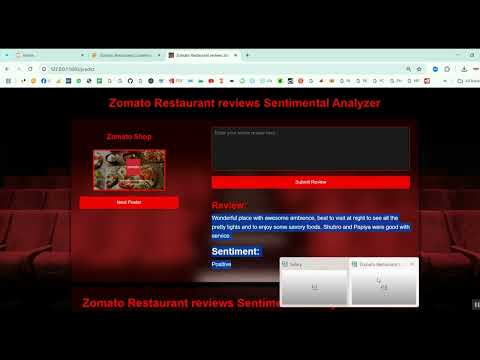
Zomato Restaurant Reviews Sentimental Analyzer in Python Projects
Zomato Restaurant Reviews Sentimental Analyzer in Python Projects
र 1000
⭐ Featured
⭐ Featured
AI & ML Models
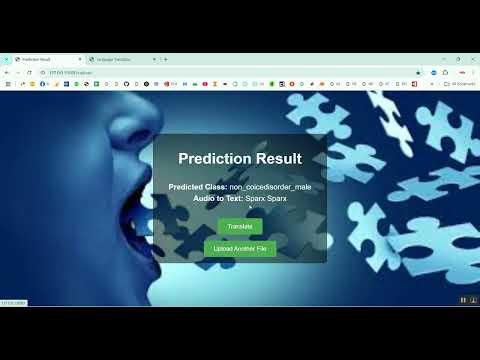
Voice Disorder Prediction using Audio Dataset in Python Projects
Voice Disorder Prediction using Audio Dataset in Python Projects
र 1000
AI & ML Models
Vitamin Deficiency Detection Using Image Processing in Python Projects
Vitamin Deficiency Detection Using Image Processing in Python Projects
र 1000