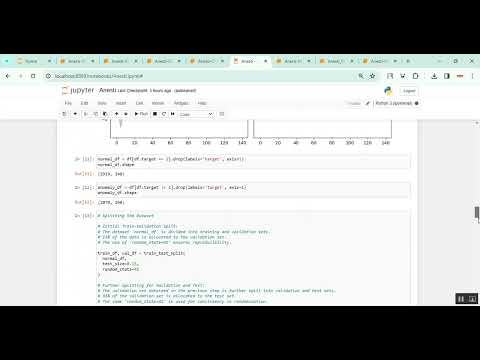
AI & ML Models
0.0 (0 reviews) • 0 downloads
Anesthesia Classification in Python Projects
र 1000
Anesthesia Classification in Python Projects
Technical Details
Domain : Python
Database : Sqlite
Tools : Anaconda
Run Tools: VS Code
Database : Sqlite
Tools : Anaconda
Run Tools: VS Code
Secure Payment
Instant Download
GST Invoice
24/7 Support
About This Product
Anesthesia Classification in Python Projects
Abstract
Anesthesia administration is a critical process in surgical procedures, where selecting the appropriate type of anesthesia can significantly impact patient safety and surgical outcomes. This project presents an Anesthesia Classification System in Python, which automates the prediction of the suitable type of anesthesia—such as general, regional, or local—based on patient demographics, medical history, surgical type, and vital signs. Machine learning algorithms like Random Forest, Support Vector Machines (SVM), and Logistic Regression are employed to train the classification model. Python libraries including Pandas, NumPy, Scikit-learn, and Matplotlib are used for data preprocessing, model training, evaluation, and visualization. By leveraging predictive modeling, this system assists anesthesiologists in making data-driven decisions, reduces human error, and improves overall patient safety in perioperative care.
Existing System
In the existing system, anesthesia selection relies primarily on the expertise and judgment of anesthesiologists, who consider patient history, type of surgery, age, and comorbidities. Manual decision-making can be time-consuming, subjective, and prone to human error, especially in high-pressure surgical environments. Some hospitals maintain static guidelines or flowcharts for anesthesia choice, but these do not dynamically adapt to individual patient variations or evolving clinical data. Additionally, traditional systems lack predictive analytics, real-time decision support, and the ability to learn from historical cases, which limits efficiency and consistency in anesthesia administration.
Proposed System
The proposed system introduces a machine learning-based anesthesia classification model developed in Python to provide intelligent decision support for anesthesiologists. Patient data, including age, weight, medical history, type of surgery, and preoperative vital signs, is preprocessed and normalized for model training. Classification algorithms such as Random Forest, SVM, and Logistic Regression are applied to predict the appropriate anesthesia type. The model is evaluated using metrics such as accuracy, precision, recall, and F1-score to ensure reliability. A user-friendly interface can be integrated using Flask or Streamlit, allowing clinicians to input patient information and receive real-time anesthesia recommendations. This system improves patient safety, enhances clinical decision-making, reduces human error, and provides a scalable solution for modern perioperative care.
Abstract
Anesthesia administration is a critical process in surgical procedures, where selecting the appropriate type of anesthesia can significantly impact patient safety and surgical outcomes. This project presents an Anesthesia Classification System in Python, which automates the prediction of the suitable type of anesthesia—such as general, regional, or local—based on patient demographics, medical history, surgical type, and vital signs. Machine learning algorithms like Random Forest, Support Vector Machines (SVM), and Logistic Regression are employed to train the classification model. Python libraries including Pandas, NumPy, Scikit-learn, and Matplotlib are used for data preprocessing, model training, evaluation, and visualization. By leveraging predictive modeling, this system assists anesthesiologists in making data-driven decisions, reduces human error, and improves overall patient safety in perioperative care.
Existing System
In the existing system, anesthesia selection relies primarily on the expertise and judgment of anesthesiologists, who consider patient history, type of surgery, age, and comorbidities. Manual decision-making can be time-consuming, subjective, and prone to human error, especially in high-pressure surgical environments. Some hospitals maintain static guidelines or flowcharts for anesthesia choice, but these do not dynamically adapt to individual patient variations or evolving clinical data. Additionally, traditional systems lack predictive analytics, real-time decision support, and the ability to learn from historical cases, which limits efficiency and consistency in anesthesia administration.
Proposed System
The proposed system introduces a machine learning-based anesthesia classification model developed in Python to provide intelligent decision support for anesthesiologists. Patient data, including age, weight, medical history, type of surgery, and preoperative vital signs, is preprocessed and normalized for model training. Classification algorithms such as Random Forest, SVM, and Logistic Regression are applied to predict the appropriate anesthesia type. The model is evaluated using metrics such as accuracy, precision, recall, and F1-score to ensure reliability. A user-friendly interface can be integrated using Flask or Streamlit, allowing clinicians to input patient information and receive real-time anesthesia recommendations. This system improves patient safety, enhances clinical decision-making, reduces human error, and provides a scalable solution for modern perioperative care.
Customer Reviews (0)
No reviews yet. Be the first!
Related Products
⭐ Featured
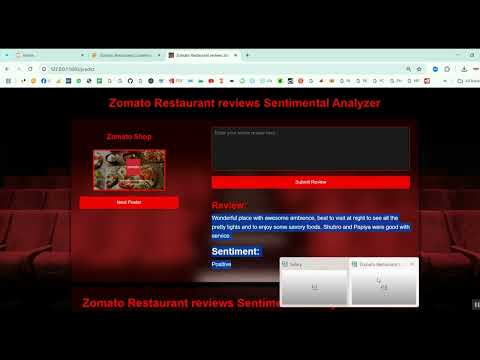
AI & ML Models
Zomato Restaurant Reviews Sentimental Analyzer in Python Projects
Zomato Restaurant Reviews Sentimental Analyzer in Python Projects
र 1000
⭐ Featured
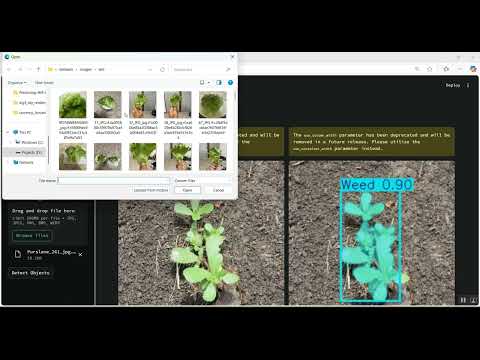
⭐ Featured

AI & ML Models
Voice Disorder Prediction using Audio Dataset in Python Projects
Voice Disorder Prediction using Audio Dataset in Python Projects
र 1000
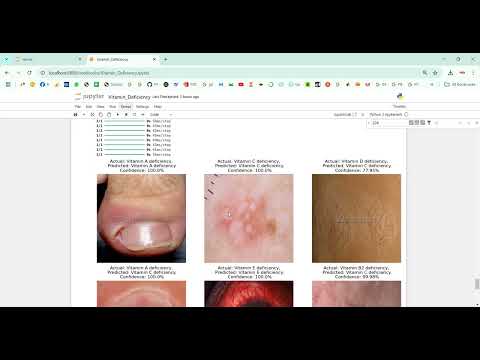
AI & ML Models
Vitamin Deficiency Detection Using Image Processing in Python Projects
Vitamin Deficiency Detection Using Image Processing in Python Projects
र 1000