AI & ML Models
0.0 (0 reviews) • 0 downloads
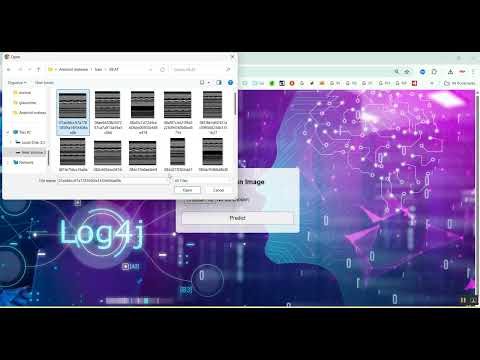
Android Malware using Image Dataset in Python Projects
र 1000
Android Malware using Image Dataset in Python Projects
Technical Details
Domain : Python
Database : Sqlite
Tools : Anaconda
Run Tools: VS Code
Database : Sqlite
Tools : Anaconda
Run Tools: VS Code
Secure Payment
Instant Download
GST Invoice
24/7 Support
About This Product
Android Malware using Image Dataset in Python Projects
Abstract
Android malware detection remains a critical challenge as mobile devices continue to host sensitive personal and enterprise data; transforming app binaries and behaviors into image representations has emerged as an effective approach for leveraging computer vision and deep learning techniques. The project Android Malware using Image Dataset in Python Projects explores converting Android APK files (or extracted bytecode/feature sequences) into grayscale or color images and training convolutional neural networks (CNNs) and transfer-learning models to classify apps as benign or malicious. Python is chosen for development because of its strong ecosystem for data processing and deep learning—libraries such as NumPy, OpenCV, TensorFlow, PyTorch, and Scikit-learn simplify feature extraction, image preprocessing, model training, and evaluation. This image-based method captures structural patterns and byte-level signatures that are difficult to detect with signature-only or static-rule approaches, enabling robust detection of obfuscated or previously unseen malware variants. The aim is to deliver an automated, scalable, and accurate detection pipeline that assists security analysts and augments mobile security toolchains.
Existing System
Existing Android malware detection techniques typically rely on static analysis—signature matching, permission and API-call heuristics—or dynamic analysis that monitors runtime behavior in sandboxes. Static methods are fast but brittle against code obfuscation and novel malware, while dynamic methods are more resilient but resource-intensive and slow to scale. Many current systems also depend on handcrafted features (permissions, intents, API frequency) and classical machine learning classifiers that struggle with high-dimensional raw byte data and subtle structural differences between benign and malicious apps. Furthermore, dataset imbalance, noisy labels, and limited generalization to new families often reduce real-world effectiveness. Visualization-based approaches are less common in production despite promising accuracy in research, and few operational pipelines convert app binaries into image-style representations for convolutional models, leaving an opportunity to improve detection performance and resilience.
Proposed System
The proposed system builds a full Python-based pipeline that transforms Android application artifacts into image datasets, applies advanced image preprocessing, and trains deep learning classifiers for malware detection. APKs are unpacked and relevant byte streams (DEX files, classes, resources) or extracted feature vectors are normalized and mapped to 1D/2D arrays, then reshaped and scaled into grayscale or RGB images; optional multi-channel encodings can represent different feature types (opcode, API calls, permissions). Image augmentation, denoising, and resizing are applied using OpenCV and Albumentations to increase robustness. Convolutional Neural Networks (custom CNNs), pre-trained architectures (ResNet, EfficientNet) fine-tuned with transfer learning, and ensemble approaches are used to maximize accuracy and reduce overfitting. The system includes data handling for class imbalance (SMOTE, class weights), cross-validation, explainability tools (Grad-CAM, saliency maps) to visualize decision regions, and performance metrics (precision, recall, F1, AUC) to evaluate detection quality. A lightweight Flask API and a command-line utility enable batch scanning and integration with CI pipelines or mobile security dashboards, while optional on-device models or edge-optimized versions (quantized TFLite) support near-real-time detection with constrained resources. Overall, the proposed image-based approach improves resilience to obfuscation, enhances generalization to unknown malware, and delivers interpretable model outputs useful for security operations.
Abstract
Android malware detection remains a critical challenge as mobile devices continue to host sensitive personal and enterprise data; transforming app binaries and behaviors into image representations has emerged as an effective approach for leveraging computer vision and deep learning techniques. The project Android Malware using Image Dataset in Python Projects explores converting Android APK files (or extracted bytecode/feature sequences) into grayscale or color images and training convolutional neural networks (CNNs) and transfer-learning models to classify apps as benign or malicious. Python is chosen for development because of its strong ecosystem for data processing and deep learning—libraries such as NumPy, OpenCV, TensorFlow, PyTorch, and Scikit-learn simplify feature extraction, image preprocessing, model training, and evaluation. This image-based method captures structural patterns and byte-level signatures that are difficult to detect with signature-only or static-rule approaches, enabling robust detection of obfuscated or previously unseen malware variants. The aim is to deliver an automated, scalable, and accurate detection pipeline that assists security analysts and augments mobile security toolchains.
Existing System
Existing Android malware detection techniques typically rely on static analysis—signature matching, permission and API-call heuristics—or dynamic analysis that monitors runtime behavior in sandboxes. Static methods are fast but brittle against code obfuscation and novel malware, while dynamic methods are more resilient but resource-intensive and slow to scale. Many current systems also depend on handcrafted features (permissions, intents, API frequency) and classical machine learning classifiers that struggle with high-dimensional raw byte data and subtle structural differences between benign and malicious apps. Furthermore, dataset imbalance, noisy labels, and limited generalization to new families often reduce real-world effectiveness. Visualization-based approaches are less common in production despite promising accuracy in research, and few operational pipelines convert app binaries into image-style representations for convolutional models, leaving an opportunity to improve detection performance and resilience.
Proposed System
The proposed system builds a full Python-based pipeline that transforms Android application artifacts into image datasets, applies advanced image preprocessing, and trains deep learning classifiers for malware detection. APKs are unpacked and relevant byte streams (DEX files, classes, resources) or extracted feature vectors are normalized and mapped to 1D/2D arrays, then reshaped and scaled into grayscale or RGB images; optional multi-channel encodings can represent different feature types (opcode, API calls, permissions). Image augmentation, denoising, and resizing are applied using OpenCV and Albumentations to increase robustness. Convolutional Neural Networks (custom CNNs), pre-trained architectures (ResNet, EfficientNet) fine-tuned with transfer learning, and ensemble approaches are used to maximize accuracy and reduce overfitting. The system includes data handling for class imbalance (SMOTE, class weights), cross-validation, explainability tools (Grad-CAM, saliency maps) to visualize decision regions, and performance metrics (precision, recall, F1, AUC) to evaluate detection quality. A lightweight Flask API and a command-line utility enable batch scanning and integration with CI pipelines or mobile security dashboards, while optional on-device models or edge-optimized versions (quantized TFLite) support near-real-time detection with constrained resources. Overall, the proposed image-based approach improves resilience to obfuscation, enhances generalization to unknown malware, and delivers interpretable model outputs useful for security operations.
Customer Reviews (0)
No reviews yet. Be the first!
Related Products
⭐ Featured

AI & ML Models
Zomato Restaurant Reviews Sentimental Analyzer in Python Projects
Zomato Restaurant Reviews Sentimental Analyzer in Python Projects
र 1000
⭐ Featured
⭐ Featured

AI & ML Models
Voice Disorder Prediction using Audio Dataset in Python Projects
Voice Disorder Prediction using Audio Dataset in Python Projects
र 1000
AI & ML Models
Vitamin Deficiency Detection Using Image Processing in Python Projects
Vitamin Deficiency Detection Using Image Processing in Python Projects
र 1000