AI & ML Models
0.0 (0 reviews) • 0 downloads
Android Malware jpeg Image in Python Projects
र 1000
Android Malware jpeg Image in Python Projects
Technical Details
Domain : Python
Database : Sqlite
Tools : Anaconda
Run Tools: VS Code
Database : Sqlite
Tools : Anaconda
Run Tools: VS Code
Secure Payment
Instant Download
GST Invoice
24/7 Support
About This Product
Android Malware jpeg Image in Python Projects
Abstract
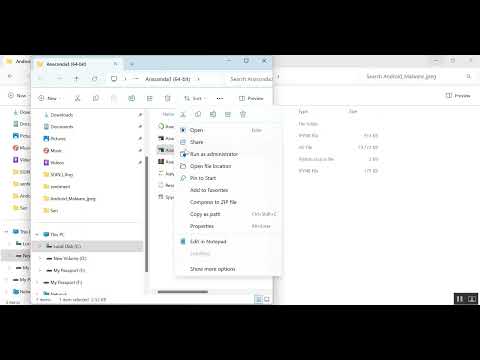
Android malware continues to pose serious threats to mobile security, with attackers constantly developing new obfuscation techniques. This project presents an Android Malware Detection system using JPEG Image Representation in Python, which converts features of Android applications into images for deep learning-based classification. APK files are analyzed to extract static features such as permissions, API calls, manifest data, and opcode sequences. These features are transformed into grayscale or colored image representations, enabling Convolutional Neural Networks (CNNs) to automatically detect patterns associated with malware. Python libraries such as TensorFlow, Keras, OpenCV, Pandas, and NumPy are used for feature extraction, image processing, and model development. By leveraging image-based feature representation, the system improves malware detection accuracy, supports visualization of anomalous patterns, and provides a scalable solution for real-time mobile security analysis.
Existing System
In existing systems, Android malware detection relies mainly on signature-based antivirus tools, traditional machine learning, or static feature analysis. Signature-based methods can only detect known malware, while conventional machine learning approaches require manual feature engineering and often fail to capture complex relationships among features. Existing systems rarely employ visual representation of APK features, limiting the ability of deep learning models like CNNs to detect subtle patterns. Moreover, current approaches do not offer intuitive visualization for analysts, making it challenging to interpret model predictions. This results in limited adaptability to new malware variants and reduced detection efficiency.
Proposed System
The proposed system introduces an image-based Android malware detection pipeline in Python. Features extracted from APK files—such as permissions, API calls, and opcodes—are converted into JPEG images, where each pixel or color channel represents specific feature values. These images are then fed into a Convolutional Neural Network (CNN) for classification into benign or malicious categories. The system is implemented using Python libraries including TensorFlow/Keras for model training, OpenCV for image processing, and Pandas/NumPy for feature handling. A user interface can be created using Flask or Streamlit, allowing analysts to upload APKs, generate image representations, and receive real-time predictions. This approach enables automated, accurate, and scalable malware detection, while also providing visual patterns for interpretability and analysis of malware behaviors
Abstract
Android malware continues to pose serious threats to mobile security, with attackers constantly developing new obfuscation techniques. This project presents an Android Malware Detection system using JPEG Image Representation in Python, which converts features of Android applications into images for deep learning-based classification. APK files are analyzed to extract static features such as permissions, API calls, manifest data, and opcode sequences. These features are transformed into grayscale or colored image representations, enabling Convolutional Neural Networks (CNNs) to automatically detect patterns associated with malware. Python libraries such as TensorFlow, Keras, OpenCV, Pandas, and NumPy are used for feature extraction, image processing, and model development. By leveraging image-based feature representation, the system improves malware detection accuracy, supports visualization of anomalous patterns, and provides a scalable solution for real-time mobile security analysis.
Existing System
In existing systems, Android malware detection relies mainly on signature-based antivirus tools, traditional machine learning, or static feature analysis. Signature-based methods can only detect known malware, while conventional machine learning approaches require manual feature engineering and often fail to capture complex relationships among features. Existing systems rarely employ visual representation of APK features, limiting the ability of deep learning models like CNNs to detect subtle patterns. Moreover, current approaches do not offer intuitive visualization for analysts, making it challenging to interpret model predictions. This results in limited adaptability to new malware variants and reduced detection efficiency.
Proposed System
The proposed system introduces an image-based Android malware detection pipeline in Python. Features extracted from APK files—such as permissions, API calls, and opcodes—are converted into JPEG images, where each pixel or color channel represents specific feature values. These images are then fed into a Convolutional Neural Network (CNN) for classification into benign or malicious categories. The system is implemented using Python libraries including TensorFlow/Keras for model training, OpenCV for image processing, and Pandas/NumPy for feature handling. A user interface can be created using Flask or Streamlit, allowing analysts to upload APKs, generate image representations, and receive real-time predictions. This approach enables automated, accurate, and scalable malware detection, while also providing visual patterns for interpretability and analysis of malware behaviors
Customer Reviews (0)
No reviews yet. Be the first!
Related Products
⭐ Featured

AI & ML Models
Zomato Restaurant Reviews Sentimental Analyzer in Python Projects
Zomato Restaurant Reviews Sentimental Analyzer in Python Projects
र 1000
⭐ Featured
⭐ Featured

AI & ML Models
Voice Disorder Prediction using Audio Dataset in Python Projects
Voice Disorder Prediction using Audio Dataset in Python Projects
र 1000
AI & ML Models
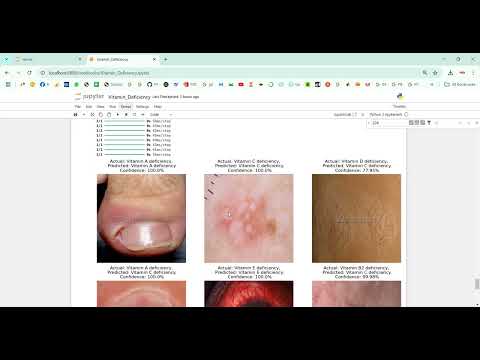
Vitamin Deficiency Detection Using Image Processing in Python Projects
Vitamin Deficiency Detection Using Image Processing in Python Projects
र 1000