AI & ML Models
0.0 (0 reviews) • 0 downloads
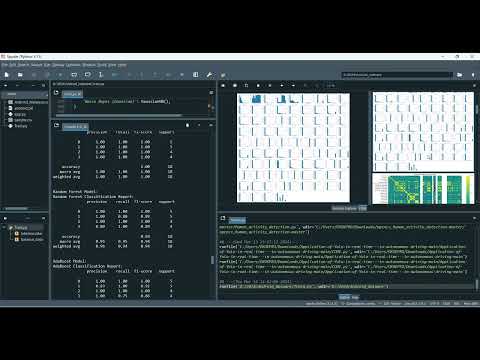
Android Malware Classification in Python Projects
र 1000
Android Malware Classification in Python Projects
Technical Details
Domain : Python
Database : Sqlite
Tools : Anaconda
Run Tools: VS Code
Database : Sqlite
Tools : Anaconda
Run Tools: VS Code
Secure Payment
Instant Download
GST Invoice
24/7 Support
About This Product
Android Malware Classification in Python Projects
Abstract
The rapid proliferation of Android applications has increased the risk of malicious software targeting mobile devices, leading to privacy breaches, financial losses, and data theft. This project presents an Android Malware Classification System using Python, which leverages machine learning to automatically classify Android applications as benign or malicious based on extracted features. Static features such as permissions, API calls, manifest components, and opcode sequences are analyzed, and the system applies classifiers such as Random Forest, Support Vector Machines (SVM), or Neural Networks for prediction. Python libraries including Pandas, NumPy, Scikit-learn, and TensorFlow/Keras are used for data preprocessing, model training, and evaluation. By automating malware detection, this system enables efficient, scalable, and accurate classification of Android apps, supporting cybersecurity professionals in real-time threat identification and mitigation.
Existing System
In the existing system, Android malware detection primarily relies on signature-based antivirus software or rule-based heuristics. These traditional methods can only detect known malware and fail to identify new, zero-day variants or obfuscated malicious apps. Some existing machine learning approaches perform malware detection using manually engineered features but often face challenges with high-dimensional data, sparse features, and class imbalance. Additionally, many systems do not provide multi-class classification to identify specific malware families or types, limiting their usefulness for threat analysis. Overall, current approaches lack scalability, adaptability, and robustness to evolving malware strategies, making mobile devices increasingly vulnerable.
Proposed System
The proposed system introduces an AI-driven Android Malware Classification model that automatically extracts relevant static features from APK files, including permissions, API calls, and manifest information. These features are preprocessed, normalized, and used to train machine learning classifiers such as Random Forest, SVM, or deep learning models like Multilayer Perceptron (MLP). The model can also perform multi-class classification to categorize malware into families or types. Python libraries such as Pandas, NumPy, Scikit-learn, and TensorFlow/Keras facilitate data preprocessing, model building, and evaluation. For user accessibility, a Flask or Streamlit-based interface can be integrated to allow analysts to upload APK feature summaries, predict malware status, and visualize classification results. The system provides automated, accurate, and scalable detection of Android malware, improving mobile security and reducing reliance on traditional signature-based approaches.
Abstract
The rapid proliferation of Android applications has increased the risk of malicious software targeting mobile devices, leading to privacy breaches, financial losses, and data theft. This project presents an Android Malware Classification System using Python, which leverages machine learning to automatically classify Android applications as benign or malicious based on extracted features. Static features such as permissions, API calls, manifest components, and opcode sequences are analyzed, and the system applies classifiers such as Random Forest, Support Vector Machines (SVM), or Neural Networks for prediction. Python libraries including Pandas, NumPy, Scikit-learn, and TensorFlow/Keras are used for data preprocessing, model training, and evaluation. By automating malware detection, this system enables efficient, scalable, and accurate classification of Android apps, supporting cybersecurity professionals in real-time threat identification and mitigation.
Existing System
In the existing system, Android malware detection primarily relies on signature-based antivirus software or rule-based heuristics. These traditional methods can only detect known malware and fail to identify new, zero-day variants or obfuscated malicious apps. Some existing machine learning approaches perform malware detection using manually engineered features but often face challenges with high-dimensional data, sparse features, and class imbalance. Additionally, many systems do not provide multi-class classification to identify specific malware families or types, limiting their usefulness for threat analysis. Overall, current approaches lack scalability, adaptability, and robustness to evolving malware strategies, making mobile devices increasingly vulnerable.
Proposed System
The proposed system introduces an AI-driven Android Malware Classification model that automatically extracts relevant static features from APK files, including permissions, API calls, and manifest information. These features are preprocessed, normalized, and used to train machine learning classifiers such as Random Forest, SVM, or deep learning models like Multilayer Perceptron (MLP). The model can also perform multi-class classification to categorize malware into families or types. Python libraries such as Pandas, NumPy, Scikit-learn, and TensorFlow/Keras facilitate data preprocessing, model building, and evaluation. For user accessibility, a Flask or Streamlit-based interface can be integrated to allow analysts to upload APK feature summaries, predict malware status, and visualize classification results. The system provides automated, accurate, and scalable detection of Android malware, improving mobile security and reducing reliance on traditional signature-based approaches.
Customer Reviews (0)
No reviews yet. Be the first!
Related Products
⭐ Featured
AI & ML Models
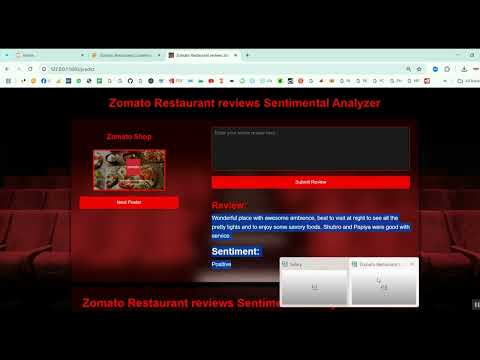
Zomato Restaurant Reviews Sentimental Analyzer in Python Projects
Zomato Restaurant Reviews Sentimental Analyzer in Python Projects
र 1000
⭐ Featured
⭐ Featured

AI & ML Models
Voice Disorder Prediction using Audio Dataset in Python Projects
Voice Disorder Prediction using Audio Dataset in Python Projects
र 1000
AI & ML Models
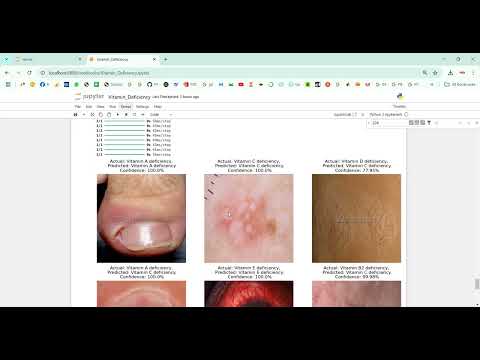
Vitamin Deficiency Detection Using Image Processing in Python Projects
Vitamin Deficiency Detection Using Image Processing in Python Projects
र 1000