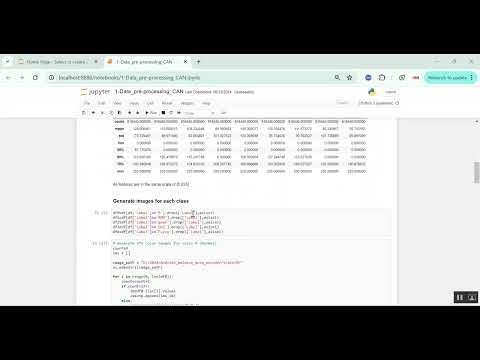
AI & ML Models
0.0 (0 reviews) • 0 downloads
Android Malware Auto Encoder Text TO Image Generation in Python Projects
र 1000
Android Malware Auto Encoder Text TO Image Generation in Python Projects
Technical Details
Domain : Python
Database : Sqlite
Tools : Anaconda
Run Tools: VS Code
Database : Sqlite
Tools : Anaconda
Run Tools: VS Code
Secure Payment
Instant Download
GST Invoice
24/7 Support
About This Product
Android Malware Auto Encoder Text TO Image Generation in Python Projects
Abstract
Android malware detection remains a critical challenge as malicious apps evolve in complexity and obfuscation techniques. This project — “Android Malware Autoencoder: Text-to-Image Generation in Python” — combines representation learning and visual generative techniques to improve malware analysis and explainability. The system extracts static and dynamic features from Android applications (manifest data, API call sequences, permission sets, and lightweight behavioral traces), converts textual and sequential features into structured embeddings, and uses an autoencoder to learn compact latent representations that highlight normal vs. anomalous app behavior. In parallel, a text‑to‑image generation module (based on VQ‑VAE/GAN or diffusion-style approaches) produces human‑readable visualizations from textual feature summaries to aid analysts in quickly inspecting suspicious patterns. Implemented in Python with libraries such as TensorFlow/PyTorch, Scikit‑learn, and PIL/OpenCV, this hybrid approach improves detection of novel malware, supports anomaly ranking, and provides interpretable visual artifacts for security teams.
Existing System
Current Android malware detection systems typically rely on signature-based scanners, handcrafted heuristics, or standalone machine-learning classifiers trained on flattened feature vectors. Signature methods fail against obfuscated or zero‑day samples, while many ML models struggle when features are high-dimensional, sequential, or sparse — leading to false positives/negatives. Some research converts code or binaries into images for CNN-based classification, but these methods often lose semantic context from textual metadata and API sequences. Additionally, explainability is limited: security analysts receive binary labels without intuitive visual summaries that link model decisions to observable behaviors. These gaps reduce analyst trust and slow triage of new threats.
Proposed System
The proposed system creates an end‑to‑end Python pipeline that (1) extracts multi‑modal Android app features (manifest fields, permission lists, API-call traces, opcode n‑grams), (2) encodes textual and sequential data into dense embeddings using NLP encoders (word2vec/BERT-lite or sequence models), (3) feeds concatenated embeddings into a deep autoencoder to learn compact anomaly‑sensitive representations, and (4) applies an anomaly scoring layer or downstream classifier (e.g., Random Forest / lightweight MLP) for malware detection. For interpretability, the system includes a text‑to‑image generator that converts selected textual summaries or latent vectors into visual maps (heatmaps, synthetic images using VQ‑VAE/GAN or diffusion decoders) so analysts can visually compare benign vs. malicious patterns. The app is packaged as a Python project with modules for feature extraction (APK parsing), model training/evaluation, and a simple Flask/Streamlit dashboard for uploading APK summaries, viewing anomaly scores, and examining generated images. Emphasis is placed on safe, defensive analysis (no code execution of unknown APKs during feature extraction), reproducible experiments, and modularity so the system can be extended with dynamic analysis traces or integrated into SOC workflows.
Abstract
Android malware detection remains a critical challenge as malicious apps evolve in complexity and obfuscation techniques. This project — “Android Malware Autoencoder: Text-to-Image Generation in Python” — combines representation learning and visual generative techniques to improve malware analysis and explainability. The system extracts static and dynamic features from Android applications (manifest data, API call sequences, permission sets, and lightweight behavioral traces), converts textual and sequential features into structured embeddings, and uses an autoencoder to learn compact latent representations that highlight normal vs. anomalous app behavior. In parallel, a text‑to‑image generation module (based on VQ‑VAE/GAN or diffusion-style approaches) produces human‑readable visualizations from textual feature summaries to aid analysts in quickly inspecting suspicious patterns. Implemented in Python with libraries such as TensorFlow/PyTorch, Scikit‑learn, and PIL/OpenCV, this hybrid approach improves detection of novel malware, supports anomaly ranking, and provides interpretable visual artifacts for security teams.
Existing System
Current Android malware detection systems typically rely on signature-based scanners, handcrafted heuristics, or standalone machine-learning classifiers trained on flattened feature vectors. Signature methods fail against obfuscated or zero‑day samples, while many ML models struggle when features are high-dimensional, sequential, or sparse — leading to false positives/negatives. Some research converts code or binaries into images for CNN-based classification, but these methods often lose semantic context from textual metadata and API sequences. Additionally, explainability is limited: security analysts receive binary labels without intuitive visual summaries that link model decisions to observable behaviors. These gaps reduce analyst trust and slow triage of new threats.
Proposed System
The proposed system creates an end‑to‑end Python pipeline that (1) extracts multi‑modal Android app features (manifest fields, permission lists, API-call traces, opcode n‑grams), (2) encodes textual and sequential data into dense embeddings using NLP encoders (word2vec/BERT-lite or sequence models), (3) feeds concatenated embeddings into a deep autoencoder to learn compact anomaly‑sensitive representations, and (4) applies an anomaly scoring layer or downstream classifier (e.g., Random Forest / lightweight MLP) for malware detection. For interpretability, the system includes a text‑to‑image generator that converts selected textual summaries or latent vectors into visual maps (heatmaps, synthetic images using VQ‑VAE/GAN or diffusion decoders) so analysts can visually compare benign vs. malicious patterns. The app is packaged as a Python project with modules for feature extraction (APK parsing), model training/evaluation, and a simple Flask/Streamlit dashboard for uploading APK summaries, viewing anomaly scores, and examining generated images. Emphasis is placed on safe, defensive analysis (no code execution of unknown APKs during feature extraction), reproducible experiments, and modularity so the system can be extended with dynamic analysis traces or integrated into SOC workflows.
Customer Reviews (0)
No reviews yet. Be the first!
Related Products
⭐ Featured
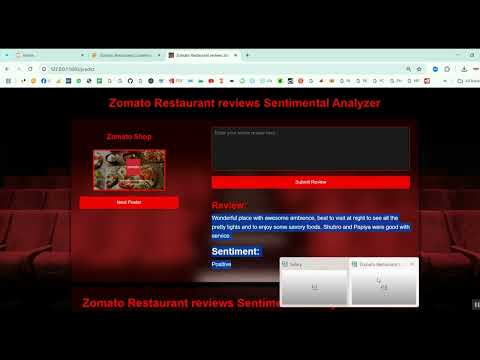
AI & ML Models
Zomato Restaurant Reviews Sentimental Analyzer in Python Projects
Zomato Restaurant Reviews Sentimental Analyzer in Python Projects
र 1000
⭐ Featured
⭐ Featured

AI & ML Models
Voice Disorder Prediction using Audio Dataset in Python Projects
Voice Disorder Prediction using Audio Dataset in Python Projects
र 1000
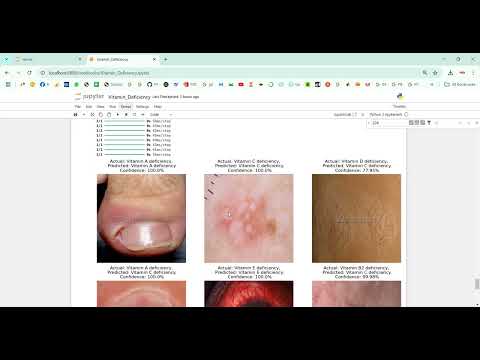
AI & ML Models
Vitamin Deficiency Detection Using Image Processing in Python Projects
Vitamin Deficiency Detection Using Image Processing in Python Projects
र 1000