AI & ML Models
0.0 (0 reviews) • 0 downloads
Android Autoencoder using Images in Python Projects
र 1000
Android Autoencoder using Images in Python Projects
Technical Details
Domain : Python
Database : Sqlite
Tools : Anaconda
Run Tools: VS Code
Database : Sqlite
Tools : Anaconda
Run Tools: VS Code
Secure Payment
Instant Download
GST Invoice
24/7 Support
About This Product
Android Autoencoder using Images in Python Projects
Abstract
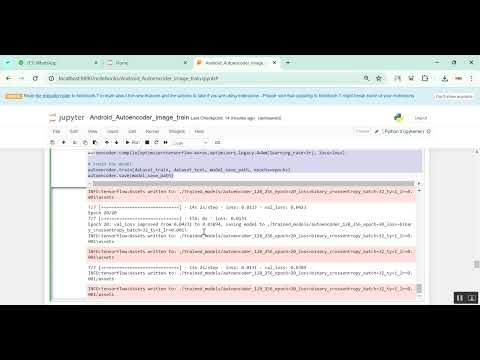
Autoencoders are a type of unsupervised neural network used for feature extraction, dimensionality reduction, and image reconstruction. This project focuses on developing an Android Autoencoder system using images in Python to process and compress image data effectively. The system uses a deep learning autoencoder model to encode input images into a lower-dimensional latent space and then decode them back to reconstruct the original images. The project leverages Python libraries such as TensorFlow, Keras, OpenCV, and NumPy for model development and image preprocessing. The application can be integrated with Android platforms using APIs or frameworks like TensorFlow Lite to deploy the trained model for mobile usage. The system enables efficient storage, transmission, and reconstruction of images while maintaining essential features, making it suitable for mobile image compression, noise reduction, and image recognition applications.
Existing System
In existing systems, image compression and feature extraction are typically performed using classical methods like JPEG compression, PCA (Principal Component Analysis), or manual feature extraction algorithms. While these methods reduce data size, they often compromise image quality or fail to capture non-linear patterns in complex image datasets. Additionally, deploying image processing models on Android devices is challenging due to limited computational resources, and traditional methods do not provide end-to-end learning for reconstruction tasks. Many systems rely on server-side processing, which requires high bandwidth and network dependency. Consequently, image reconstruction and feature extraction on mobile platforms remain inefficient and lack adaptive learning capabilities.
Proposed System
The proposed system introduces a deep learning autoencoder model for images that can be deployed on Android platforms. The autoencoder network consists of an encoder that compresses input images into a latent vector and a decoder that reconstructs the images from the latent space. The system supports image preprocessing steps such as resizing, normalization, and noise removal. Using Python and Keras, the autoencoder is trained on large image datasets to learn essential image features automatically. After training, the model can be converted to TensorFlow Lite for integration into Android applications, enabling mobile devices to perform image compression and reconstruction efficiently. The system allows noise reduction, anomaly detection in images, and efficient storage or transmission of image data. By combining deep learning with mobile deployment, this approach ensures high-quality reconstruction, low latency, and scalability for Android-based image processing applications.
Abstract
Autoencoders are a type of unsupervised neural network used for feature extraction, dimensionality reduction, and image reconstruction. This project focuses on developing an Android Autoencoder system using images in Python to process and compress image data effectively. The system uses a deep learning autoencoder model to encode input images into a lower-dimensional latent space and then decode them back to reconstruct the original images. The project leverages Python libraries such as TensorFlow, Keras, OpenCV, and NumPy for model development and image preprocessing. The application can be integrated with Android platforms using APIs or frameworks like TensorFlow Lite to deploy the trained model for mobile usage. The system enables efficient storage, transmission, and reconstruction of images while maintaining essential features, making it suitable for mobile image compression, noise reduction, and image recognition applications.
Existing System
In existing systems, image compression and feature extraction are typically performed using classical methods like JPEG compression, PCA (Principal Component Analysis), or manual feature extraction algorithms. While these methods reduce data size, they often compromise image quality or fail to capture non-linear patterns in complex image datasets. Additionally, deploying image processing models on Android devices is challenging due to limited computational resources, and traditional methods do not provide end-to-end learning for reconstruction tasks. Many systems rely on server-side processing, which requires high bandwidth and network dependency. Consequently, image reconstruction and feature extraction on mobile platforms remain inefficient and lack adaptive learning capabilities.
Proposed System
The proposed system introduces a deep learning autoencoder model for images that can be deployed on Android platforms. The autoencoder network consists of an encoder that compresses input images into a latent vector and a decoder that reconstructs the images from the latent space. The system supports image preprocessing steps such as resizing, normalization, and noise removal. Using Python and Keras, the autoencoder is trained on large image datasets to learn essential image features automatically. After training, the model can be converted to TensorFlow Lite for integration into Android applications, enabling mobile devices to perform image compression and reconstruction efficiently. The system allows noise reduction, anomaly detection in images, and efficient storage or transmission of image data. By combining deep learning with mobile deployment, this approach ensures high-quality reconstruction, low latency, and scalability for Android-based image processing applications.
Customer Reviews (0)
No reviews yet. Be the first!
Related Products
⭐ Featured
AI & ML Models
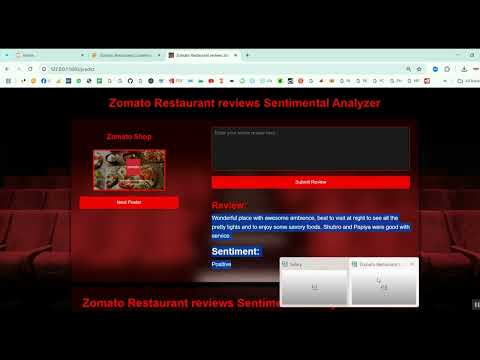
Zomato Restaurant Reviews Sentimental Analyzer in Python Projects
Zomato Restaurant Reviews Sentimental Analyzer in Python Projects
र 1000
⭐ Featured
⭐ Featured
AI & ML Models
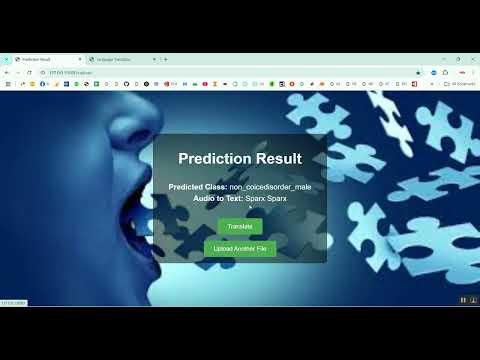
Voice Disorder Prediction using Audio Dataset in Python Projects
Voice Disorder Prediction using Audio Dataset in Python Projects
र 1000
AI & ML Models
Vitamin Deficiency Detection Using Image Processing in Python Projects
Vitamin Deficiency Detection Using Image Processing in Python Projects
र 1000