AI & ML Models
0.0 (0 reviews) • 0 downloads
Amazon Reviews Sentiment Analysis in Python Projects
र 1000
Amazon Reviews Sentiment Analysis in Python Projects
Technical Details
Domain : Python
Database : Sqlite
Tools : Anaconda
Run Tools: VS Code
Database : Sqlite
Tools : Anaconda
Run Tools: VS Code
Secure Payment
Instant Download
GST Invoice
24/7 Support
About This Product
Amazon Reviews Sentiment Analysis in Python Projects
Abstract
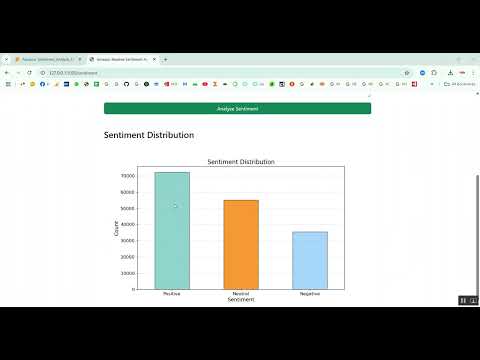
Sentiment analysis is an emerging area of natural language processing (NLP) that focuses on determining the emotional tone behind text data. With the exponential growth of e-commerce platforms like Amazon, analyzing customer reviews has become essential for understanding user satisfaction, product performance, and market trends. The project titled Amazon Reviews Sentiment Analysis in Python Projects aims to analyze large volumes of Amazon product reviews and classify them into positive, negative, or neutral sentiments using machine learning and deep learning techniques. Python is chosen as the implementation language due to its powerful libraries for NLP and machine learning such as NLTK, Scikit-learn, pandas, TensorFlow, and Hugging Face Transformers. The system extracts reviews, preprocesses textual data, applies sentiment classification models, and visualizes sentiment trends. This sentiment-based analysis helps businesses improve customer experience, enhance product quality, and make data-driven marketing decisions.
Existing System
In the existing system, sentiment analysis is either carried out manually or through basic rule-based techniques. Manual review analysis is time-consuming, prone to human bias, and inefficient when dealing with massive online review data. Traditional keyword-based or lexicon-based sentiment scoring methods are used in some automated systems, but these methods struggle with contextual understanding, sarcasm, negation, and complex language patterns. The existing approach fails to capture the true meaning behind customer opinions due to limited linguistic analysis. Additionally, current review systems on e-commerce platforms only display star ratings and raw reviews without providing intelligent insights or aggregated sentiment summaries. There is no automated system for detecting fake reviews or identifying key sentiment factors affecting customer satisfaction. As a result, businesses are unable to extract meaningful insights from customer feedback efficiently.
Proposed System
The proposed system introduces a machine learning and deep learning-based sentiment analysis model to automatically classify Amazon customer reviews with high accuracy. The system uses text preprocessing techniques such as tokenization, stemming, stop-word removal, and lemmatization to clean raw review data. Feature extraction methods like TF-IDF, Bag of Words, or word embeddings (Word2Vec, GloVe, BERT) are used to convert text into numerical form for model training. Supervised learning algorithms such as Logistic Regression, Naïve Bayes, Random Forest, and Support Vector Machine are used for sentiment classification, while advanced models like LSTM, Bi-LSTM, and BERT improve contextual understanding and sentiment prediction accuracy. The system also identifies sentiment polarity, subjectivity, and aspect-based sentiments for detailed analysis. Finally, data visualization libraries like Matplotlib and Seaborn are used to display sentiment trends and insights. This automated sentiment analysis provides intelligent review insights, helps detect fake or biased reviews, and supports decision-making for both businesses and consumers.
Abstract
Sentiment analysis is an emerging area of natural language processing (NLP) that focuses on determining the emotional tone behind text data. With the exponential growth of e-commerce platforms like Amazon, analyzing customer reviews has become essential for understanding user satisfaction, product performance, and market trends. The project titled Amazon Reviews Sentiment Analysis in Python Projects aims to analyze large volumes of Amazon product reviews and classify them into positive, negative, or neutral sentiments using machine learning and deep learning techniques. Python is chosen as the implementation language due to its powerful libraries for NLP and machine learning such as NLTK, Scikit-learn, pandas, TensorFlow, and Hugging Face Transformers. The system extracts reviews, preprocesses textual data, applies sentiment classification models, and visualizes sentiment trends. This sentiment-based analysis helps businesses improve customer experience, enhance product quality, and make data-driven marketing decisions.
Existing System
In the existing system, sentiment analysis is either carried out manually or through basic rule-based techniques. Manual review analysis is time-consuming, prone to human bias, and inefficient when dealing with massive online review data. Traditional keyword-based or lexicon-based sentiment scoring methods are used in some automated systems, but these methods struggle with contextual understanding, sarcasm, negation, and complex language patterns. The existing approach fails to capture the true meaning behind customer opinions due to limited linguistic analysis. Additionally, current review systems on e-commerce platforms only display star ratings and raw reviews without providing intelligent insights or aggregated sentiment summaries. There is no automated system for detecting fake reviews or identifying key sentiment factors affecting customer satisfaction. As a result, businesses are unable to extract meaningful insights from customer feedback efficiently.
Proposed System
The proposed system introduces a machine learning and deep learning-based sentiment analysis model to automatically classify Amazon customer reviews with high accuracy. The system uses text preprocessing techniques such as tokenization, stemming, stop-word removal, and lemmatization to clean raw review data. Feature extraction methods like TF-IDF, Bag of Words, or word embeddings (Word2Vec, GloVe, BERT) are used to convert text into numerical form for model training. Supervised learning algorithms such as Logistic Regression, Naïve Bayes, Random Forest, and Support Vector Machine are used for sentiment classification, while advanced models like LSTM, Bi-LSTM, and BERT improve contextual understanding and sentiment prediction accuracy. The system also identifies sentiment polarity, subjectivity, and aspect-based sentiments for detailed analysis. Finally, data visualization libraries like Matplotlib and Seaborn are used to display sentiment trends and insights. This automated sentiment analysis provides intelligent review insights, helps detect fake or biased reviews, and supports decision-making for both businesses and consumers.
Customer Reviews (0)
No reviews yet. Be the first!
Related Products
⭐ Featured
AI & ML Models
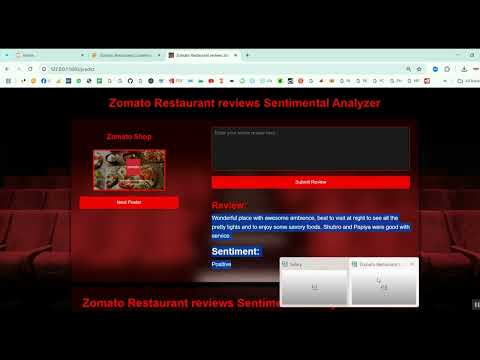
Zomato Restaurant Reviews Sentimental Analyzer in Python Projects
Zomato Restaurant Reviews Sentimental Analyzer in Python Projects
र 1000
⭐ Featured
⭐ Featured
AI & ML Models
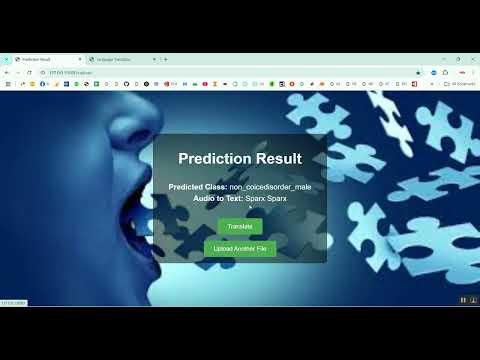
Voice Disorder Prediction using Audio Dataset in Python Projects
Voice Disorder Prediction using Audio Dataset in Python Projects
र 1000
AI & ML Models
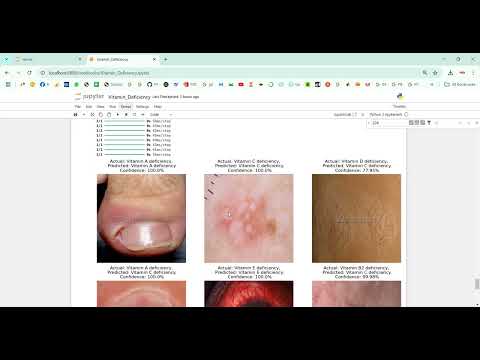
Vitamin Deficiency Detection Using Image Processing in Python Projects
Vitamin Deficiency Detection Using Image Processing in Python Projects
र 1000