
AI & ML Models
0.0 (0 reviews) • 0 downloads
Alzheimer Disease Prediction in Python Projects
र 1000
Alzheimer Disease Prediction in Python Projects
Technical Details
Domain : Python
Database : Sqlite
Tools : Anaconda
Run Tools: VS Code
Database : Sqlite
Tools : Anaconda
Run Tools: VS Code
Secure Payment
Instant Download
GST Invoice
24/7 Support
About This Product
Alzheimer Disease Prediction in Python Projects
Abstract
Alzheimer’s disease is a progressive neurodegenerative disorder that affects memory, thinking, and behavioral abilities, especially in elderly individuals. Early diagnosis of Alzheimer’s is crucial to slow progression and plan effective treatment strategies. This project presents a machine learning-based Alzheimer Disease Prediction system using Python that analyzes patient data to predict the likelihood of Alzheimer’s at an early stage. The system uses clinical and cognitive features such as age, gender, MMSE score, memory test results, brain imaging summaries, and genetic risk factors to classify patients into categories such as mild cognitive impairment, early-stage Alzheimer’s, or severe Alzheimer’s. Python libraries including Pandas, NumPy, Scikit-learn, and Matplotlib are used for data preprocessing, model training, and visualization. Machine learning algorithms such as Logistic Regression, Random Forest, SVM, and Gradient Boosting are applied to build a reliable prediction model. The system provides a valuable decision-support tool for neurologists and healthcare professionals to assist in early prognosis of Alzheimer’s disease.
Existing System
Currently, the diagnosis of Alzheimer’s disease relies heavily on clinical evaluation, memory and cognitive tests, MRI or PET scans, and neurological assessments. These diagnosis methods are time-consuming, expensive, and require expert neurologists, which limits accessibility in many regions. Moreover, diagnosis often happens at an advanced stage when brain cells are already severely damaged, reducing the effectiveness of treatment. Traditional diagnosis does not include predictive analytics based on historical patient data, which could help detect early patterns of the disease. Manual interpretation of medical reports and scans is prone to human error and varies based on doctor expertise. Due to lack of automated tools, the existing system fails to provide early detection support and timely diagnosis, which is critical in improving the quality of life of Alzheimer’s patients.
Proposed System
The proposed system introduces an AI-driven Alzheimer Disease Prediction model using Python that predicts the disease at an early stage using machine learning techniques. The system preprocesses patient data, handles missing values, and normalizes clinical input features. Feature selection methods are applied to identify the most important risk indicators. The model is trained using supervised learning algorithms to classify patients based on the probability of Alzheimer’s occurrence. The system also includes a visual dashboard to display prediction results and health insights in a user-friendly manner. Advanced models like Support Vector Machines (SVM) and Random Forest improve classification accuracy, while evaluation metrics like accuracy, precision, recall, and confusion matrix ensure system reliability. This automated system helps doctors and medical researchers by providing an early warning tool, reducing diagnosis delays, and enabling timely medical intervention. It also supports telemedicine platforms and hospital decision-support systems.
Abstract
Alzheimer’s disease is a progressive neurodegenerative disorder that affects memory, thinking, and behavioral abilities, especially in elderly individuals. Early diagnosis of Alzheimer’s is crucial to slow progression and plan effective treatment strategies. This project presents a machine learning-based Alzheimer Disease Prediction system using Python that analyzes patient data to predict the likelihood of Alzheimer’s at an early stage. The system uses clinical and cognitive features such as age, gender, MMSE score, memory test results, brain imaging summaries, and genetic risk factors to classify patients into categories such as mild cognitive impairment, early-stage Alzheimer’s, or severe Alzheimer’s. Python libraries including Pandas, NumPy, Scikit-learn, and Matplotlib are used for data preprocessing, model training, and visualization. Machine learning algorithms such as Logistic Regression, Random Forest, SVM, and Gradient Boosting are applied to build a reliable prediction model. The system provides a valuable decision-support tool for neurologists and healthcare professionals to assist in early prognosis of Alzheimer’s disease.
Existing System
Currently, the diagnosis of Alzheimer’s disease relies heavily on clinical evaluation, memory and cognitive tests, MRI or PET scans, and neurological assessments. These diagnosis methods are time-consuming, expensive, and require expert neurologists, which limits accessibility in many regions. Moreover, diagnosis often happens at an advanced stage when brain cells are already severely damaged, reducing the effectiveness of treatment. Traditional diagnosis does not include predictive analytics based on historical patient data, which could help detect early patterns of the disease. Manual interpretation of medical reports and scans is prone to human error and varies based on doctor expertise. Due to lack of automated tools, the existing system fails to provide early detection support and timely diagnosis, which is critical in improving the quality of life of Alzheimer’s patients.
Proposed System
The proposed system introduces an AI-driven Alzheimer Disease Prediction model using Python that predicts the disease at an early stage using machine learning techniques. The system preprocesses patient data, handles missing values, and normalizes clinical input features. Feature selection methods are applied to identify the most important risk indicators. The model is trained using supervised learning algorithms to classify patients based on the probability of Alzheimer’s occurrence. The system also includes a visual dashboard to display prediction results and health insights in a user-friendly manner. Advanced models like Support Vector Machines (SVM) and Random Forest improve classification accuracy, while evaluation metrics like accuracy, precision, recall, and confusion matrix ensure system reliability. This automated system helps doctors and medical researchers by providing an early warning tool, reducing diagnosis delays, and enabling timely medical intervention. It also supports telemedicine platforms and hospital decision-support systems.
Customer Reviews (0)
No reviews yet. Be the first!
Related Products
⭐ Featured
AI & ML Models
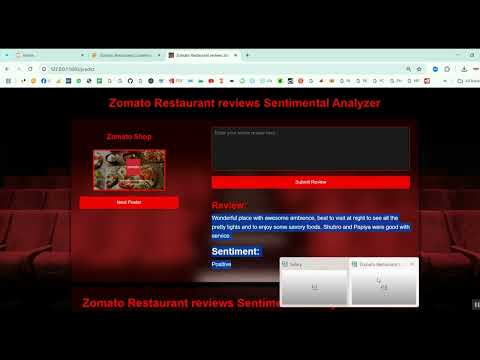
Zomato Restaurant Reviews Sentimental Analyzer in Python Projects
Zomato Restaurant Reviews Sentimental Analyzer in Python Projects
र 1000
⭐ Featured
⭐ Featured
AI & ML Models
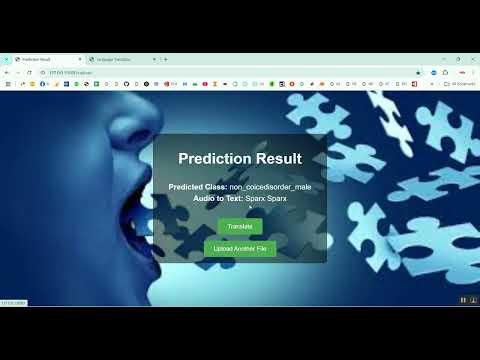
Voice Disorder Prediction using Audio Dataset in Python Projects
Voice Disorder Prediction using Audio Dataset in Python Projects
र 1000
AI & ML Models
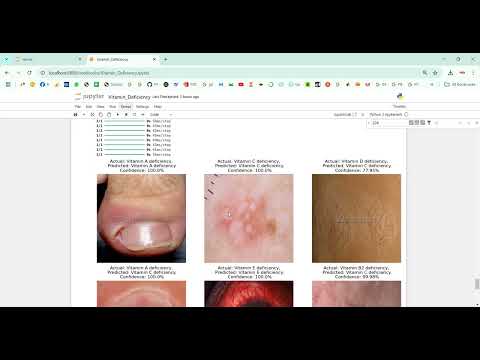
Vitamin Deficiency Detection Using Image Processing in Python Projects
Vitamin Deficiency Detection Using Image Processing in Python Projects
र 1000