AI & ML Models
0.0 (0 reviews) • 0 downloads
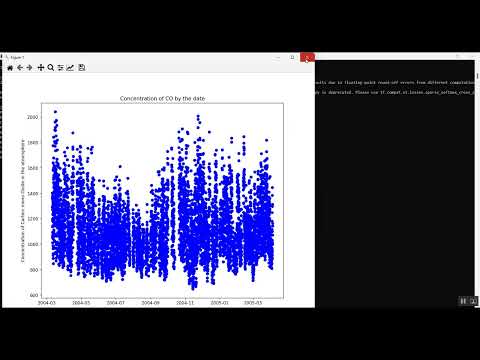
Air Quality Index Prediction Flask in Python Projects
र 1000
Air Quality Index Prediction Flask in Python Projects
Technical Details
Domain : Python
Database : Sqlite
Tools : Anaconda
Run Tools: VS Code
Database : Sqlite
Tools : Anaconda
Run Tools: VS Code
Secure Payment
Instant Download
GST Invoice
24/7 Support
About This Product
Air Quality Index Prediction Flask in Python Projects
Abstract
Air pollution has become a major environmental concern affecting human health, climate, and overall quality of life. Monitoring and predicting air quality levels is essential to take preventive measures and control pollution-related risks. This project presents an Air Quality Index (AQI) Prediction System using Python and Flask, which provides real-time AQI forecasting based on environmental pollutant data. The system analyzes major pollutants such as PM2.5, PM10, CO, NO₂, SO₂, and O₃, and uses machine learning algorithms to predict future air quality levels. Python libraries such as Pandas, NumPy, Scikit-learn, and Matplotlib are used for data preprocessing, model training, and visualization. The trained model is integrated into a Flask web application that allows users to input pollutant values and receive AQI predictions along with health advisory messages. This system plays a key role in environmental monitoring, public awareness, and smart city development.
Existing System
In the existing system, air quality monitoring is primarily performed by government agencies and environmental control boards using fixed monitoring stations. These systems display AQI values on official websites but do not provide future air quality predictions. The available data is usually static, city-specific, and lacks real-time forecasting capabilities. Moreover, most existing platforms do not provide personalized risk alerts or interactive interfaces for public use. Traditional AQI analysis also requires expert knowledge and manual handling of pollutant datasets, making it less accessible for general users or developers. The absence of automated prediction systems and user-friendly platforms makes the current system inefficient for proactive air quality management.
Proposed System
The proposed system introduces an AI-enabled Air Quality Index Prediction Web Application developed using Python and Flask. The model collects AQI datasets from open sources such as CPCB, OpenAQ, or Kaggle, and preprocesses them for noise removal and feature analysis. Machine learning algorithms like Linear Regression, Random Forest Regression, or XGBoost are applied to predict AQI based on pollutant levels. The prediction model is deployed using Flask to create a responsive and simple web interface, where users can input live pollutant values or use sample environmental data for predictions. The system displays predicted AQI levels along with categories such as Good, Moderate, Unhealthy, or Hazardous, based on standard air quality guidelines. Additionally, the system provides health recommendations and pollution control tips to the user. This approach ensures real-time AQI forecasting, improves environmental awareness, and supports decision-making for pollution control planning.
Abstract
Air pollution has become a major environmental concern affecting human health, climate, and overall quality of life. Monitoring and predicting air quality levels is essential to take preventive measures and control pollution-related risks. This project presents an Air Quality Index (AQI) Prediction System using Python and Flask, which provides real-time AQI forecasting based on environmental pollutant data. The system analyzes major pollutants such as PM2.5, PM10, CO, NO₂, SO₂, and O₃, and uses machine learning algorithms to predict future air quality levels. Python libraries such as Pandas, NumPy, Scikit-learn, and Matplotlib are used for data preprocessing, model training, and visualization. The trained model is integrated into a Flask web application that allows users to input pollutant values and receive AQI predictions along with health advisory messages. This system plays a key role in environmental monitoring, public awareness, and smart city development.
Existing System
In the existing system, air quality monitoring is primarily performed by government agencies and environmental control boards using fixed monitoring stations. These systems display AQI values on official websites but do not provide future air quality predictions. The available data is usually static, city-specific, and lacks real-time forecasting capabilities. Moreover, most existing platforms do not provide personalized risk alerts or interactive interfaces for public use. Traditional AQI analysis also requires expert knowledge and manual handling of pollutant datasets, making it less accessible for general users or developers. The absence of automated prediction systems and user-friendly platforms makes the current system inefficient for proactive air quality management.
Proposed System
The proposed system introduces an AI-enabled Air Quality Index Prediction Web Application developed using Python and Flask. The model collects AQI datasets from open sources such as CPCB, OpenAQ, or Kaggle, and preprocesses them for noise removal and feature analysis. Machine learning algorithms like Linear Regression, Random Forest Regression, or XGBoost are applied to predict AQI based on pollutant levels. The prediction model is deployed using Flask to create a responsive and simple web interface, where users can input live pollutant values or use sample environmental data for predictions. The system displays predicted AQI levels along with categories such as Good, Moderate, Unhealthy, or Hazardous, based on standard air quality guidelines. Additionally, the system provides health recommendations and pollution control tips to the user. This approach ensures real-time AQI forecasting, improves environmental awareness, and supports decision-making for pollution control planning.
Customer Reviews (0)
No reviews yet. Be the first!
Related Products
⭐ Featured
AI & ML Models
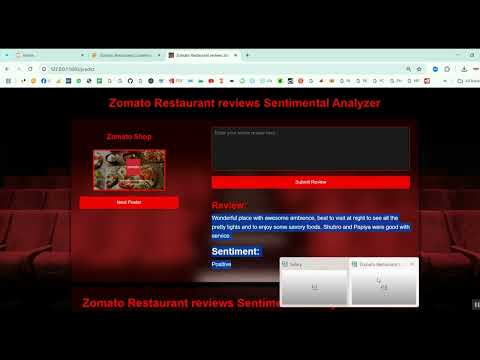
Zomato Restaurant Reviews Sentimental Analyzer in Python Projects
Zomato Restaurant Reviews Sentimental Analyzer in Python Projects
र 1000
⭐ Featured
⭐ Featured
AI & ML Models
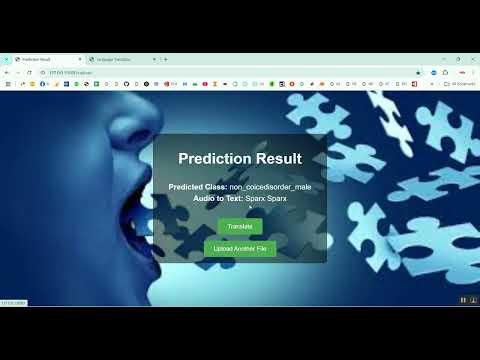
Voice Disorder Prediction using Audio Dataset in Python Projects
Voice Disorder Prediction using Audio Dataset in Python Projects
र 1000
AI & ML Models
Vitamin Deficiency Detection Using Image Processing in Python Projects
Vitamin Deficiency Detection Using Image Processing in Python Projects
र 1000