AI & ML Models
0.0 (0 reviews) • 0 downloads
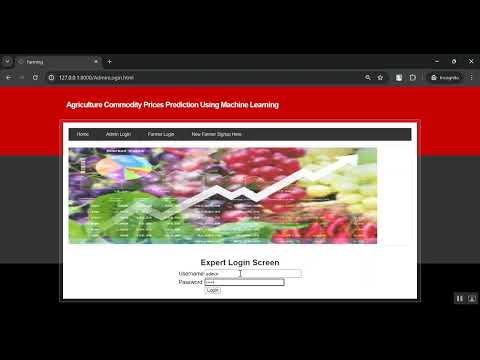
Agriculture Commodity Prices Prediction in Python Projects
र 1000
Agriculture Commodity Prices Prediction in Python Projects
Technical Details
Domain : Python
Database : Sqlite
Tools : Anaconda
Run Tools: VS Code
Database : Sqlite
Tools : Anaconda
Run Tools: VS Code
Secure Payment
Instant Download
GST Invoice
24/7 Support
About This Product
Agriculture Commodity Prices Prediction in Python Projects
Abstract
Agricultural commodity price prediction plays a crucial role in supporting farmers, traders, and policymakers in making informed decisions related to crop cultivation, storage, and marketing strategies. Price fluctuations in agricultural products such as rice, wheat, maize, pulses, and vegetables are influenced by various dynamic factors including demand-supply variations, climatic conditions, seasonal patterns, and market trends. Traditional manual methods of analyzing commodity prices are time-consuming, inaccurate, and lack real-time insights. In this project, Python is used as the primary programming environment due to its powerful data analysis, visualization, and machine learning libraries like Pandas, NumPy, Matplotlib, and Scikit-learn. The system processes historical price data to identify trends and utilizes machine learning algorithms such as Linear Regression, Random Forest, or LSTM networks to predict future prices. This Python-based approach not only improves forecasting accuracy but also provides an interactive and user-friendly platform for real-time price analysis, supporting better decision-making in the agricultural sector.
Existing System
The existing system for analyzing agricultural commodity prices largely depends on manual data collection from local markets, agricultural offices, or government publications. Farmers and traders rely on traditional databases, newspapers, and websites that present static or delayed price information. Due to lack of automated analytics, the users are unable to understand hidden patterns and fluctuations affecting commodity prices. Moreover, these systems fail to incorporate machine learning or predictive analytics, leading to poor forecasting capabilities. In many rural regions, farmers have limited access to updated market prices and rely heavily on middlemen, resulting in exploitation and financial losses. The absence of data visualization tools also makes it difficult to interpret price trends effectively. Overall, the current system lacks automation, real-time updates, pattern recognition, and predictive intelligence, which are essential for effective agricultural planning and market analysis.
Proposed System
The proposed system introduces a Python-based intelligent platform for analyzing and predicting agricultural commodity prices using real-time and historical data. This system automates the data collection process by integrating online market data sources or CSV repositories and performs data preprocessing to handle missing values and noise. Exploratory data analysis and visualization techniques are applied to uncover trends, seasonal patterns, and price behavior using Python libraries. Advanced machine learning models are incorporated to deliver accurate price predictions, helping farmers and traders make informed crop planning and selling decisions. The system also provides a graphical user interface or dashboard to display price trends and prediction graphs, making it accessible even for non-technical users. Additionally, this model can be extended to include external factors like rainfall, inflation, and market demand to enhance prediction reliability. The proposed system ensures automation, accuracy, transparency, and smart decision-making in agricultural pricing.
Abstract
Agricultural commodity price prediction plays a crucial role in supporting farmers, traders, and policymakers in making informed decisions related to crop cultivation, storage, and marketing strategies. Price fluctuations in agricultural products such as rice, wheat, maize, pulses, and vegetables are influenced by various dynamic factors including demand-supply variations, climatic conditions, seasonal patterns, and market trends. Traditional manual methods of analyzing commodity prices are time-consuming, inaccurate, and lack real-time insights. In this project, Python is used as the primary programming environment due to its powerful data analysis, visualization, and machine learning libraries like Pandas, NumPy, Matplotlib, and Scikit-learn. The system processes historical price data to identify trends and utilizes machine learning algorithms such as Linear Regression, Random Forest, or LSTM networks to predict future prices. This Python-based approach not only improves forecasting accuracy but also provides an interactive and user-friendly platform for real-time price analysis, supporting better decision-making in the agricultural sector.
Existing System
The existing system for analyzing agricultural commodity prices largely depends on manual data collection from local markets, agricultural offices, or government publications. Farmers and traders rely on traditional databases, newspapers, and websites that present static or delayed price information. Due to lack of automated analytics, the users are unable to understand hidden patterns and fluctuations affecting commodity prices. Moreover, these systems fail to incorporate machine learning or predictive analytics, leading to poor forecasting capabilities. In many rural regions, farmers have limited access to updated market prices and rely heavily on middlemen, resulting in exploitation and financial losses. The absence of data visualization tools also makes it difficult to interpret price trends effectively. Overall, the current system lacks automation, real-time updates, pattern recognition, and predictive intelligence, which are essential for effective agricultural planning and market analysis.
Proposed System
The proposed system introduces a Python-based intelligent platform for analyzing and predicting agricultural commodity prices using real-time and historical data. This system automates the data collection process by integrating online market data sources or CSV repositories and performs data preprocessing to handle missing values and noise. Exploratory data analysis and visualization techniques are applied to uncover trends, seasonal patterns, and price behavior using Python libraries. Advanced machine learning models are incorporated to deliver accurate price predictions, helping farmers and traders make informed crop planning and selling decisions. The system also provides a graphical user interface or dashboard to display price trends and prediction graphs, making it accessible even for non-technical users. Additionally, this model can be extended to include external factors like rainfall, inflation, and market demand to enhance prediction reliability. The proposed system ensures automation, accuracy, transparency, and smart decision-making in agricultural pricing.
Customer Reviews (0)
No reviews yet. Be the first!
Related Products
⭐ Featured
AI & ML Models
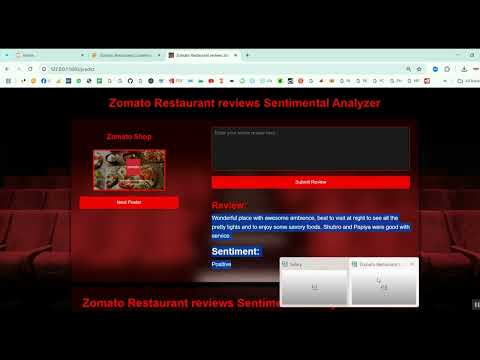
Zomato Restaurant Reviews Sentimental Analyzer in Python Projects
Zomato Restaurant Reviews Sentimental Analyzer in Python Projects
र 1000
⭐ Featured
⭐ Featured

AI & ML Models
Voice Disorder Prediction using Audio Dataset in Python Projects
Voice Disorder Prediction using Audio Dataset in Python Projects
र 1000

AI & ML Models
Vitamin Deficiency Detection Using Image Processing in Python Projects
Vitamin Deficiency Detection Using Image Processing in Python Projects
र 1000