AI & ML Models
0.0 (0 reviews) • 0 downloads
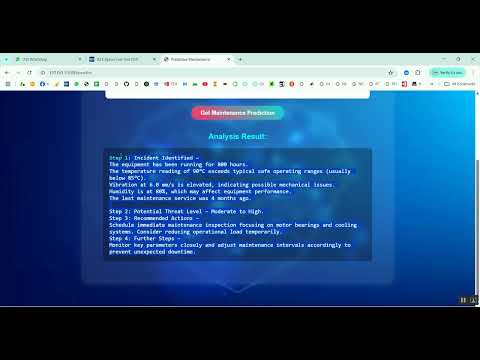
Agricultural AI Powered Predictive Maintenance in Python Projects
र 1000
Agricultural AI Powered Predictive Maintenance in Python Projects
Technical Details
Domain : Python
Database : Sqlite
Tools : Anaconda
Run Tools: VS Code
Database : Sqlite
Tools : Anaconda
Run Tools: VS Code
Secure Payment
Instant Download
GST Invoice
24/7 Support
About This Product
Agricultural AI Powered Predictive Maintenance in Python Projects
Abstract
Modern agriculture relies heavily on farm machinery such as tractors, irrigation systems, harvesters, and drones to improve productivity and reduce human effort. However, unexpected equipment failures can lead to costly downtime and reduced crop yield. This project proposes an AI-powered predictive maintenance system for agriculture using Python. The system monitors real-time machinery performance through sensor data such as vibration, temperature, fuel efficiency, and run time. Machine learning algorithms analyze patterns to predict potential failures before they occur. By providing timely maintenance alerts and reducing machine breakdowns, the system supports continuous agricultural operations and improves farm productivity. This data-driven maintenance strategy enhances equipment lifespan, reduces operational costs, and supports sustainable farming.
Existing System
Traditional agricultural machinery maintenance relies on reactive or scheduled maintenance methods. In reactive maintenance, equipment is repaired only after a breakdown occurs, leading to costly delays and crop losses during critical farming cycles. Scheduled maintenance, on the other hand, follows fixed service intervals without considering actual machine condition, resulting in unnecessary servicing and higher maintenance costs. Existing systems lack real-time monitoring, rely on manual inspections, and do not use intelligent analytics to predict failures. Furthermore, farmers in rural areas may lack skilled technicians and tools to diagnose early warning signs of machinery issues. As a result, traditional maintenance strategies are inefficient, expensive, and unable to support high-demand precision agriculture.
Proposed System
The proposed system introduces a Python-based AI predictive maintenance model tailored for agricultural machinery. The system collects data from IoT sensors attached to machines, including engine temperature, oil pressure, noise levels, and operational load. Data preprocessing techniques are used to filter noise and normalize sensor readings. Machine learning algorithms such as Random Forest, Support Vector Machines (SVM), and Gradient Boosting are applied to detect anomalies and predict machinery failure. Deep learning models like LSTM are implemented for time-series failure prediction. Python libraries such as Pandas, NumPy, Scikit-learn, TensorFlow, and Matplotlib are used for data analysis, model training, and performance visualization. The system generates real-time health status reports and alerts farmers before equipment failure occurs. By shifting from reactive to predictive maintenance, the system reduces downtime, enhances equipment reliability, and supports smart agriculture through AI and IoT integration.
Abstract
Modern agriculture relies heavily on farm machinery such as tractors, irrigation systems, harvesters, and drones to improve productivity and reduce human effort. However, unexpected equipment failures can lead to costly downtime and reduced crop yield. This project proposes an AI-powered predictive maintenance system for agriculture using Python. The system monitors real-time machinery performance through sensor data such as vibration, temperature, fuel efficiency, and run time. Machine learning algorithms analyze patterns to predict potential failures before they occur. By providing timely maintenance alerts and reducing machine breakdowns, the system supports continuous agricultural operations and improves farm productivity. This data-driven maintenance strategy enhances equipment lifespan, reduces operational costs, and supports sustainable farming.
Existing System
Traditional agricultural machinery maintenance relies on reactive or scheduled maintenance methods. In reactive maintenance, equipment is repaired only after a breakdown occurs, leading to costly delays and crop losses during critical farming cycles. Scheduled maintenance, on the other hand, follows fixed service intervals without considering actual machine condition, resulting in unnecessary servicing and higher maintenance costs. Existing systems lack real-time monitoring, rely on manual inspections, and do not use intelligent analytics to predict failures. Furthermore, farmers in rural areas may lack skilled technicians and tools to diagnose early warning signs of machinery issues. As a result, traditional maintenance strategies are inefficient, expensive, and unable to support high-demand precision agriculture.
Proposed System
The proposed system introduces a Python-based AI predictive maintenance model tailored for agricultural machinery. The system collects data from IoT sensors attached to machines, including engine temperature, oil pressure, noise levels, and operational load. Data preprocessing techniques are used to filter noise and normalize sensor readings. Machine learning algorithms such as Random Forest, Support Vector Machines (SVM), and Gradient Boosting are applied to detect anomalies and predict machinery failure. Deep learning models like LSTM are implemented for time-series failure prediction. Python libraries such as Pandas, NumPy, Scikit-learn, TensorFlow, and Matplotlib are used for data analysis, model training, and performance visualization. The system generates real-time health status reports and alerts farmers before equipment failure occurs. By shifting from reactive to predictive maintenance, the system reduces downtime, enhances equipment reliability, and supports smart agriculture through AI and IoT integration.
Customer Reviews (0)
No reviews yet. Be the first!
Related Products
⭐ Featured

AI & ML Models
Zomato Restaurant Reviews Sentimental Analyzer in Python Projects
Zomato Restaurant Reviews Sentimental Analyzer in Python Projects
र 1000
⭐ Featured
⭐ Featured

AI & ML Models
Voice Disorder Prediction using Audio Dataset in Python Projects
Voice Disorder Prediction using Audio Dataset in Python Projects
र 1000
AI & ML Models
Vitamin Deficiency Detection Using Image Processing in Python Projects
Vitamin Deficiency Detection Using Image Processing in Python Projects
र 1000