AI & ML Models
0.0 (0 reviews) • 0 downloads
Abnormal Event Detection in Python Projects
र 1000
Abnormal Event Detection in Python Projects
Technical Details
Domain : Python
Database : Sqlite
Tools : Anaconda
Run Tools: VS Code
Database : Sqlite
Tools : Anaconda
Run Tools: VS Code
Secure Payment
Instant Download
GST Invoice
24/7 Support
About This Product
Abnormal Event Detection in Python Projects
Abstract
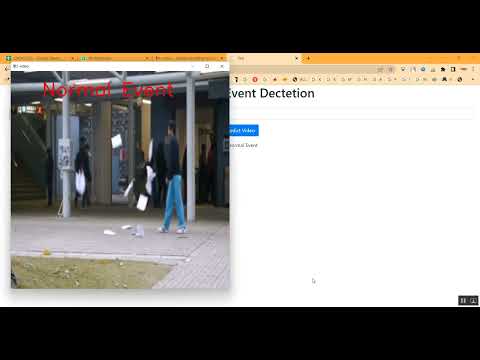
Abnormal event detection plays a crucial role in surveillance, security monitoring, industrial systems, and anomaly analysis. This project focuses on Abnormal Event Detection using Machine Learning and Python, where the system identifies unusual activities or patterns that deviate from normal behavior in datasets such as video footage, sensor logs, or time-series signals. The project utilizes Python-based data preprocessing, feature extraction, and anomaly detection techniques to detect abnormal events automatically. Depending on the dataset type, advanced algorithms such as Autoencoders, Isolation Forest, One-Class SVM, or LSTM-based models are used to identify anomalies effectively. The system enhances automation and accuracy in identifying suspicious or rare events, which are often difficult and time-consuming to detect manually.
Existing System
Existing abnormal event detection systems largely depend on manual monitoring or predefined rule-based models. In surveillance environments, human operators analyze camera feeds to detect unusual activities, but this approach is inefficient, prone to fatigue, and subject to human error. Rule-based anomaly detection systems analyze data based on fixed thresholds or predefined conditions; however, these systems are not adaptable to dynamic environments and fail to detect complex unseen anomalies. Traditional statistical models are also limited as they assume linear relationships and often struggle with high-dimensional real-world data. These limitations reduce detection accuracy and delay timely responses in real-world applications.
Proposed System
The proposed system introduces an intelligent Python-based abnormal event detection model using machine learning and deep learning techniques. The system preprocesses input data through normalization, noise handling, and feature extraction. Depending on the application domain, anomaly detection is performed using algorithms like Isolation Forest for high-dimensional data, One-Class SVM for novelty detection, Autoencoders for reconstruction-based detection, or LSTM networks for time-dependent anomaly prediction. The trained model learns normal behavior patterns from historical data and flags any abnormal deviations as anomalies. This automated system improves detection accuracy, minimizes false alarms, and provides faster identification of critical events. It is scalable and adaptable for applications such as video surveillance, fraud detection, health monitoring, cybersecurity, and industrial system monitoring.
Abstract
Abnormal event detection plays a crucial role in surveillance, security monitoring, industrial systems, and anomaly analysis. This project focuses on Abnormal Event Detection using Machine Learning and Python, where the system identifies unusual activities or patterns that deviate from normal behavior in datasets such as video footage, sensor logs, or time-series signals. The project utilizes Python-based data preprocessing, feature extraction, and anomaly detection techniques to detect abnormal events automatically. Depending on the dataset type, advanced algorithms such as Autoencoders, Isolation Forest, One-Class SVM, or LSTM-based models are used to identify anomalies effectively. The system enhances automation and accuracy in identifying suspicious or rare events, which are often difficult and time-consuming to detect manually.
Existing System
Existing abnormal event detection systems largely depend on manual monitoring or predefined rule-based models. In surveillance environments, human operators analyze camera feeds to detect unusual activities, but this approach is inefficient, prone to fatigue, and subject to human error. Rule-based anomaly detection systems analyze data based on fixed thresholds or predefined conditions; however, these systems are not adaptable to dynamic environments and fail to detect complex unseen anomalies. Traditional statistical models are also limited as they assume linear relationships and often struggle with high-dimensional real-world data. These limitations reduce detection accuracy and delay timely responses in real-world applications.
Proposed System
The proposed system introduces an intelligent Python-based abnormal event detection model using machine learning and deep learning techniques. The system preprocesses input data through normalization, noise handling, and feature extraction. Depending on the application domain, anomaly detection is performed using algorithms like Isolation Forest for high-dimensional data, One-Class SVM for novelty detection, Autoencoders for reconstruction-based detection, or LSTM networks for time-dependent anomaly prediction. The trained model learns normal behavior patterns from historical data and flags any abnormal deviations as anomalies. This automated system improves detection accuracy, minimizes false alarms, and provides faster identification of critical events. It is scalable and adaptable for applications such as video surveillance, fraud detection, health monitoring, cybersecurity, and industrial system monitoring.
Customer Reviews (0)
No reviews yet. Be the first!
Related Products
⭐ Featured

AI & ML Models
Zomato Restaurant Reviews Sentimental Analyzer in Python Projects
Zomato Restaurant Reviews Sentimental Analyzer in Python Projects
र 1000
⭐ Featured

⭐ Featured

AI & ML Models
Voice Disorder Prediction using Audio Dataset in Python Projects
Voice Disorder Prediction using Audio Dataset in Python Projects
र 1000

AI & ML Models
Vitamin Deficiency Detection Using Image Processing in Python Projects
Vitamin Deficiency Detection Using Image Processing in Python Projects
र 1000